Clear Sky Science · en
Metformin provides superior neuroprotective potential compared to semaglutide in preventing diabetes-associated Alzheimer’s disease via dual actions
Why Diabetes Drugs Matter for Brain Health
Type 2 diabetes does more than raise blood sugar; it also increases the chances of developing Alzheimer’s disease, a leading cause of memory loss in older adults. Many people with diabetes already take medicines such as metformin or newer weight‑loss injections like semaglutide. This study asks a question with direct relevance for patients and doctors: which diabetes drugs are most likely to shield the brain from Alzheimer’s, and why?
Connecting Blood Sugar Problems to Memory Loss
Alzheimer’s disease and type 2 diabetes share several harmful processes, including poor insulin signaling, chronic inflammation, and oxidative stress. Because of these overlaps, Alzheimer’s is sometimes nicknamed “type 3 diabetes.” People with type 2 diabetes are more likely to experience thinking problems and dementia, but the exact biological links are still being worked out. The authors of this paper reasoned that if diabetes fuels brain decline through shared pathways, then drugs that best correct those pathways might also offer the strongest protection against Alzheimer’s.
Using Networks Instead of Single Targets
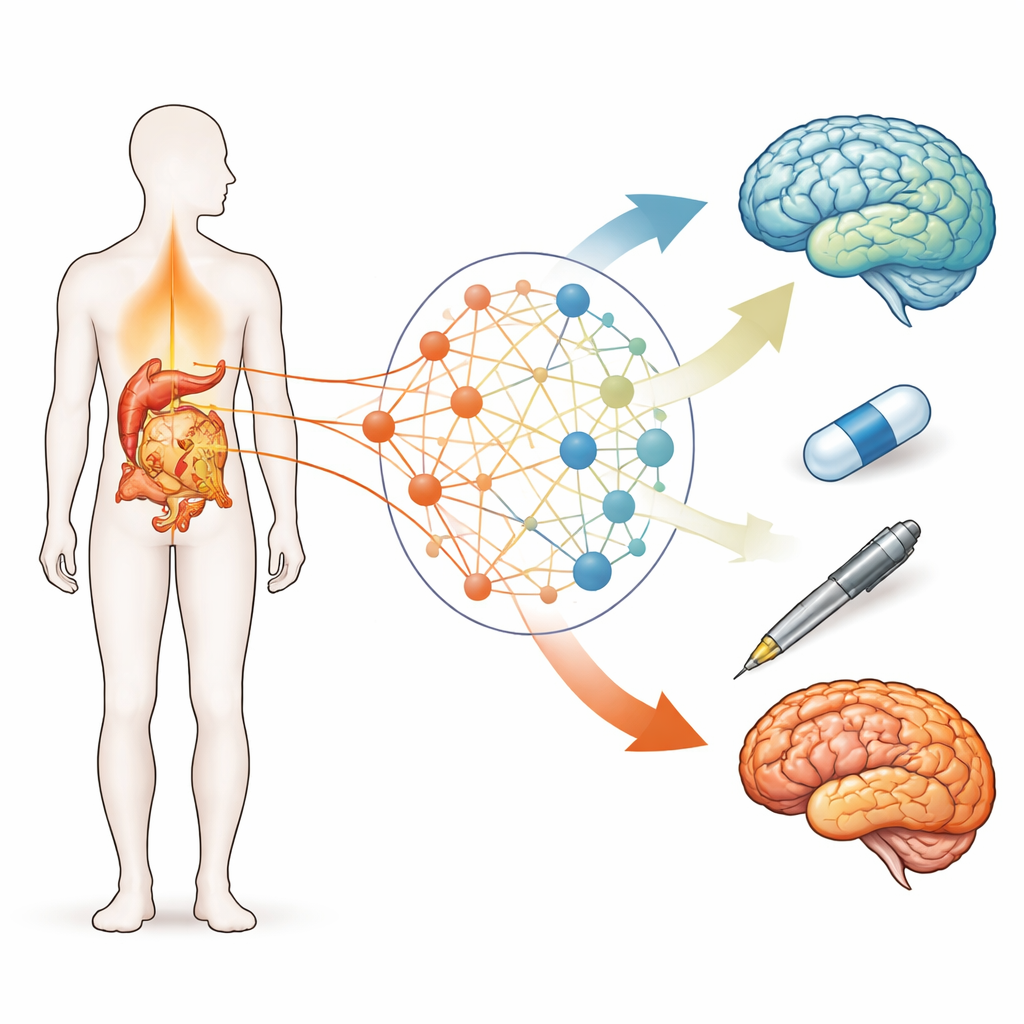
Rather than focusing on one molecule at a time, the researchers built a large map of interacting biological pathways involved in both diabetes and Alzheimer’s. They started by collecting hundreds of proteins linked to each disease from public databases and asked which cellular pathways those proteins belonged to. They then stitched these pathways into a “comorbidity network” where each node is a pathway and each link represents a functional connection. Pathways shared by both diseases were given extra weight, because changes there are more likely to influence the development of Alzheimer’s in people with diabetes. This systems‑level map allowed them to see where different drugs act within the broader disease web.
Ranking Diabetes Drugs by Their Network Footprint
The team next examined 39 commonly used type 2 diabetes treatments and identified which of the mapped pathways each drug touches. For every pathway, they calculated how central it is in the diabetes–Alzheimer’s network, combining how many connections it has, how often it sits on the shortest routes between other pathways, and how close it lies to the entire network. They then gave each drug an “impact score” based on the summed importance of the pathways it influences. Metformin emerged as the top‑ranked drug, acting on key hubs such as AMPK, insulin, and adipocytokine signaling that tie metabolic control to cell survival, aging, and brain health. Some dual therapies that pair long‑acting insulin with other agents showed similarly high scores, suggesting that multi‑pathway actions may be especially helpful.
Why Semaglutide Falls Behind
In contrast, semaglutide and other GLP‑1 receptor agonists landed near the bottom of the rankings. These drugs mainly acted on pathways involved in hormone signaling and insulin release that, in this network, were poorly connected to core Alzheimer’s‑related processes. To test whether their model matched biological reality, the authors turned to blood gene‑expression data from people with mild cognitive impairment, an early stage of Alzheimer’s. When they repeated their impact analysis in this independent dataset, metformin and a small group of other drugs again ranked among the highest, supporting the robustness of the network‑based scores. The researchers also zoomed in on metformin’s immediate neighbors in the network and found direct links to pathways for Alzheimer’s disease, programmed cell death, stress responses, and longevity, strengthening the case that it sits at a crossroads between metabolism and neurodegeneration.
Hints of Antiviral Protection and Genetic Limits
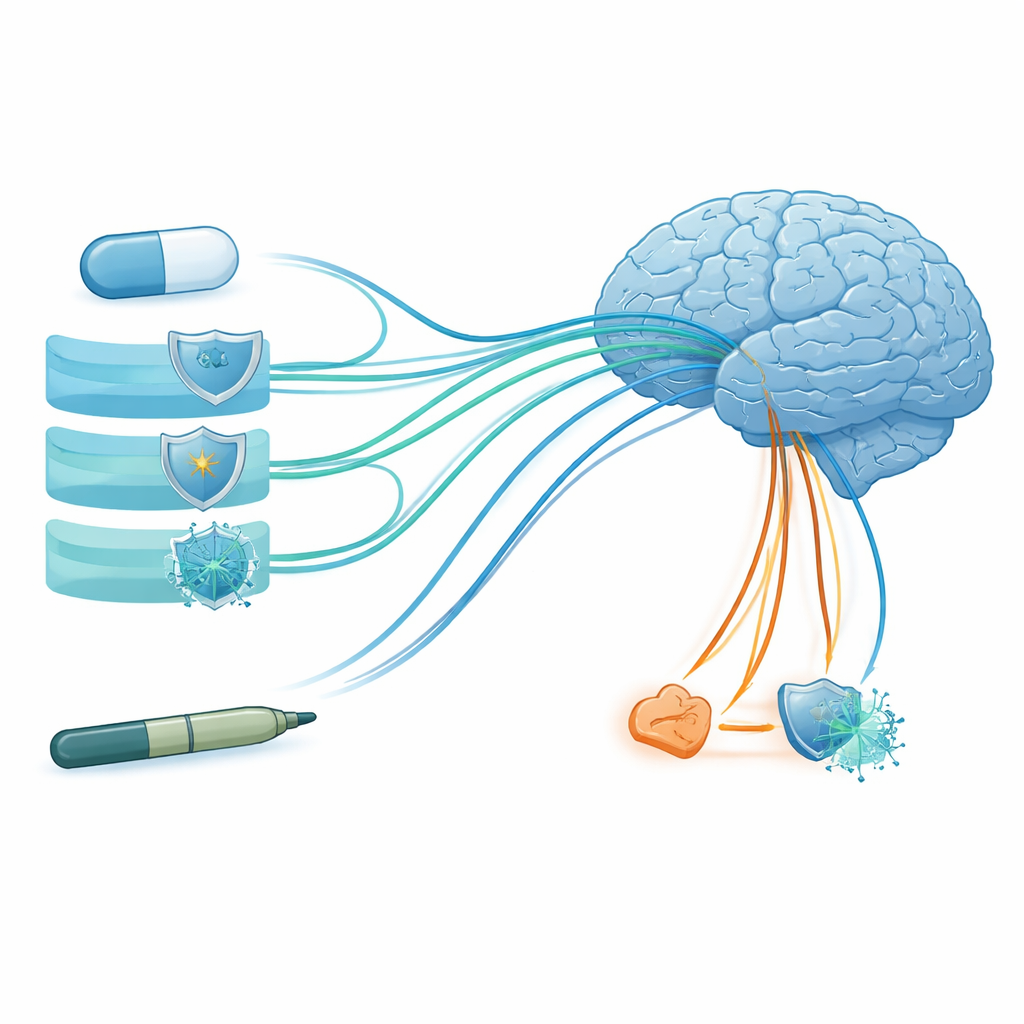
Another intriguing clue came from pathways related to herpesviruses, which have been implicated as possible contributors to Alzheimer’s. The network suggested that metformin can indirectly influence several viral infection pathways through its main targets, hinting that part of its benefit might involve tamping down chronic viral activity that harms the brain. However, when the team used a genetic method called Mendelian randomization to ask whether inherited changes in drug target genes alter Alzheimer’s risk, they found no clear causal signal for either metformin or semaglutide. This suggests that any protective effect probably acts through modifiable biological states, such as insulin resistance or inflammation, rather than through fixed genetic variation.
What This Means for Patients and Future Trials
For lay readers, the core message is that not all diabetes drugs are equal when it comes to potential brain benefits. In this comprehensive computational comparison, metformin consistently showed the strongest promise for reducing diabetes‑associated Alzheimer’s risk, while semaglutide appeared far less connected to the brain’s disease pathways despite its impressive impact on weight loss. The authors stress that their work does not replace clinical trials, but it does provide a roadmap for which drugs deserve closer study in people at high risk of dementia. Ultimately, they argue that preventing Alzheimer’s in those with diabetes will require precision medicine—choosing treatments based not only on blood sugar control, but also on how each drug interacts with a person’s genes, immune system, infections, and overall biology.
Citation: Georgiou, A., Zanos, P. & Onisiforou, A. Metformin provides superior neuroprotective potential compared to semaglutide in preventing diabetes-associated Alzheimer’s disease via dual actions. Commun Med 6, 196 (2026). https://doi.org/10.1038/s43856-026-01471-3
Keywords: type 2 diabetes, Alzheimer’s disease, metformin, semaglutide, neuroprotection