Clear Sky Science · en
Minimal benefit of co-testing over HPV primary screening with cytology triage from resource-limited settings in China
Why this matters for women’s health
Cervical cancer is one of the few cancers that can largely be prevented with regular screening, yet many women—especially in rural and low‑income areas—still miss out. Health systems must decide which tests to offer so they can find dangerous cell changes early without overwhelming clinics and laboratories. This study from county programs in central and western China asks a practical question with global relevance: when money, staff, and equipment are limited, which cervical screening approach gives the best balance between catching serious problems and avoiding unnecessary procedures?
Four different ways to look for early warning signs
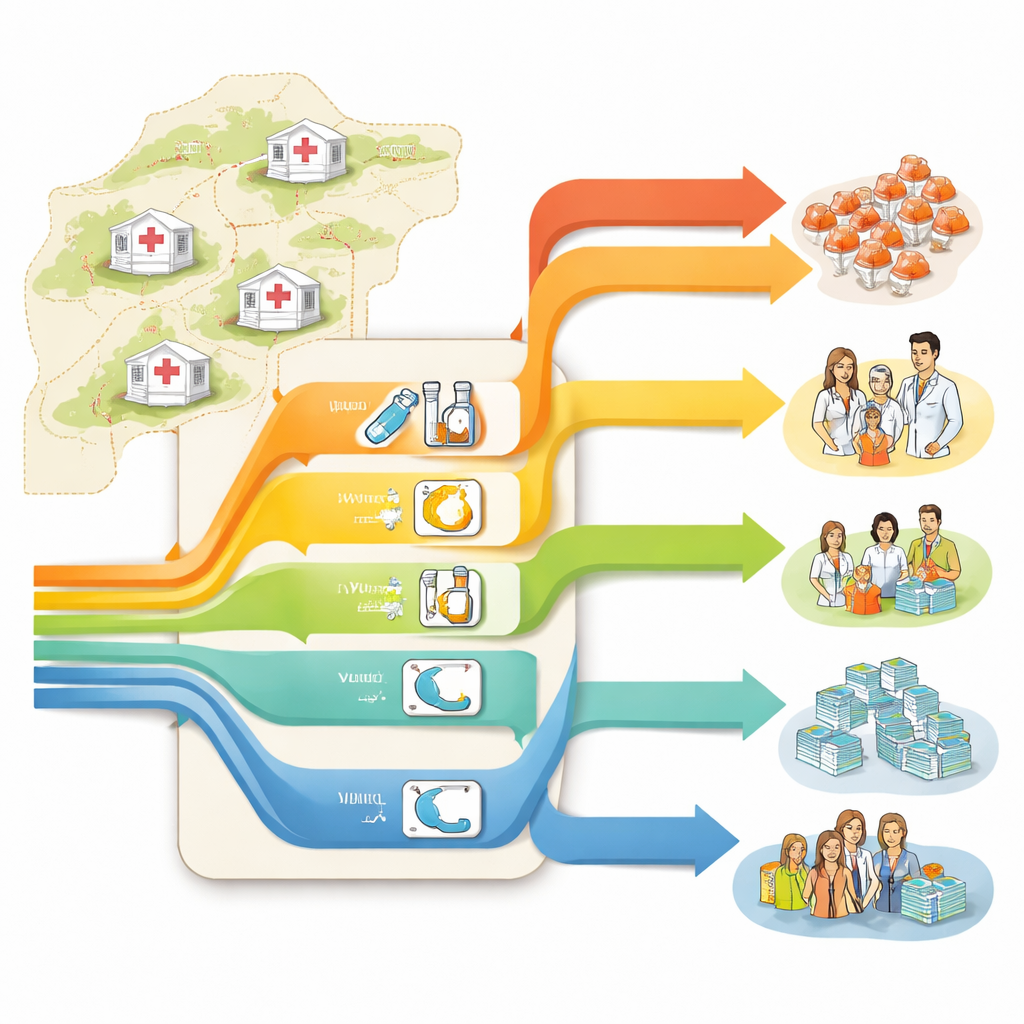
The researchers followed 33,387 women aged 35–64 who attended routine screening at four county clinics. Each woman had two kinds of tests from the same sample: a test for high‑risk types of human papillomavirus (HPV), the virus that causes most cervical cancers, and a microscope exam of cervical cells, known as cytology. Because everyone had both tests, the team could “replay” the results to see how four different screening strategies would have performed: doing both tests on everyone (co‑testing); using the HPV test first and cytology only to double‑check some positive results (HPV primary with cytology triage); using HPV results alone to guide follow‑up (HPV‑only); or relying only on cytology.
What was counted: serious disease and medical workload
The study focused on finding moderate to severe pre‑cancerous changes, grouped as CIN2+—the point at which treatment can reliably prevent cancer. For each strategy, the team counted how many CIN2+ cases would be found per 1,000 women, how many women would be sent to hospital for a close examination of the cervix (colposcopy), and how many cytology slides labs would have to process. They also calculated how many women must be sent for colposcopy to find one true case of CIN2+—a simple measure of how efficiently a strategy uses specialist services. These numbers matter greatly where trained cytology staff and colposcopy slots are in short supply.
Almost the same benefit, very different burdens
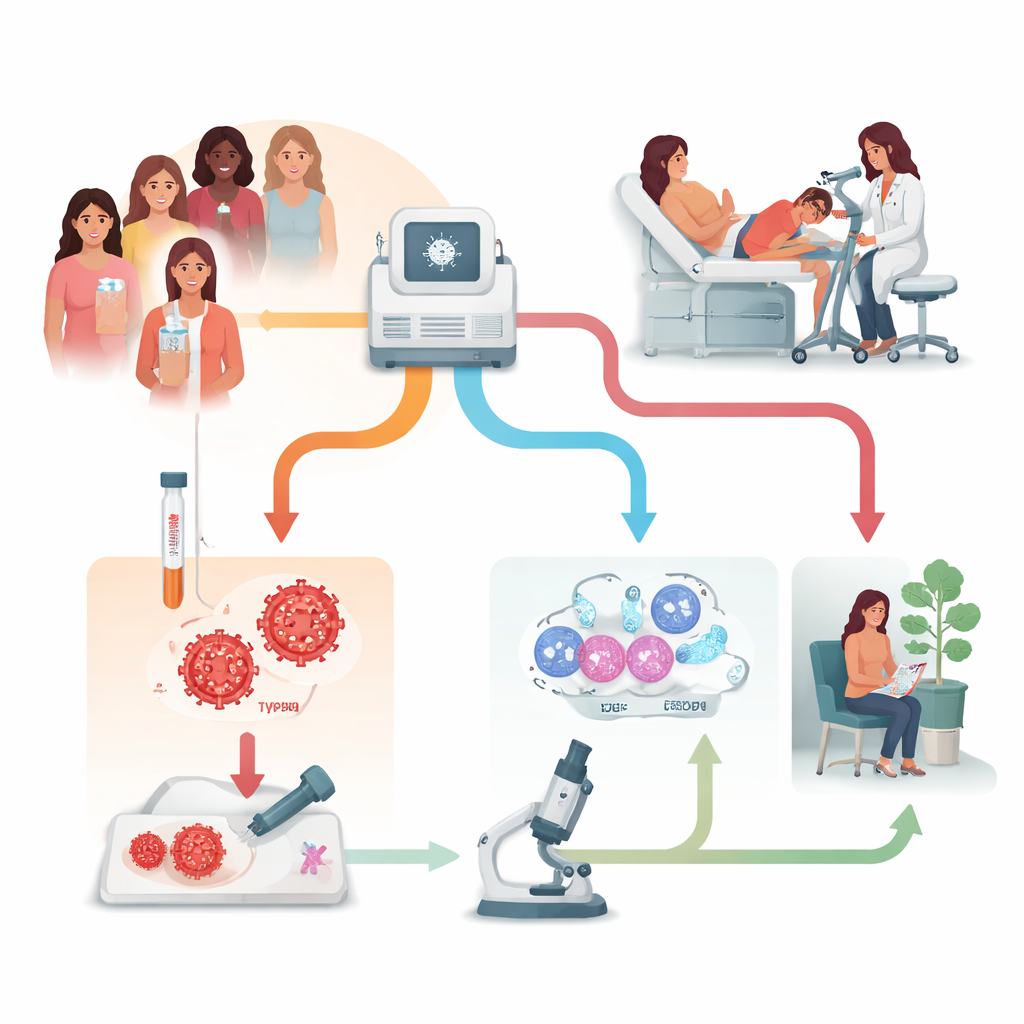
Doing both HPV and cytology for every woman detected 6.7 CIN2+ cases per 1,000 women screened. Using HPV as the first test and reserving cytology for certain HPV‑positive women detected 6.5 cases per 1,000—essentially the same yield. But co‑testing was far more demanding on the health system: for every 1,000 women, it led to about 33 extra hospital referrals and nearly 900 additional cytology slides compared with the HPV‑first approach, while delivering virtually no extra benefit. Cytology‑only screening detected fewer serious cell changes yet still pushed up referrals, whereas HPV‑only screening eased the strain on clinics but missed some treatable disease in women with non‑priority virus types.
Choosing the smartest path in tight settings
When the team compared the four options head‑to‑head, HPV‑first screening with cytology triage stood out as the most balanced strategy. It caught nearly as many serious lesions as co‑testing but required fewer examinations and much less lab work. It also produced a higher share of truly important findings among women who underwent colposcopy, meaning fewer women experienced anxiety and invasive procedures for harmless results. The HPV‑only option may be a reasonable fallback where cytology services do not exist at all, provided women are invited back regularly so that missed cases can be caught later. However, relying only on cytology risks missing too many high‑grade problems and is not advisable.
What this means for women and health planners
For women, the take‑home message is reassuring: a carefully designed HPV‑based program can offer strong protection without subjecting everyone to more tests and hospital visits than necessary. For health officials working with limited staff and budgets, the findings argue against routinely using two screening tests on every woman. Instead, an HPV‑first strategy that uses cytology only for targeted follow‑up can free up resources, reduce unnecessary procedures, and still find dangerous cervical changes in time for effective treatment. This approach supports global efforts, led by the World Health Organization, to eliminate cervical cancer as a public health problem—especially in the rural and underserved communities that need efficient solutions the most.
Citation: Jia, X., Da, X., Shi, J. et al. Minimal benefit of co-testing over HPV primary screening with cytology triage from resource-limited settings in China. Commun Med 6, 191 (2026). https://doi.org/10.1038/s43856-026-01467-z
Keywords: cervical cancer screening, HPV testing, cytology triage, resource-limited settings, women’s health