Clear Sky Science · en
Leveraging electronic health records to examine differential clinical outcomes in people with Alzheimer’s disease
Why this research matters to families
Alzheimer’s disease affects millions of older adults and their families, but not everyone’s journey with the illness looks the same. Some people live for many years at home before needing extra help, while others move into nursing homes sooner or die earlier. This study uses the digital footprints in modern medical records to understand who is most at risk of these serious outcomes, and which health factors might be changed to improve the lives of people living with Alzheimer’s disease.
Looking for patterns in everyday medical care
The researchers tapped into electronic health records from two large health systems in Pennsylvania and Massachusetts, covering nearly three decades of care. These records included not only billing codes and prescriptions but also doctors’ notes, which together offered a rich picture of each patient’s health over time. Because diagnosis codes alone can be unreliable for pinpointing who truly has Alzheimer’s, the team used a computer-based approach to sort through the data and identify patients whose records strongly suggested they had the disease.

Teaching computers to spot Alzheimer’s in the real world
To build a reliable group of patients, the scientists applied an unsupervised “phenotyping” algorithm. In simple terms, they let the computer learn which combinations of clues in the records—such as particular diagnosis codes, medications, and phrases in notes—tend to go together in people with Alzheimer’s. They then checked the computer’s decisions against gold-standard diagnoses from expert-reviewed charts and a long-standing Alzheimer’s registry. The algorithm performed well across different hospitals and demographic groups, making the resulting group of 29,262 patients a strong foundation for studying how the disease unfolds in everyday practice.
Who is more likely to enter a nursing home?
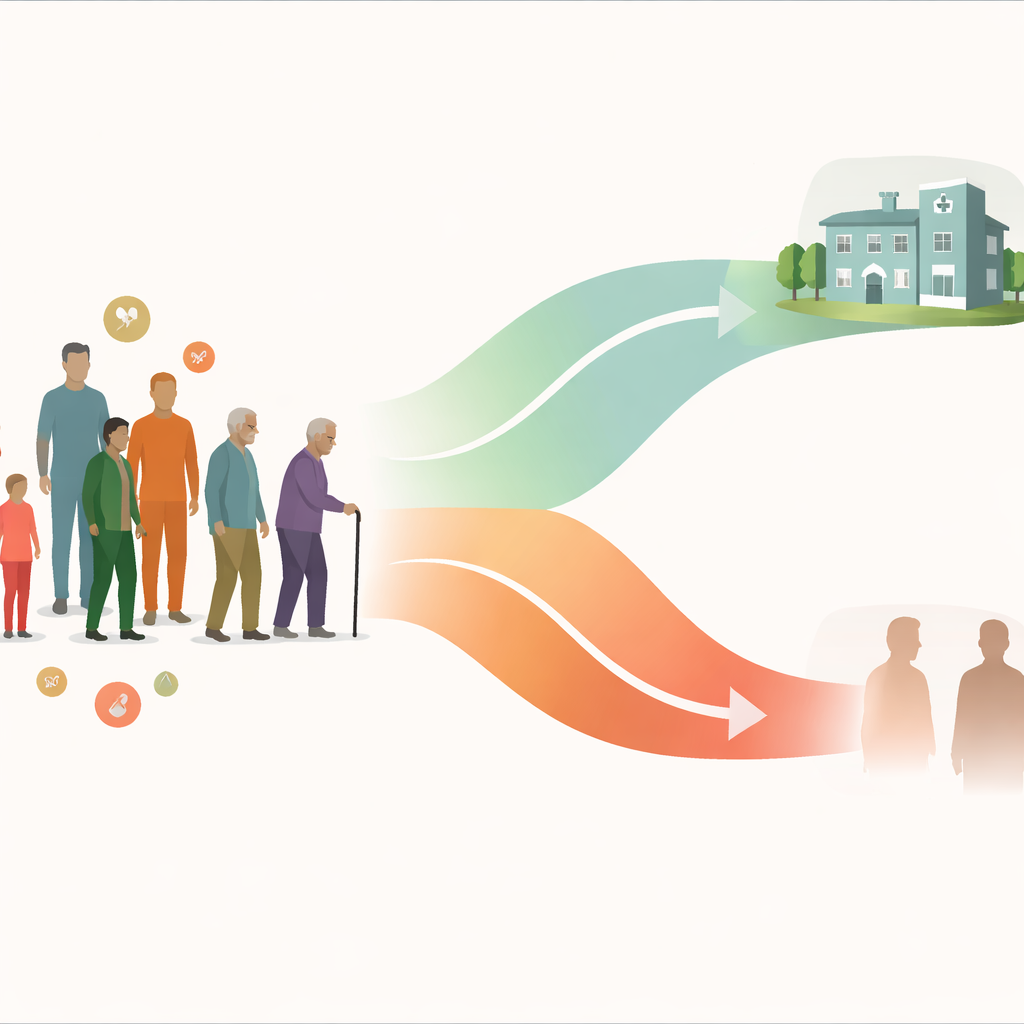
Once the group was defined, the team followed each person from the time of their first documented Alzheimer’s diagnosis to see whether and when they entered a nursing home or died. Nearly half of the patients eventually moved into a nursing home. After taking into account age, other illnesses, and how often people used healthcare services, women were slightly more likely than men to be admitted to a nursing home. Older age at diagnosis and a heavier burden of other medical problems—especially mood disorders, severe mental symptoms like hallucinations, and conditions such as high blood pressure, diabetes, lung disease, and kidney problems—also raised the chances of nursing home entry.
Who faces higher risk of dying sooner?
More than half of the patients died during the study period, but the risk was not the same for everyone. Men had a higher risk of death than women, even though women were more likely to need nursing home care. Non-Hispanic White patients had a higher risk of death than patients from racial and ethnic minority groups. Older age at diagnosis again played a major role, as did serious coexisting illnesses. Cancers, heart and blood vessel problems such as heart failure and circulation issues, and severe psychiatric symptoms all made death more likely. Interestingly, people who had fewer healthcare visits before diagnosis were also more likely to die, suggesting that limited contact with the medical system may leave important problems untreated.
What this means for patients and policy
For a layperson, the main takeaway is that Alzheimer’s outcomes are shaped not only by the disease itself, but also by age, gender, race and ethnicity, and other health conditions. Women with Alzheimer’s are more likely to survive longer but eventually require nursing home care, while men and non-Hispanic White patients are more likely to die sooner after diagnosis. Heavy burdens of additional illnesses and delayed diagnosis further worsen both risks. By showing that these patterns can be detected using routine medical records, this work opens the door to more personalized care plans and to public health policies that focus on earlier diagnosis, careful management of other health problems, and more equitable support for diverse groups living with Alzheimer’s disease.
Citation: Venkatesh, S., Wang, L., Morris, M. et al. Leveraging electronic health records to examine differential clinical outcomes in people with Alzheimer’s disease. Commun Med 6, 250 (2026). https://doi.org/10.1038/s43856-026-01443-7
Keywords: Alzheimer’s disease, electronic health records, nursing home admission, mortality, health disparities