Clear Sky Science · en
Convergent genomic and molecular features predict risk of metachronous metastasis in clear cell renal cell carcinoma
Why some kidney cancers come back
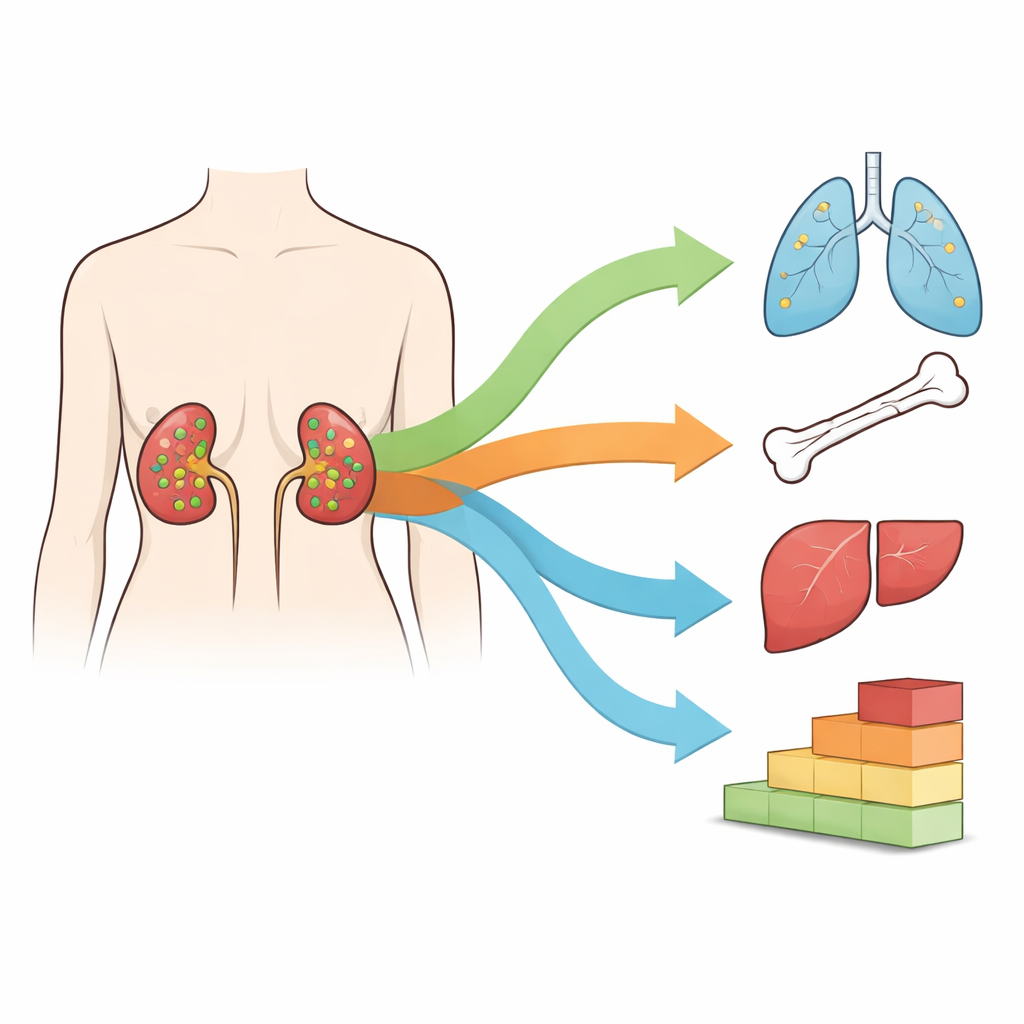
For many people with clear cell renal cell carcinoma, the most common form of kidney cancer, surgery to remove the kidney tumor seems to cure the disease. Yet in about one in three cases, cancer reappears months or years later in other parts of the body. This delayed spread, known as metachronous metastasis, is hard to predict and even harder to treat. The study summarized here asks a practical question with life‑changing consequences: can we read a tumor’s DNA and RNA at the time of surgery to tell which patients are most likely to face a dangerous relapse?
Following patients over years, not months
The researchers re‑examined data from 192 people whose kidney tumors had already been deeply profiled by large cancer projects. Crucially, they added long‑term follow‑up, tracking who developed metastases and when, for up to eight years. This allowed them to divide tumors into three groups: those that were already spreading or did so quickly, those that never spread during follow‑up, and those that looked localized at first but seeded new tumors later. Because the last two groups can look similar on scans and under the microscope, comparing their molecular patterns offered a way to uncover hidden warning signs that ordinary clinical tests miss.
A fragile chromosome region as an early warning sign
At the level of DNA, the team scanned for gains and losses of large chromosomal segments. They found that tumors which later produced metastases were especially likely to have lost a stretch on the short arm of chromosome 1, in a band called 1p31–36. In this region, many genes showed both reduced copy number and lower activity, suggesting that the physical loss of DNA was directly silencing them. Several of these genes, including CYP4A11, are involved in breaking down fatty molecules, hinting that this chromosomal damage might rewire how tumor cells handle fuel and building blocks. This pattern of coordinated DNA loss and gene quieting distinguished future metastatic tumors from more indolent ones that never spread.
How tumor cells and their neighbors change
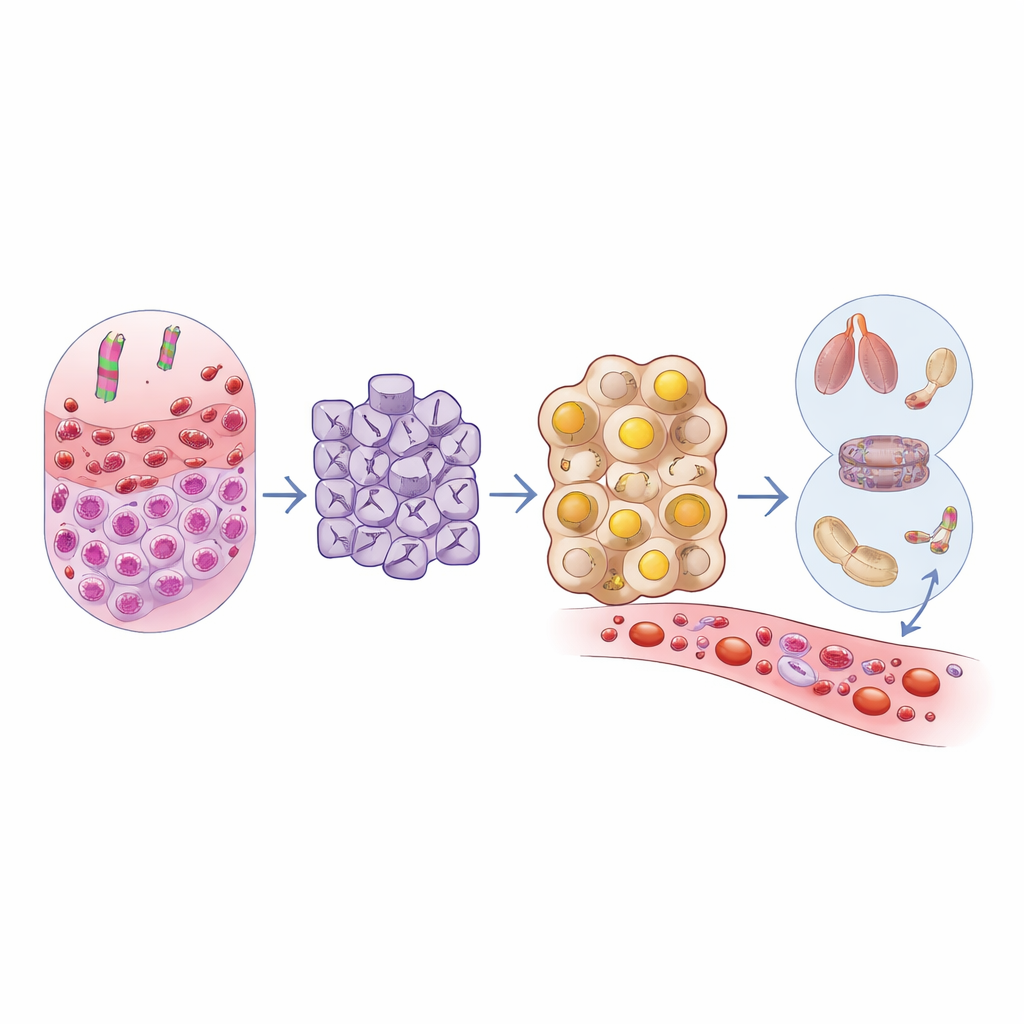
Because a bulk tumor sample mixes cancer cells with supporting and immune cells, the authors used computational methods to “unmix” the data and estimate which genes were active in each compartment. In the cancer cells themselves, tumors that later spread showed reduced activity of genes that help cells keep their orderly, tightly connected architecture. One key player, PATJ, which helps maintain the polarity and tight junctions that keep epithelial cells neatly lined up, was strongly turned down and also sits in the vulnerable 1p region. At the same time, cancer cells showed broad dampening of multiple fatty‑acid breakdown routes, consistent with a shift toward storing fats as droplets inside the cells—a hallmark of this cancer type. In the surrounding microenvironment, the researchers saw fewer signals from certain immune cells, including regulatory T cells and a pro‑inflammatory type of macrophage, suggesting that the local immune landscape in high‑risk tumors is unusually depleted of potentially protective cell types.
From molecular signals to a practical risk score
To turn these insights into something clinicians could eventually use, the team built a statistical model that combines the activity of just five genes: FKBP15, SLC31A1, CPT2, PATJ, and CALR. All five emerged as strong individual predictors of later metastasis. Using cross‑validation, where the model is repeatedly trained on part of the data and tested on the rest, this five‑gene signature more accurately separated high‑risk and low‑risk patients than several existing kidney cancer gene panels designed for recurrence or survival. Patients with higher five‑gene scores had shorter periods without disease, while those with low scores tended to remain metastasis‑free for longer. The model’s performance was also supported when applied to an independent group of patients.
What this means for patients and future care
For a person facing kidney cancer surgery, the biggest unknown is whether the removed tumor has already “planted seeds” elsewhere that will emerge later. This study suggests that certain hidden features—loss of a specific chromosome region, weakening of the cell’s structural order, and suppression of fat‑burning pathways—mark tumors with a higher chance of delayed spread. By distilling these patterns into a compact five‑gene test, the work points toward more tailored follow‑up: patients flagged as high risk could be monitored more closely or considered for additional treatments, while low‑risk patients might avoid unnecessary therapy. Although the model still needs prospective clinical testing, the results offer a clearer molecular picture of why some clear cell kidney cancers come back and how we might better anticipate and prevent that outcome.
Citation: M. Naeini, M., Pang, M., Rohatgi, N. et al. Convergent genomic and molecular features predict risk of metachronous metastasis in clear cell renal cell carcinoma. Commun Med 6, 205 (2026). https://doi.org/10.1038/s43856-026-01436-6
Keywords: kidney cancer, metastasis risk, cancer genomics, tumor microenvironment, fatty acid metabolism