Clear Sky Science · en
Policy mitigation, human drivers and health risks of antibiotics in global aquatic environments
Why Antibiotics in Water Matter to Everyone
Antibiotics have saved countless lives, but the pills and powders that protect us do not simply vanish after use. Much of what people and farm animals excrete ends up, only partly treated, in rivers, lakes and coastal waters. This review pulls together data from more than a thousand sampling sites in 33 countries to show how antibiotic residues are now common in waters, sediments and aquatic organisms worldwide, how this pollution is tied to economic growth and policy, and what it means for human health—from weight gain risks to the spread of drug‑resistant infections. 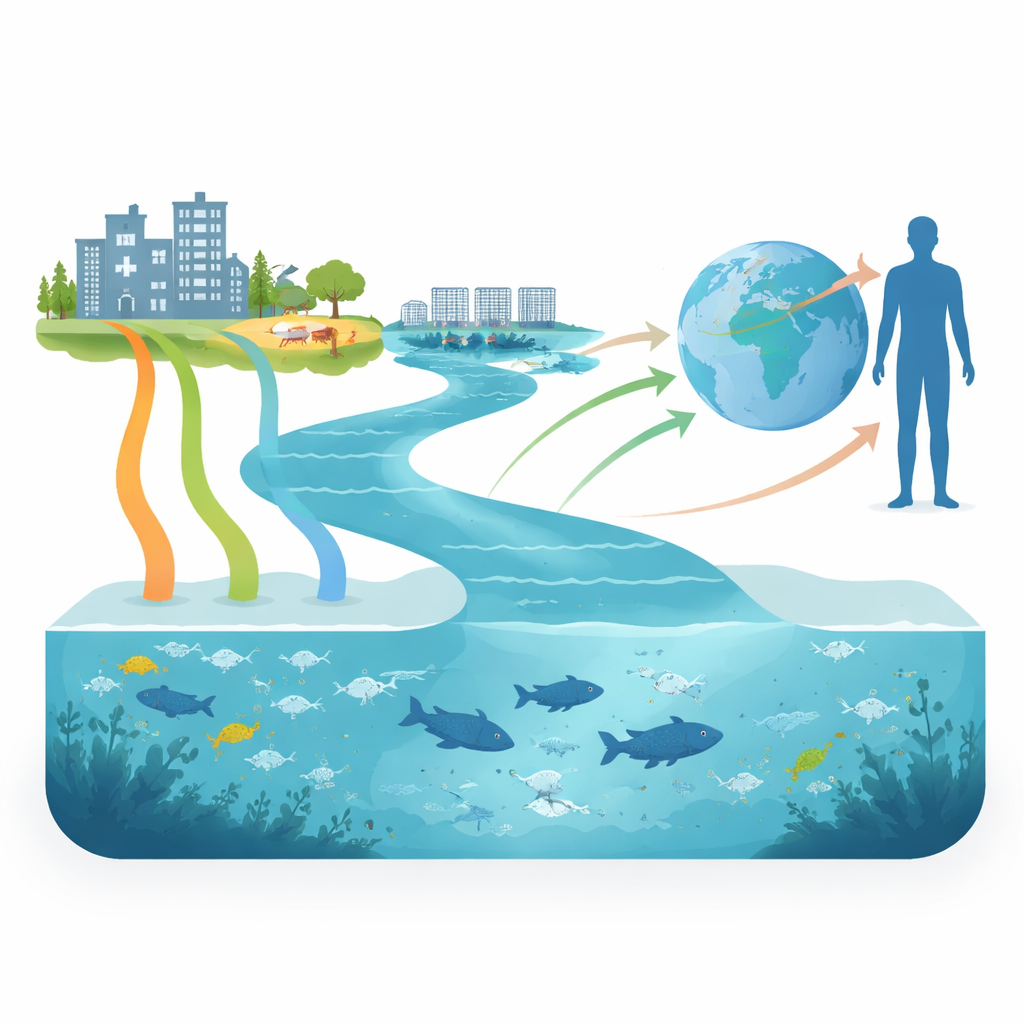
How Everyday Activities Feed Drugs into Rivers and Seas
The authors describe a global cycle in which antibiotics used in hospitals, households, livestock, and fish farms flow through sewage systems and runoff into nearby waters. Four major groups—tetracyclines, fluoroquinolones, sulfonamides and macrolides—are the most frequently detected. Concentrations vary by many orders of magnitude, but on average they are highest in water, somewhat lower in bottom sediments, and lower still in aquatic organisms. Certain fluoroquinolones, such as ciprofloxacin and norfloxacin, stand out for their high levels in rivers and sediments, while drugs like enrofloxacin and oxytetracycline often dominate in fish and other aquatic life, reflecting heavy use in aquaculture and their tendency to cling to tissues.
Rising Trends and the Power of Policy Choices
Looking over the past two decades, antibiotic levels in global waters, sediments and organisms have generally climbed. Yet the pattern is not uniform. In high‑income countries, concentrations in surface waters peaked around 2006 and have since declined, coinciding with bans on using antibiotics as growth promoters in farm animals and tighter controls on medical prescribing. In contrast, many low‑ and middle‑income countries have seen rapid growth in antibiotic use as access to medicines improves and meat and fish production expands. The study introduces a "benefit‑risk" index comparing economic gains from antibiotics with environmental risks; this index has dropped below zero in richer countries, where regulation has curbed pollution, but remains high in many poorer nations, indicating that environmental risks are keeping pace with or outstripping economic benefits.
Unequal Pollution in Different Regions
Antibiotic contamination is not evenly spread across the globe. Rivers in countries such as India, China and Kenya can carry far higher levels than those in the United States or western Europe, and hot spots often cluster between 20 and 40 degrees north latitude—the same belt that hosts dense populations and intensive farming. Sediments, which trap compounds that stick to particles, show a long memory of past use: even where current policies have tightened, older discharges remain locked in the mud. Fish and shellfish mirror the contamination of their surroundings, especially near fish farms and wastewater outfalls, and can accumulate certain drugs that are poorly removed by treatment plants. Over time, the gap in pollution between regions grew and then began to narrow, not because everyone is safer, but because use has leveled off in wealthier states while soaring elsewhere.
From Contaminated Water to Human Bodies
Antibiotics in aquatic environments ultimately return to people, mainly through food and, to a lesser degree, drinking water and recreation. Surveys of urine and blood samples reveal a surprising array of veterinary drugs—compounds intended for animals rather than patients—in human bodies, likely carried in fish, shellfish and other foods. Frequent consumption of contaminated aquatic products is linked to higher internal antibiotic levels. The review highlights early evidence that long‑term, low‑level exposure may nudge the gut microbiome toward weight gain: populations with higher antibiotic loads in aquatic organisms tend to have higher rates of overweight, and young children show particularly strong associations. Even more troubling, environmental concentrations often sit above thresholds that favor the survival of resistant bacteria, and the prevalence of resistant Escherichia coli in people rises with antibiotic levels measured in waters and aquatic life. 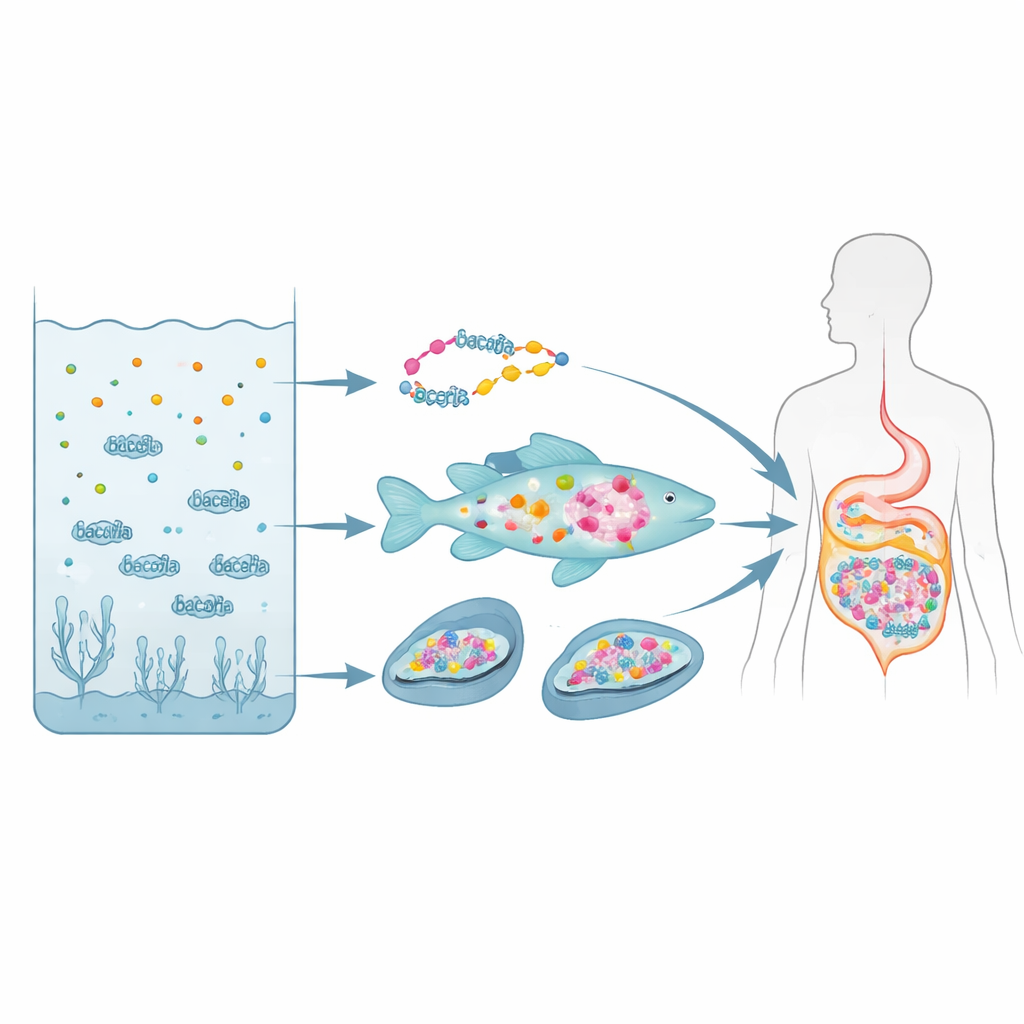
What This Means for Health and the Future
Taken together, the findings portray a world in which the benefits of antibiotics are shadowed by an expanding, and uneven, cloud of pollution. As countries grow wealthier, antibiotic consumption rises, improving survival from infections but also loading rivers, sediments and food webs with drugs that foster resistance and may contribute to obesity and other chronic ills. The authors argue that effective solutions are already visible: stricter rules on farm and aquaculture use, better wastewater treatment, and public education have begun to bend the curve in high‑income regions. Extending such stewardship worldwide—while tracking where and how specific drugs are used—will be essential to keep life‑saving antibiotics effective and to shield both ecosystems and vulnerable people from the hidden costs carried by contaminated waters.
Citation: Zhao, F., Yang, L., Wang, H. et al. Policy mitigation, human drivers and health risks of antibiotics in global aquatic environments. Commun Earth Environ 7, 317 (2026). https://doi.org/10.1038/s43247-026-03453-8
Keywords: antibiotic pollution, aquatic environment, antimicrobial resistance, aquaculture, environmental health