Clear Sky Science · en
Enhanced organic carbon burial in rewetted wetlands precedes long-term stabilization
Why soggy fields matter for the climate
Across farm country, many small wetlands were drained to make way for crops, quietly turning natural carbon storehouses into sources of greenhouse gases. This study asks what happens when we reverse that choice by blocking drainage ditches and letting water return. By digging into sediment cores across Canadian farm landscapes, the researchers trace how long it takes rewetted wetlands to start locking away carbon again and whether they can regain the steady storage seen in untouched sites. 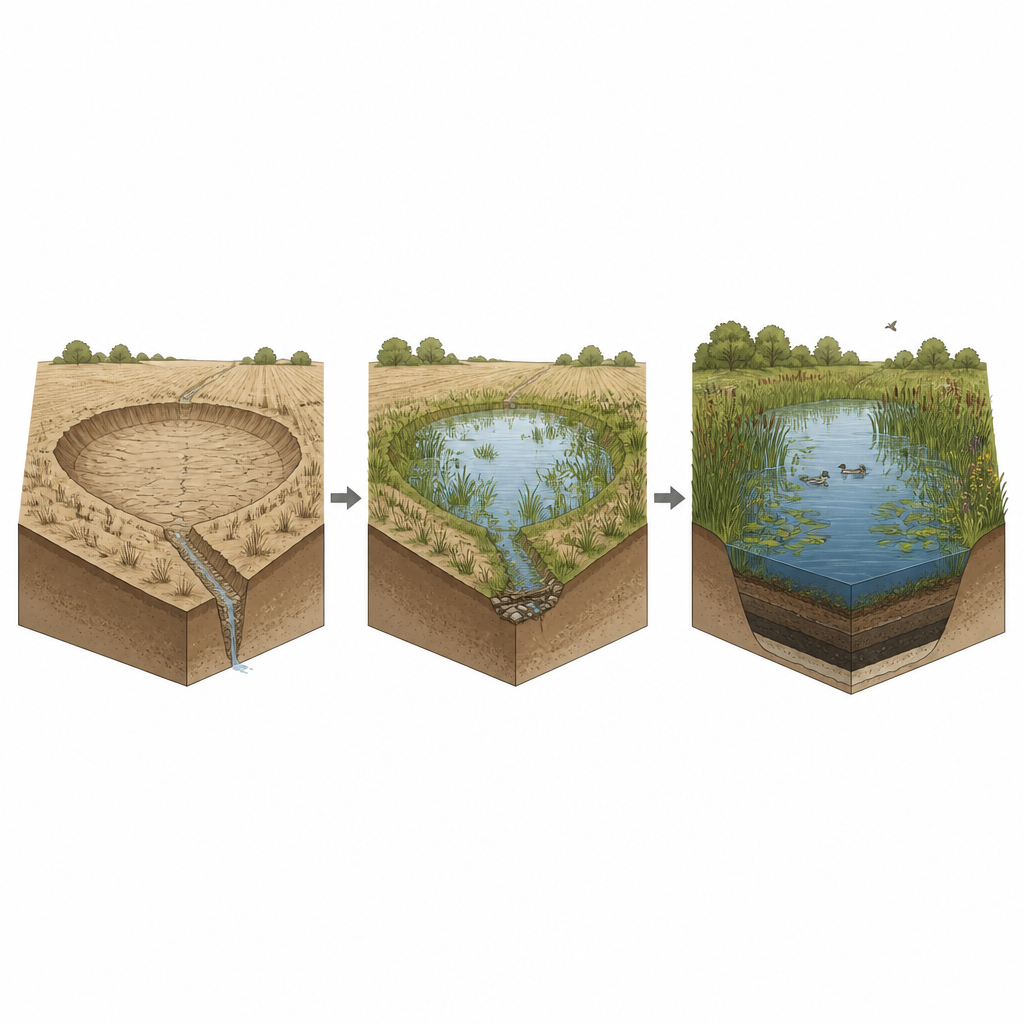
What the scientists set out to learn
The team focused on freshwater wetlands with mineral-rich soils, common in the prairie pothole region and other working lands. They sampled 60 wetlands across southern Canada, including sites that had never been drained and others that were drained and later rewetted between 4 and 40 years ago. Using natural radioactive signals in the sediments as a clock, they reconstructed how much organic carbon accumulated year by year, both before drainage and after rewetting. This let them compare three key stages for the same basins: pre-drainage, drained, and post-rewetting.
How they read the history written in mud
To build these histories, the researchers collected multiple sediment cores from the center of each wetland and sliced them into thin layers. Each layer was dated using lead-210, a naturally occurring isotope that settles from the atmosphere, and cross-checked with cesium-137 from mid twentieth century nuclear tests. They measured organic matter in each layer and converted it to carbon stored per hectare per year. By stacking these dated slices, they estimated baseline burial rates in undisturbed wetlands, pre-drainage rates in wetlands that were later rewetted, and the average rate after water was returned.
What happens after the water comes back
Carbon burial in undisturbed wetlands and in pre-drainage periods turned out to be similar, suggesting that conditions before drainage provide a realistic recovery target. Once ditches were plugged and water levels rose, burial rates jumped quickly. In the first decade or so after rewetting, many wetlands stored noticeably more carbon each year than they had before drainage. Over the following decades, these boosted rates eased off and gradually settled back toward the earlier baseline by around 40 years. 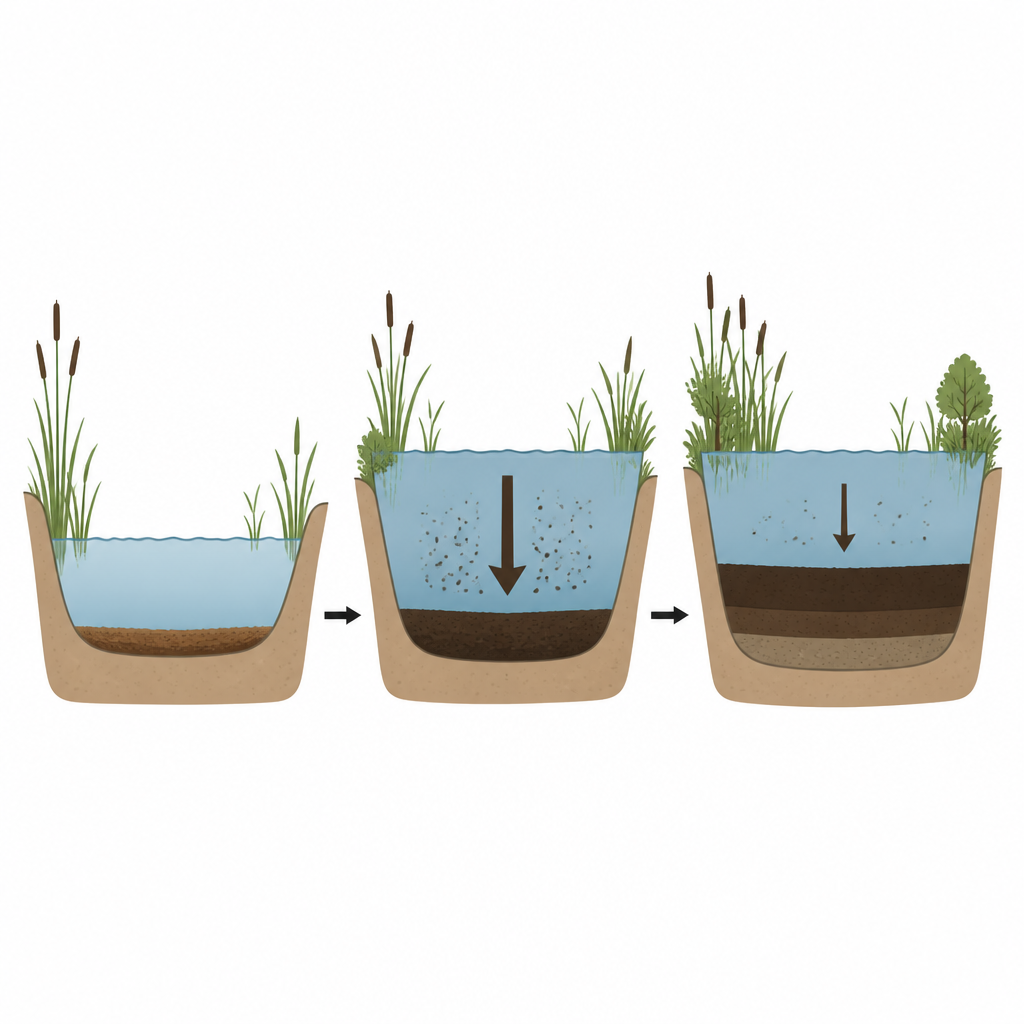
Growing stocks even as speeds slow down
Even while the annual rate of burial slowed toward its earlier level, the total amount of carbon stored in the sediments kept climbing. Across wetlands rewetted for up to four decades, cumulative post-rewetting stocks rose steadily, reaching roughly 25 metric tons of carbon per hectare in some older sites. Larger and older wetlands tended to store more carbon overall, while surrounding cropland, climate, and wetland type influenced how strong and how long the early surge in burial lasted. One site with especially high early accumulation showed that individual wetlands can behave quite differently from the average pattern.
What this means for using wetlands in climate plans
The authors describe an overshoot and stabilization pattern. Rewetting first sparks a surge of carbon burial, then the system gradually relaxes to a long term steady pace similar to pre-drainage conditions, while total carbon stores continue to build. They did not measure greenhouse gas emissions such as methane and nitrous oxide, so they do not claim that rewetting always cools the climate, but they show that sediment carbon storage can be revived and maintained over many decades. For planners considering natural climate solutions, this work provides time based expectations for how restored wetlands in farm landscapes rebuild their role as carbon sinks.
Citation: Mistry, P., Creed, I.F., Trick, C.G. et al. Enhanced organic carbon burial in rewetted wetlands precedes long-term stabilization. Commun Earth Environ 7, 430 (2026). https://doi.org/10.1038/s43247-026-03416-z
Keywords: wetland restoration, carbon burial, rewetting, natural climate solutions, agricultural landscapes