Clear Sky Science · en
Synergizing resource recovery and net-zero emissions in China’s wastewater sector
Turning Dirty Water into a Useful Resource
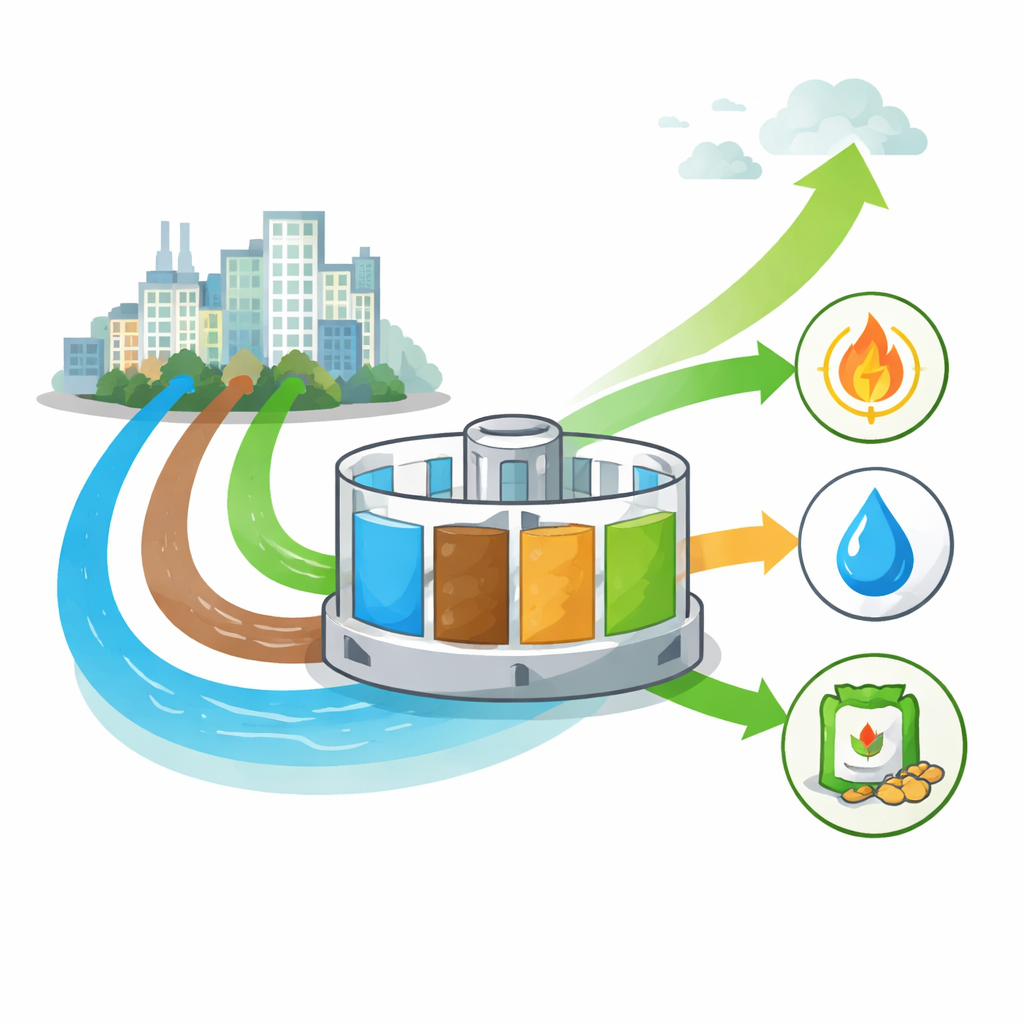
Across China, vast networks of pipes quietly carry away the water we use at home and in factories. Traditionally, wastewater treatment plants have been viewed as necessary but costly shields against pollution. This study argues they can become something much more inspiring: powerful engines that recover energy, produce fertilizer and clean water, and even help pull climate‑warming gases out of the atmosphere. By redesigning how wastewater is treated nationwide, the authors show that China’s wastewater sector could move from being a major emitter of greenhouse gases to a net climate benefit.
Why Wastewater Matters for Climate
Wastewater plants do more than scrub dirty water. As sewage and industrial water are treated, they release methane and nitrous oxide—potent greenhouse gases—along with carbon dioxide tied to electricity and chemical use. When the authors added up all these direct and indirect emissions for China in 2019, they found about 100 million tonnes of carbon dioxide equivalent, putting the sector among the world’s larger industrial polluters. Most emissions come from organic matter and nitrogen breaking down in treatment tanks and sludge handling, plus the electricity needed for pumping and aeration. Urban domestic and commercial wastewater dominates because it is produced in huge volumes and carries high loads of organic carbon and nitrogen.
From Linear Waste to Circular System
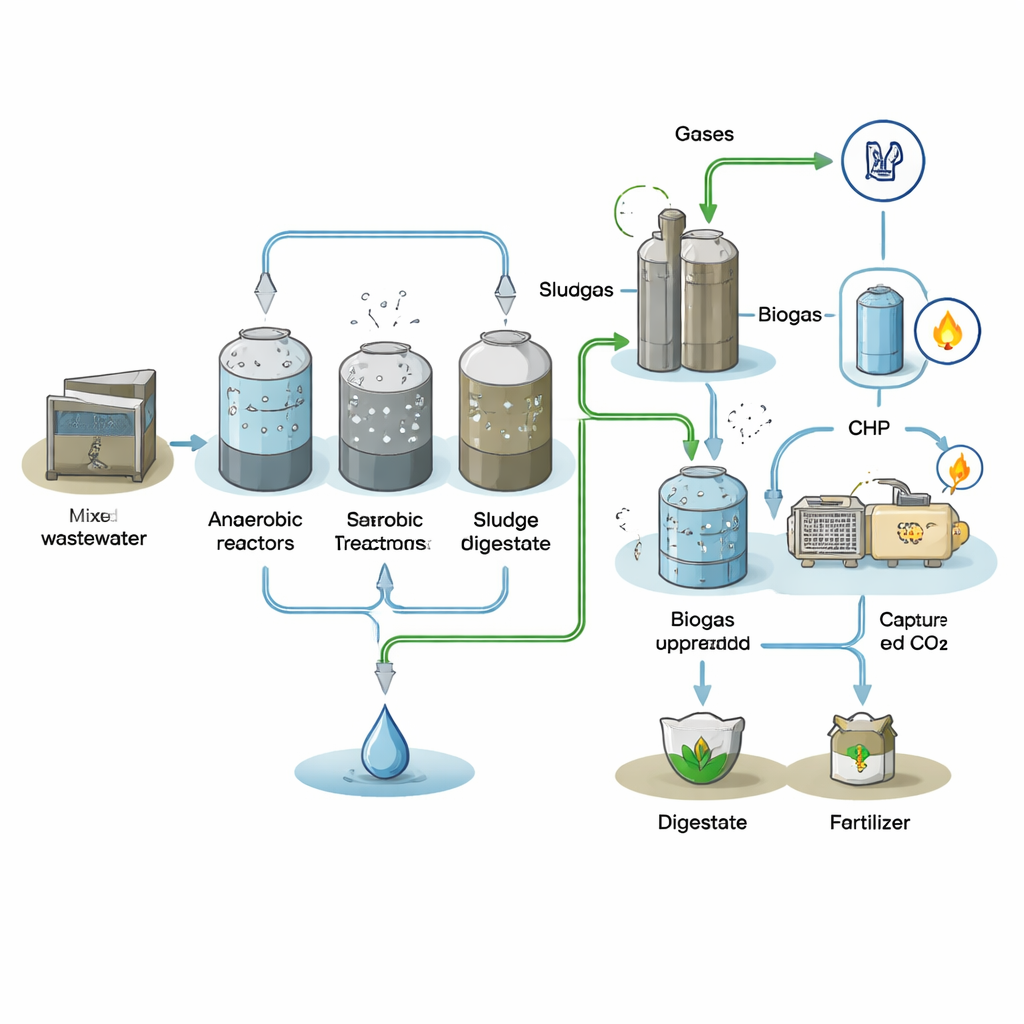
Instead of treating wastewater as something to dispose of, the study designs a life‑cycle system that turns it into a source of energy, water, and plant nutrients. The authors divide the system into four linked units: treatment of water, treatment of sludge, energy recovery and conversion, and supply of energy and chemicals from outside. They introduce mostly mature technologies that can already work at large scale. These include high‑rate anaerobic processes that turn organic matter into biogas, heat pumps that harvest warmth from hot industrial wastewater, and processes that turn digested sludge into biofertilizer. They also explore ways to reclaim treated water for industry and cities, and to bolt carbon‑capture units onto biogas cleaning and combined heat‑and‑power systems so that carbon is trapped instead of released.
How Much Pollution and Energy Can Be Saved
By combining these technologies into six future “what‑if” scenarios, the team tests how far resource recovery can push the sector toward climate goals. When they include the climate benefits of replacing coal‑based power, fossil gas, conventional fertilizers, and freshwater with recovered products, the best-performing scenario turns today’s 99.8 million tonnes of emissions into about 10 million tonnes of net removal. In that design, wastewater treatment not only powers itself through recovered energy but also exports surplus electricity and heat, produces biofertilizer that offsets synthetic fertilizers, and captures carbon from biogas streams. Even when the authors ignore these substitution benefits and look only at on‑site emissions and carbon captured, the advanced system slashes direct process emissions and relies much less on outside energy.
Different Waste Streams, Different Opportunities
Not all wastewater is equal. High‑organic industrial wastewater—rich in food, paper, and chemical by‑products—offers the greatest opportunity because its concentrated carbon yields abundant biogas and heat. In every scenario, treating this stream can deliver net energy gains and even net‑negative emissions on its own. Low‑organic industrial wastewater and municipal sewage are harder to deal with, but still benefit from better treatment schemes. The study also examines wastewater reuse options. A relatively simple filtration and disinfection chain that produces water for non‑drinking uses delivers more climate benefit, at lower energy cost, than an energy‑hungry membrane system designed to supply very high‑purity industrial water. Across China’s provinces, differences in wastewater volumes, composition, and industrial activity generate distinct patterns of energy use and emission reductions, suggesting that regional strategies will be needed.
Balancing Climate Gains and Costs
Transforming the wastewater sector is not free. Some of the most advanced setups, especially those using energy‑intensive membrane reactors and extensive carbon capture, would currently raise overall costs by more than half compared with today’s system. However, the authors highlight more practical near‑term pathways. In particular, combining high‑rate primary treatment, efficient nitrogen removal, sludge digestion to biofertilizer, and targeted carbon capture can cut emissions substantially while increasing costs only modestly—and in some industrial cases, energy and resource sales more than cover expenses. They also point to future cost cuts from cheaper membranes and nitrogen‑removal technologies, plus wider use of heat pumps on both hot industrial effluent and cooler secondary effluent as heat‑use infrastructure expands.
What This Means for Everyday Life
For non‑specialists, the core message is that the water flushed down toilets and drained from factories could become an important climate solution rather than just a waste problem. With thoughtful design and the right mix of technologies, China’s wastewater plants could supply energy, fertilizer, and reusable water while removing more greenhouse gases than they emit. The study maps out realistic technology packages that get close to this goal with manageable extra costs today, and it shows how future improvements could tip the system into net economic gain. In a broader sense, it offers a concrete example of how reimagining existing infrastructure within a circular economy can help societies move toward net‑zero emissions.
Citation: Yang, W., Liu, H., Yao, T. et al. Synergizing resource recovery and net-zero emissions in China’s wastewater sector. Commun Earth Environ 7, 320 (2026). https://doi.org/10.1038/s43247-026-03346-w
Keywords: wastewater resource recovery, greenhouse gas emissions, circular economy, carbon capture, China water infrastructure