Clear Sky Science · en
Igneous and sedimentary origins of Jezero crater units from X-ray crystal mapping on Mars
Rocks at an Ancient Martian Lake
Jezero crater, the landing site of NASA’s Perseverance rover, once hosted a lake and river delta. Today its rocks hold clues to Mars’s volcanic past and watery environments. This study asks a deceptively simple question with big implications: are key rock layers in Jezero built from solidified lava, or from sediments laid down by water and later altered? The answer shapes how scientists read the planet’s history and where they search for signs of ancient life.
A Crater Full of Hidden Clues
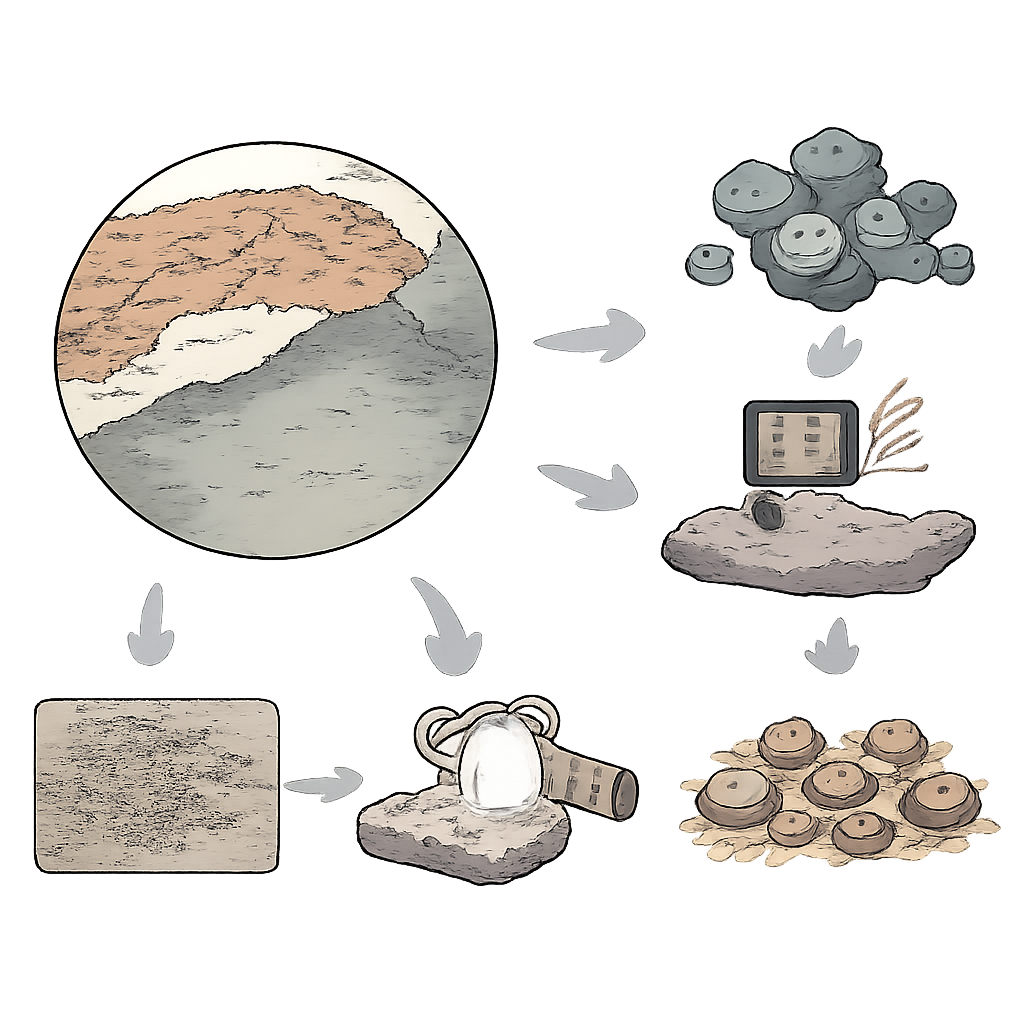
Jezero sits within one of Mars’s largest deposits of the mineral olivine, mixed with carbonate minerals that can form in the presence of water. From orbit, these deposits have been variously interpreted as lava flows, buried magma bodies, water-carried sediments, or volcanic ash. On the ground, Perseverance has explored several distinct units: lava-like rocks on the crater floor, a river delta made of sandstones and conglomerates, and a mysterious "Margin Unit" rich in olivine and carbonate along the western crater rim. Untangling whether each of these formed directly from magma or from redistributed sediment is essential for reconstructing how long liquid water persisted in the region.
Reading Crystals with X‑Rays
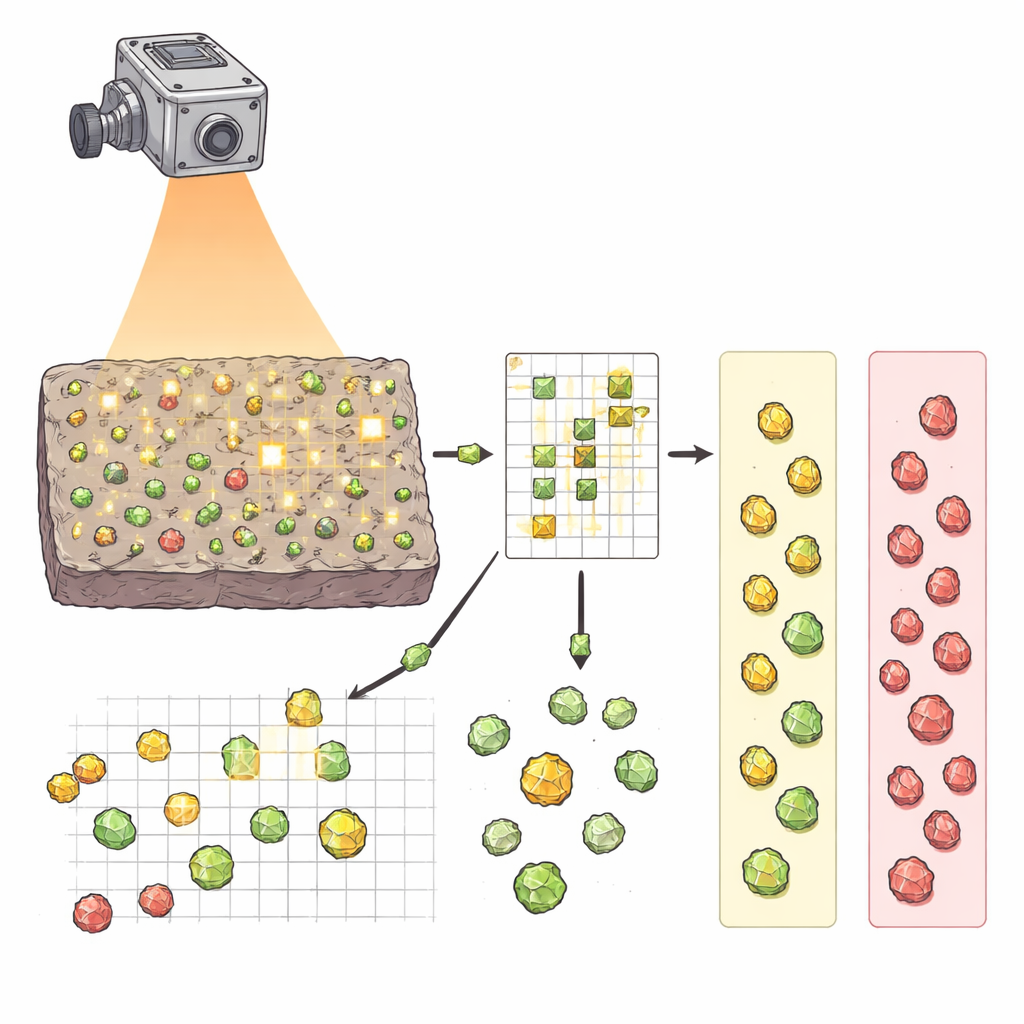
The team focused on olivine crystals as tiny recorders of rock origin. Olivine’s internal mix of magnesium and iron varies depending on the melt or source rock it came from. To read this chemical fingerprint, the study used Perseverance’s PIXL instrument, which fires X‑rays at abraded patches of rock and records both their chemical makeup and faint diffraction peaks produced by crystal structures. These measurements were combined with an automated classification method called MIST that identifies pure mineral spots. By blending spatial patterns, crystal-structure signals, and chemistry, the authors mapped the composition of individual, intact olivine grains while minimizing interference from neighboring minerals—a common problem when analyzing such fine-scale textures remotely.
Different Stories in Different Parts of the Crater
Applying this new approach across more than a thousand Martian days of rover operations, the researchers compared olivine grains from three main settings: igneous rocks on the crater floor, sedimentary rocks in the upper fan (delta), and the Margin Unit. In the crater floor’s Séítah formation, olivine compositions were tightly clustered, matching expectations for crystals that slowly settled from a single magma body, known as an igneous cumulate. Some boulders perched on the upper fan showed a similarly narrow spread but with more magnesium-rich olivine, pointing to a distinct, deeper or more primitive magma source. In contrast, olivine grains within the upper fan sandstones and conglomerates displayed a wide range of compositions, indicating that river processes had mixed material eroded from multiple, chemically different source regions beyond the crater.
A New Look at the Mysterious Margin
The Margin Unit had been debated as either a shoreline deposit or a local expression of the regional olivine–carbonate layer seen from orbit. The olivine crystals there told a more unified story. Their compositions formed a single, relatively narrow population, closely resembling those in the Séítah igneous cumulate unit on the crater floor. The spread in values was modest and could be explained by crystal zoning, subtle measurement effects, or, importantly, by chemical changes from water-driven alteration that preferentially dissolves certain types of olivine. The team saw no sign of the multiple distinct sources expected if the Margin Unit were built from a mix of transported sediments like those in the upper fan.
What This Means for Mars’s Past
By sharpening how PIXL data are used, this work shows that individual crystals on Mars can be treated almost like rock samples in a terrestrial lab. The olivine fingerprints confirm that the crater floor units are products of magmas that crystallized in place, while the fan sediments blend material from several distant sources. Crucially, the Margin Unit—once thought by some to be largely sedimentary—now appears to be dominated by altered igneous rock related to the same magmatic episode that formed Séítah. This points to a more extensive volcanic foundation beneath Jezero’s ancient lake and refines the context for the samples Perseverance is caching for eventual return to Earth.
Citation: Orenstein, B.J., Flannery, D.T., Jones, M.W.M. et al. Igneous and sedimentary origins of Jezero crater units from X-ray crystal mapping on Mars. Commun Earth Environ 7, 283 (2026). https://doi.org/10.1038/s43247-026-03227-2
Keywords: Mars geology, Jezero crater, Perseverance rover, olivine crystals, igneous and sedimentary rocks