Clear Sky Science · en
Glacier-specific controls on enhanced trace metal mobility across global mountain and polar meltwaters
Why melting ice matters for our water
As glaciers shrink around the world, they do more than raise sea level. These rivers of ice also act like giant chemical reactors, quietly hoarding and releasing tiny amounts of metals such as zinc, copper, iron, and lead. When glaciers melt, these metals are flushed into streams, rivers, and ultimately the ocean, where they can either nourish life or become pollutants. This study unravels how different kinds of glaciers – small mountain glaciers versus vast polar ice sheets – release these metals, and what that means for ecosystems and people who depend on meltwater.
Different kinds of ice, different chemical footprints
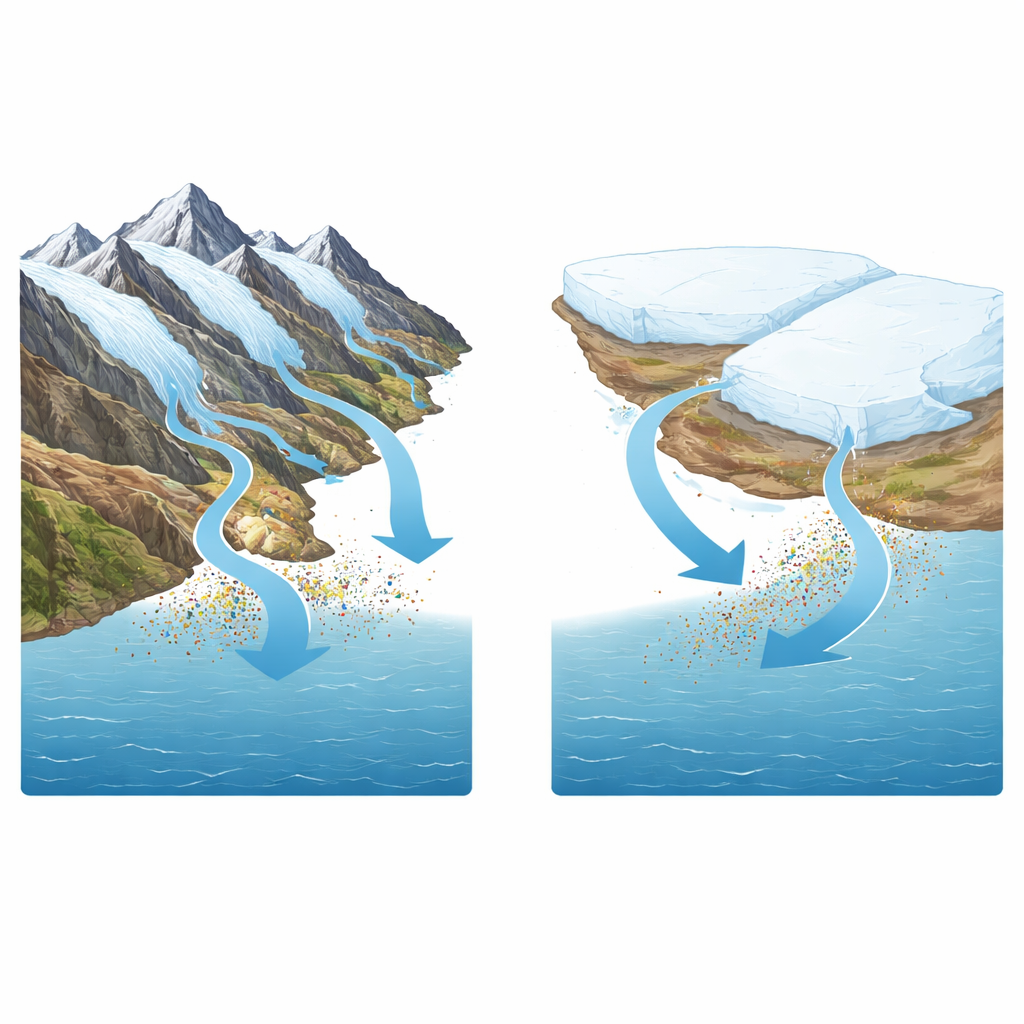
Glaciers are not chemically silent blocks of frozen water. Over decades to centuries, falling snow traps particles from the atmosphere, including dust and pollution rich in metals. At the same time, the ice slowly grinds the rock beneath it into fresh, highly reactive fragments. When meltwater begins to flow, it interacts with this ground-up rock and with stored atmospheric particles, picking up dissolved metals along the way. The authors compiled measurements of dissolved metals from 14 mountain glaciers and 2 ice-sheet outlets spread across the Himalaya, Tibetan Plateau, Andes, Alps, Rocky Mountains, Greenland, and Antarctica. Their goal was to see whether glacier type itself – steep and fast-draining versus broad and slow – helps determine how much metal is released and how easily those metals move.
Tracking how much metal glaciers release
To compare very different places on a common scale, the team relied on two simple ideas. First, they estimated how enriched each metal was in meltwater compared with its average abundance in Earth’s crust. Big enrichments suggest strong weathering, intense atmospheric fallout, or both. Second, they calculated a “mobility” index – a way to ask how easily each metal is carried away by water compared with a reference element that dissolves readily from rocks. Using these tools, they showed that meltwaters from both mountain glaciers and ice sheets often contain metal concentrations one to two orders of magnitude higher than typical world rivers or the open ocean. But the chemical mix is different: mountain glaciers are especially rich in zinc, cobalt, nickel, copper, and cadmium, whereas ice sheets more often export iron and chromium controlled by low-oxygen reactions beneath thick ice.
Why steep mountains are chemical amplifiers
Mountain glaciers tend to sit on varied, metal-bearing rocks and drain through short, energetic channels. Meltwater rushes through fractured bedrock and freshly ground debris, promoting reactions that break down sulfide and carbonate minerals and liberate metals such as zinc, nickel, and lead. Debris-covered glaciers add another twist: rock fragments on the ice surface trap heat and lengthen the time that water spends seeping through sediments, further boosting metal release. In contrast, many parts of the Greenland and Antarctic ice sheets sit on gently sloping beds with slower, more distributed drainage systems. There, water lingers, and low-oxygen conditions favor the gradual release of iron from sediments while other metals are partly trapped on mineral surfaces. The result is that, per unit area, mountain glaciers now release up to six times more zinc, eight times more copper, nineteen times more lead, and about ninety times more cadmium than ice sheets.
A double-edged chemical pulse downstream
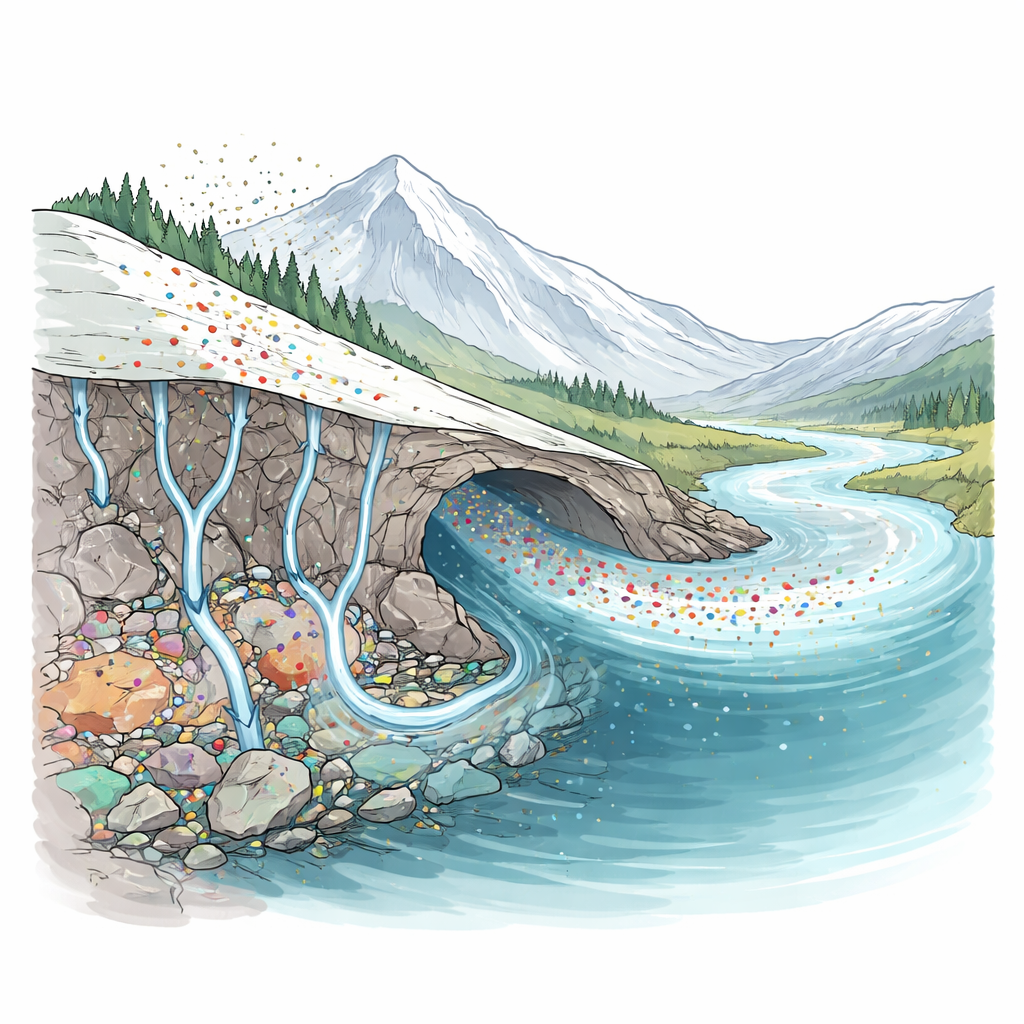
The metals released by glaciers do not simply vanish; they shape downstream rivers, lakes, and coastal seas. Some, like iron, zinc, and cobalt, are vital micronutrients that support algae and bacteria at the base of food webs, especially in nutrient-poor waters. Short bursts of meltwater rich in these elements can act like a natural fertilizer, stimulating biological productivity and influencing how much carbon the ocean can take up from the atmosphere. At the same time, the same meltwater can carry lead and cadmium at levels that approach or exceed aquatic life guidelines, particularly in soft, low-alkalinity headwaters. These pulses often coincide with peak melt seasons, such as monsoon months in the Himalaya or early summer in the Alps and Rockies, delivering brief but intense chemical shocks to fragile ecosystems and to communities that rely on glacier-fed water supplies.
What a warming world means for future waters
This study shows that as climate change accelerates glacier retreat, the world’s high mountains are becoming temporary “hot spots” of metal release. Over the next decades, many small, steep glaciers are likely to send increasing waves of both nutrients and contaminants downstream before they eventually disappear, reducing these inputs in the long term. Recognizing that mountain glaciers and ice sheets behave differently is crucial for forecasting changes in water quality, aquatic life, and even ocean carbon uptake. While we cannot stop the chemical weathering that accompanies ice loss, we can monitor these evolving fluxes, protect wetlands and floodplains that naturally trap metals, and plan water management strategies that reduce risks to ecosystems and people as glaciers continue to shrink.
Citation: Sundriyal, S., Shukla, T., Kang, S. et al. Glacier-specific controls on enhanced trace metal mobility across global mountain and polar meltwaters. Commun Earth Environ 7, 324 (2026). https://doi.org/10.1038/s43247-025-03064-9
Keywords: glacier meltwater, trace metals, mountain glaciers, ice sheets, climate change