Clear Sky Science · en
Advanced carbon-based electrodes for zinc-ion hybrid supercapacitors enhanced by heteroatom doping
Powering a Cleaner, Faster Future
From electric cars to grid-scale solar farms, our world increasingly depends on devices that can store energy safely, charge in minutes, and last for years. Traditional batteries deliver a lot of energy but charge slowly and can raise safety or cost concerns, while classic supercapacitors charge fast but store little energy. This article explores a promising middle ground: zinc-ion hybrid supercapacitors that use advanced carbon materials subtly modified with other elements to deliver both speed and stamina for tomorrow’s energy-hungry technologies.
Why Zinc and Carbon Make a Strong Team
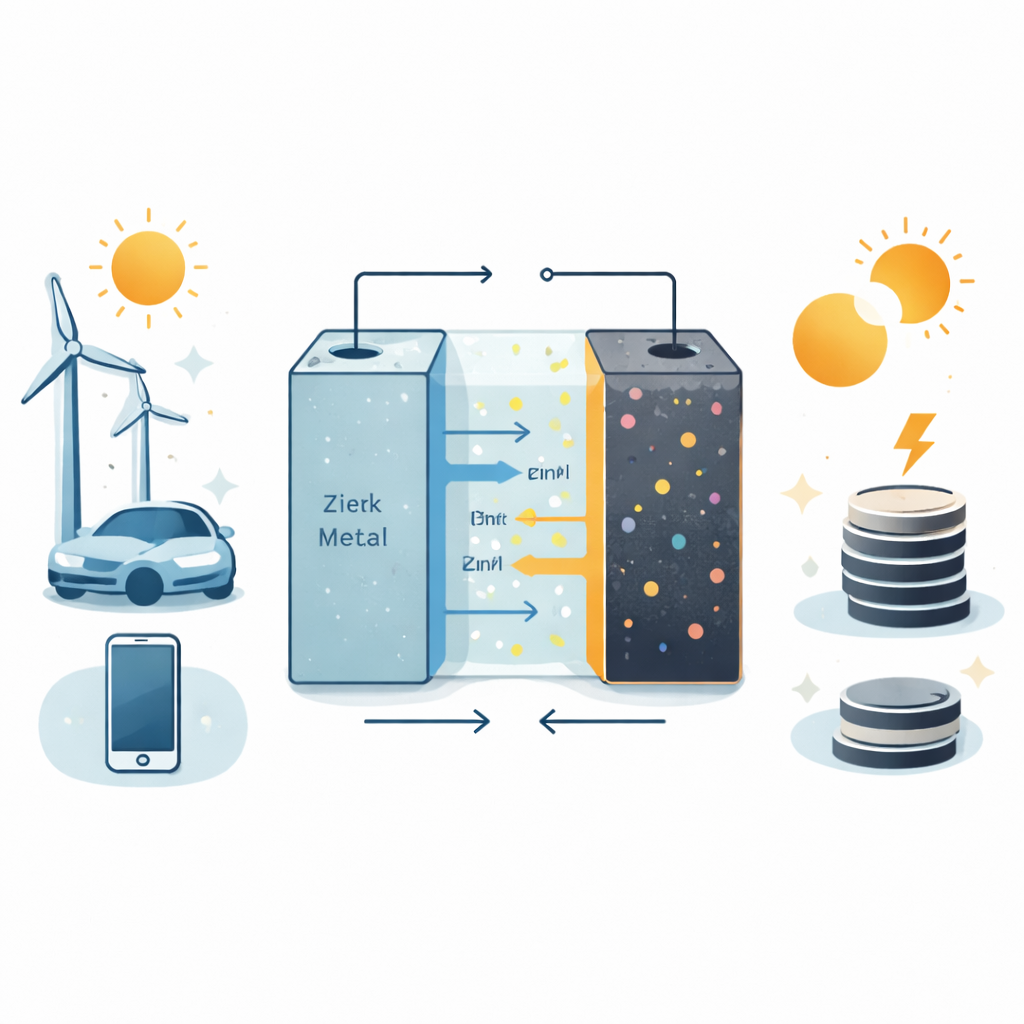
Zinc-ion hybrid supercapacitors pair a zinc metal negative electrode with a carbon-based positive electrode soaked in a watery salt solution. During charging and discharging, zinc ions shuttle back and forth between the two sides, slipping into and out of tiny spaces in the carbon while metallic zinc forms and dissolves on the opposite side. This simple architecture combines the best traits of batteries and supercapacitors: the zinc metal brings high energy storage, while the carbon side offers rapid ion movement and long life. Zinc itself is abundant, inexpensive, and safer than many battery metals, making this platform attractive for both portable gadgets and large stationary systems that must operate reliably for tens of thousands of cycles.
Giving Carbon a Helpful Atomic Makeover
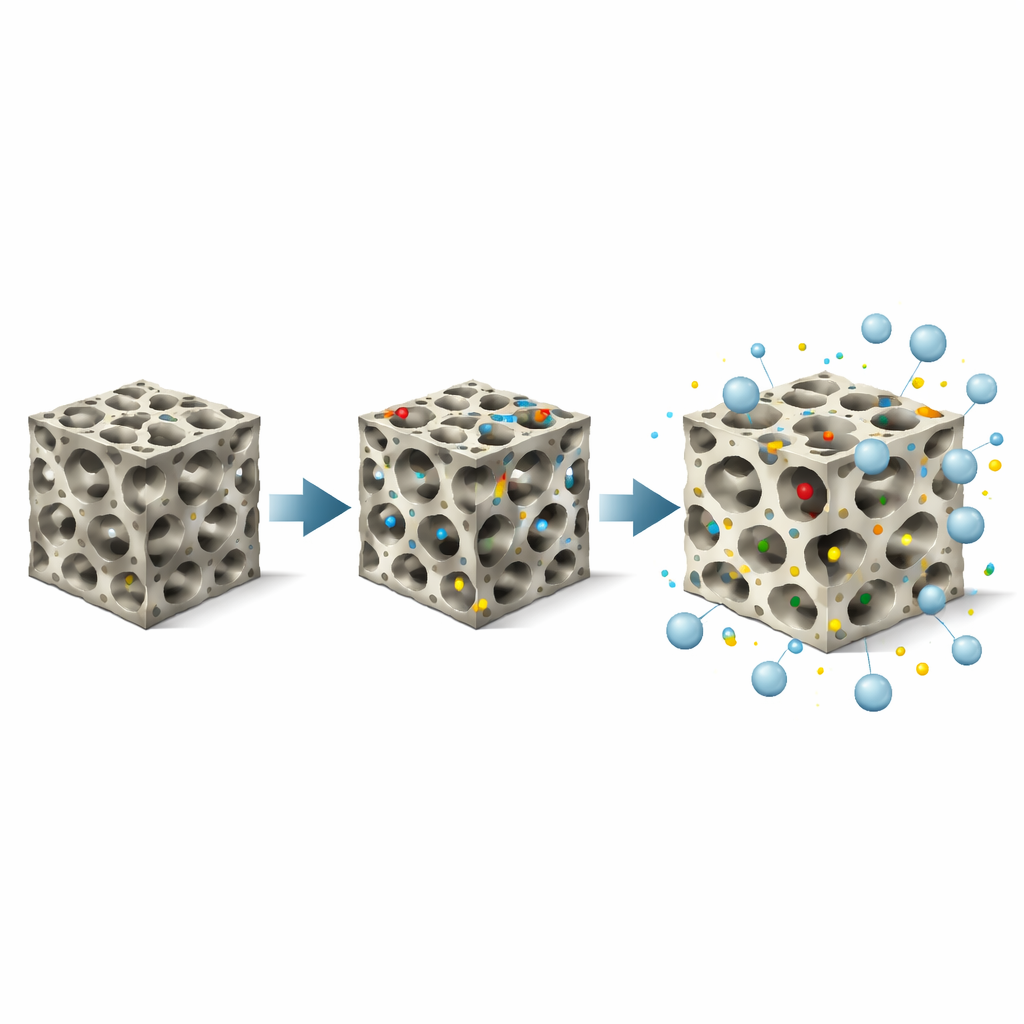
On its own, even very porous carbon has limits: it mainly stores charge by forming a thin, charged layer at its surface, which caps how much energy it can hold. The review shows how “doping” carbon with a small amount of other elements—such as nitrogen, oxygen, sulfur, phosphorus, boron, chlorine, or even selenium—fundamentally changes its behavior. These guest atoms tweak the way electrons are distributed in the carbon framework, create highly active sites that can grip zinc ions more strongly, and improve how easily the liquid electrolyte wets and penetrates the pores. In practice, this turns a passive sponge into an active host that can both attract zinc ions and participate in fast, reversible reactions, boosting capacity without sacrificing fast charging.
Building Better Pathways for Ions
The authors emphasize that structure is just as important as chemistry. The most effective electrodes are built like miniature highways: countless tiny pores that store charge, connected to larger channels that let zinc ions flow quickly in and out. By carefully tuning the mix of very small pores (for high storage) and medium-sized pores (for rapid access), researchers have created carbons that hold energy comparable to some lithium batteries while still operating at supercapacitor-like power. Many of these carbons come from low-cost or waste sources—such as rice straw, coconut shells, chili stems, or passion fruit peel—then are activated and doped in one or two steps, creating sustainable pathways from agricultural residues to high-performance energy devices.
Working Together with Multiple Elements
Going beyond a single dopant, the review highlights a new generation of carbons that host several different elements at once. Nitrogen and oxygen together improve conductivity and water-loving character; sulfur and phosphorus introduce defects and extra reaction centers; boron and chlorine further reshape how zinc ions interact with the surface. When these elements are balanced and spread throughout an open, layered network, they act cooperatively: some sites grab incoming zinc ions, others help them move, and still others stabilize the surrounding liquid. In well-designed materials, most of the stored charge comes from fast, surface-based processes, allowing devices to maintain high capacity even at very high charge and discharge rates and to survive tens of thousands of cycles with little fading.
Design Rules and the Road Ahead
Drawing together results from the past five years, the authors distill practical design rules: keep the overall surface area high but ensure that medium-sized pores make up a substantial fraction; aim for specific ranges of nitrogen, oxygen, sulfur, and other dopants; and favor structures where the most active dopant sites sit near accessible pore surfaces. They also argue that matching each carbon design with the right zinc-containing electrolyte, and standardizing how devices are tested, will be crucial for fair comparison and rapid progress. Looking forward, they envision using machine learning and automated experimentation to search the enormous design space of pore structures, dopant combinations, and electrolytes. For non-specialists, the takeaway is clear: by subtly reshaping carbon at the atomic level and at the nanoscale, researchers are turning a common material into the heart of safe, affordable, and durable energy storage systems that can help power a low-carbon future.
Citation: Ji, Y., Xu, W., Wu, Z. et al. Advanced carbon-based electrodes for zinc-ion hybrid supercapacitors enhanced by heteroatom doping. Commun Mater 7, 103 (2026). https://doi.org/10.1038/s43246-026-01148-3
Keywords: zinc-ion hybrid supercapacitors, heteroatom-doped carbon, sustainable energy storage, porous electrode materials, aqueous electrolytes