Clear Sky Science · en
Impact pathways of a homestead food production programme on women’s dietary diversity in Bangladesh
Why home gardens matter for daily meals
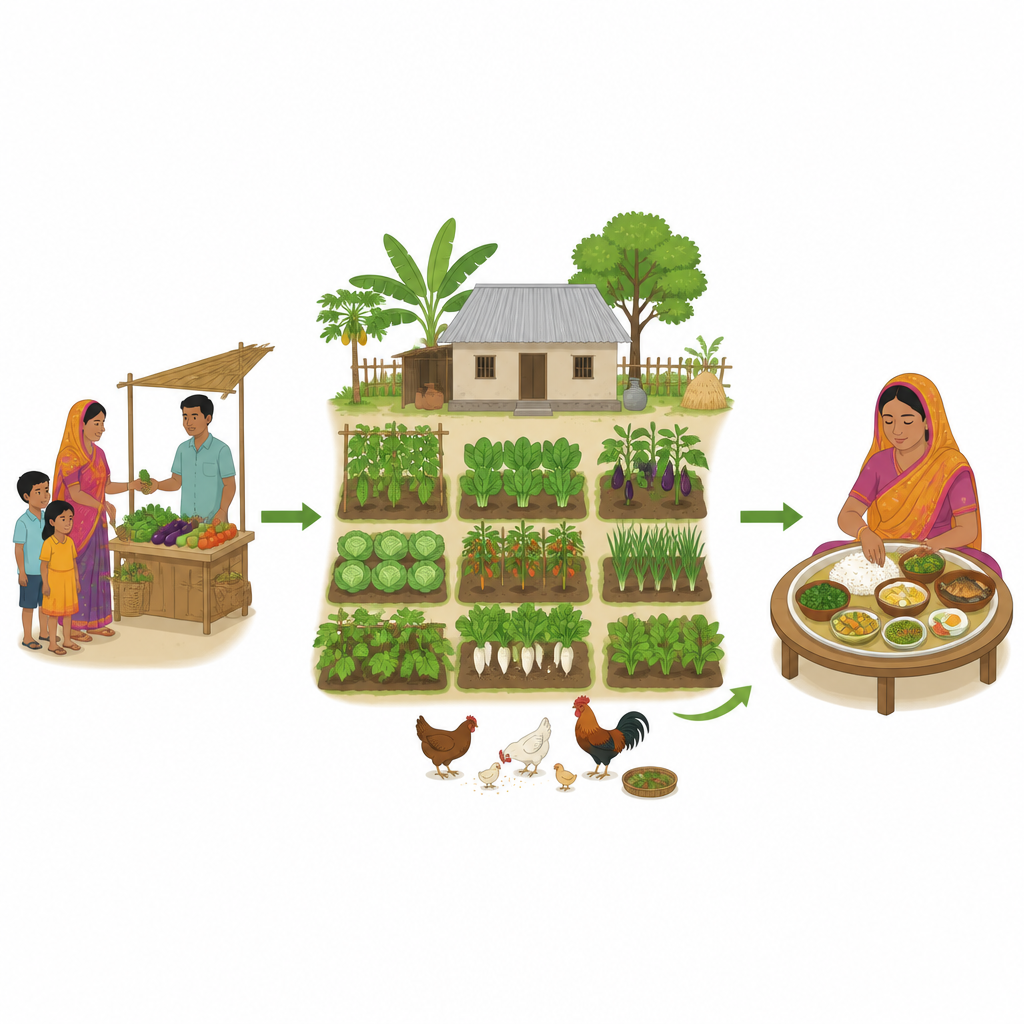
For many families in rural Bangladesh and other low income regions, putting a varied and healthy meal on the table is a daily struggle. Diets often rely heavily on rice, with too few vegetables, fruits or animal foods to supply essential vitamins and minerals. This study asks a simple but important question: when households are supported to grow more diverse foods around their homes, how exactly does that change what women eat each day?
Growing food close to home
The research is based on a homestead food production program that worked with nearly 2,700 young women in 96 rural settlements in northeastern Bangladesh. Women in the intervention group received three years of training and support to establish richer home gardens and small scale poultry flocks, along with sessions on hygiene, food safety and nutrition. Later, some women also received basic guidance on how to use markets, for example to buy or sell food. Women in other similar settlements did not receive this package and served as a comparison group.
Tracking changes in women’s diets
Over several years, trained survey teams visited women regularly to record what they had eaten in the previous day, which crops they had harvested from their gardens, how many chickens and eggs they produced, what they knew about healthy eating, and how often they were involved in buying or selling goods. Using these repeated measurements, the researchers calculated a dietary diversity score: the number of different food groups a woman consumed out of ten possible groups. They then used statistical models designed to trace cause and effect to see how much each part of the program contributed to any changes in diet.
Home gardens as the main driver
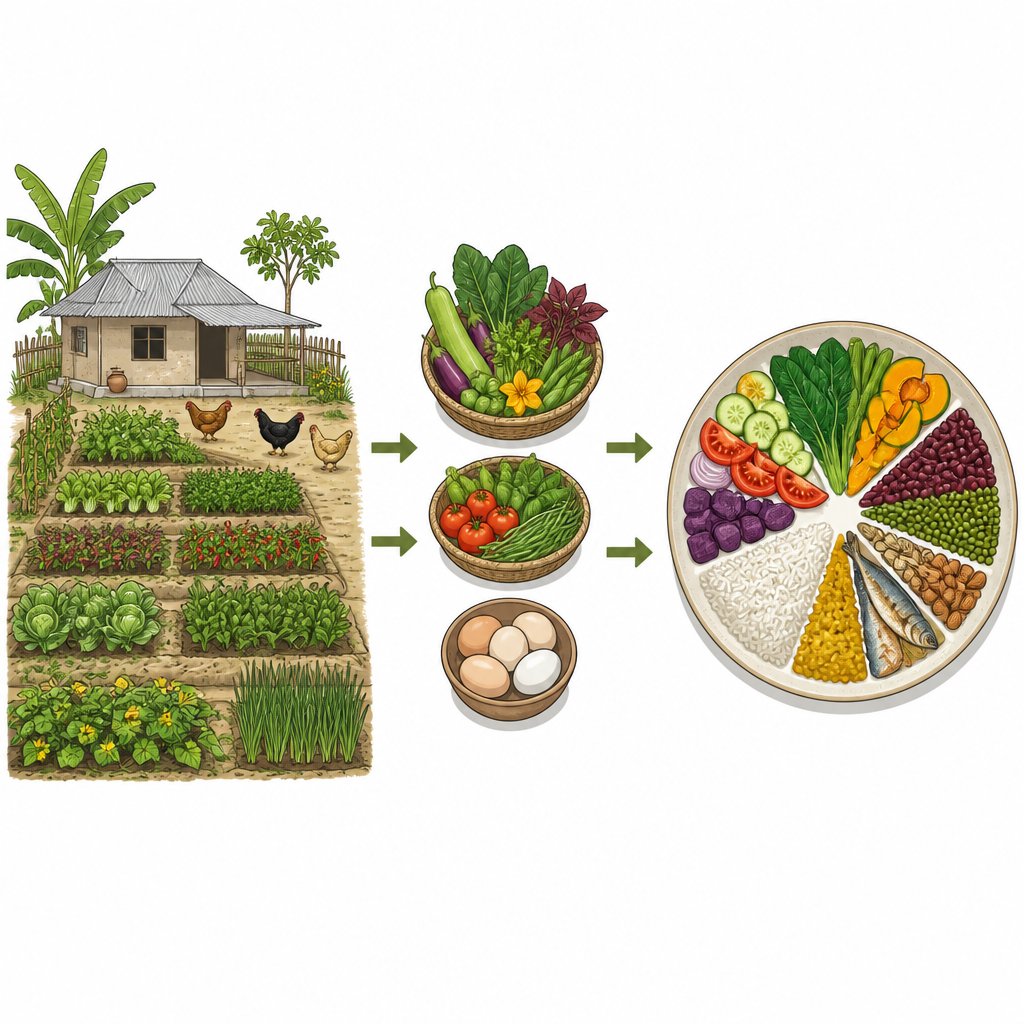
The program increased women’s dietary diversity by about half a food group on the ten point scale, and a larger share of women reached a commonly used minimum standard of diet variety. Almost all of this improvement could be explained by four pathways the team examined: home gardening, poultry production, women’s nutrition knowledge and women’s activity in markets. The clear standout was home gardening. Women in the program harvested roughly five more types of crops and adopted several better gardening practices than women in comparison villages. These gains in garden diversity alone accounted for around three quarters of the improvement in women’s diets, mainly because women ate more of their own vegetables and fruits rather than buying or selling them.
Smaller roles for knowledge, chickens and markets
Nutrition education also mattered. Women who better understood the importance of eating a mix of food groups, and who knew more about the health benefits of specific foods, tended to eat more varied diets. This pathway explained close to one fifth of the total dietary improvement, working both directly and by shaping what women chose to buy when they did engage with markets. In contrast, poultry rearing played only a minor part. Although the program modestly increased the number of birds and eggs, these changes were too small and irregular to shift diets much. Women’s market activity, mainly buying rather than selling food, contributed a small additional share, often by allowing women to redirect money toward foods they could not easily grow at home.
What this means for future programs
In plain terms, the study finds that helping women grow a wider range of crops around their homes is the most effective lever for improving what they eat, with nutrition lessons providing an important extra boost. Efforts to promote small scale poultry or rely heavily on selling produce and using the income for food made a much smaller difference in this setting, where women’s mobility and control over purchases are limited and gardens are geared toward family consumption. For planners and charities designing nutrition focused agriculture projects, these results suggest putting home garden diversity and practical nutrition education at the center of their efforts, while carefully weighing the costs and benefits of more complex components such as poultry schemes.
Citation: Lambrecht, N.J., Sparling, T.M., Mayer, A. et al. Impact pathways of a homestead food production programme on women’s dietary diversity in Bangladesh. Nat Food 7, 464–473 (2026). https://doi.org/10.1038/s43016-026-01354-9
Keywords: homestead food production, dietary diversity, home gardening, nutrition education, Bangladesh rural nutrition