Clear Sky Science · en
Overcoming barriers to micro-scale greening in rapidly urbanizing Sub-Saharan African cities: empirical insights from Ghana
Why small city gardens matter
As many African cities grow at breakneck speed, yards and courtyards are being covered with concrete, tiles and asphalt. This makes daily life hotter, floods more frequent and neighborhoods less pleasant to live in. This study looks at how very small pieces of greenery—such as trees, hedges, potted plants and green roofs on private plots—could help turn the tide in the Greater Kumasi area of Ghana, and what stands in the way of making this shift.
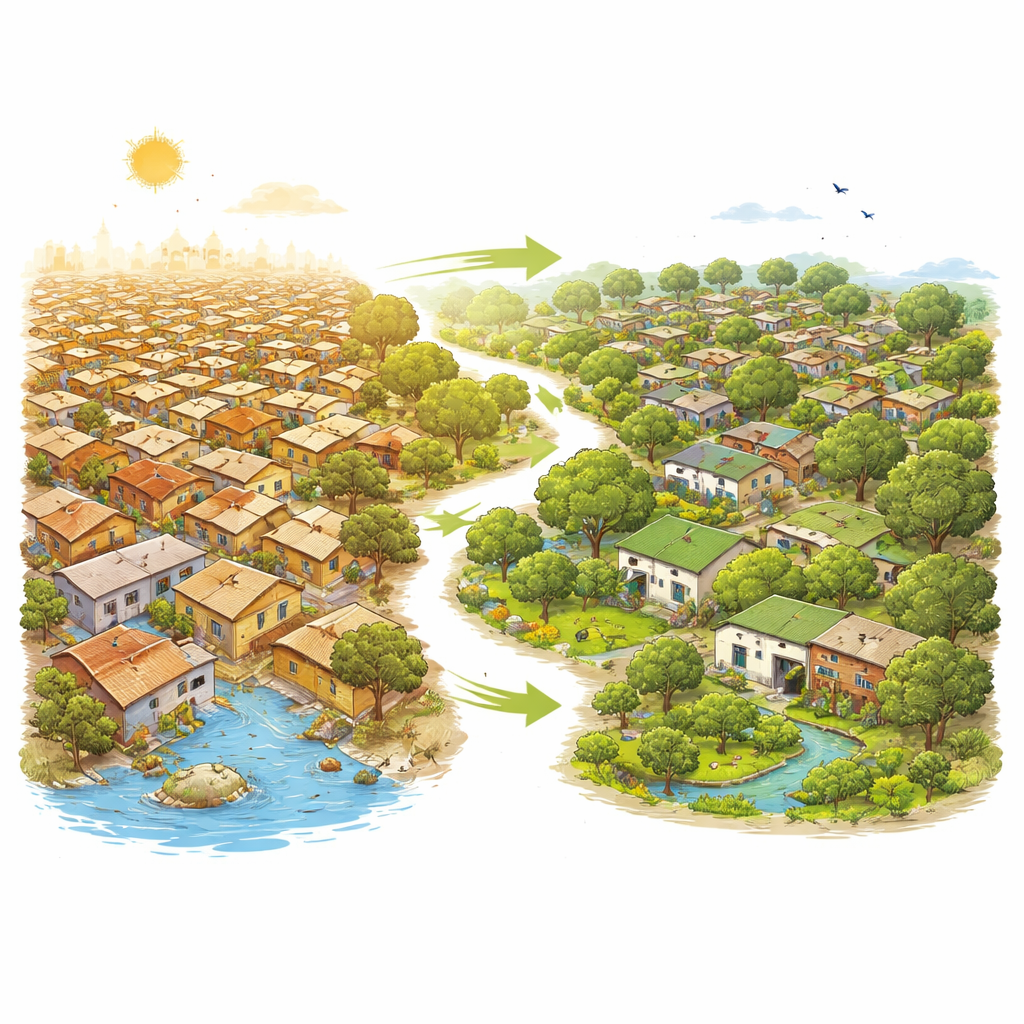
From concrete yards to living spaces
The authors focus on “micro-scale” greening: changes made on individual plots and buildings rather than big parks or forests. In Kumasi, more than half of homeowners have sealed their courtyards, a pattern seen in many rapidly growing African cities. Yet simple measures—like shade trees, rain gardens, permeable paving and vertical gardens—can soak up rain, cool homes, clean the air and even provide food or herbs. The study asks which of these benefits citizens care about most, and how that knowledge can steer practical, neighborhood-level greening.
What residents want from urban nature
Through a survey of 622 residents across low-, middle- and high-income neighborhoods, the researchers found that people are strongly drawn to the direct comforts that greenery brings. Cooling homes, making surroundings more beautiful, purifying air and providing shade were the top-ranked benefits. Poorer neighborhoods leaned toward benefits linked to survival and protection—such as water storage, shade and shelter from wind. Middle-income areas favored a mix of comfort and livelihood, valuing food, income opportunities, cooling and clean air. Wealthier areas prioritized recreation, herbs and improved health and well-being. Using an evidence-based map of which plants and designs deliver which benefits, the study matched these wishes to suitable measures for each neighborhood type, from hedges and shade trees in low-income areas to green facades and roofs where buildings can support them.
What stands in the way of greener yards
Despite this appetite for benefits, many obstacles block small-scale greening. Across the city, money was the most common barrier: establishing and maintaining plants is seen as more costly than simply paving a yard. Low-income areas also struggle with small, crowded plots, disputes over land and insecure tenure, which make long-term investment risky. In middle-income neighborhoods, worries center on water shortages, pests and a lack of skilled landscapers to design and maintain effective solutions. High-income residents are more affected by weak institutions and building rules that still favor solid walls and hard surfaces. Cultural attitudes also matter: sealed compounds are widely viewed as modern and prestigious, while vegetated yards can be seen as old-fashioned or messy.
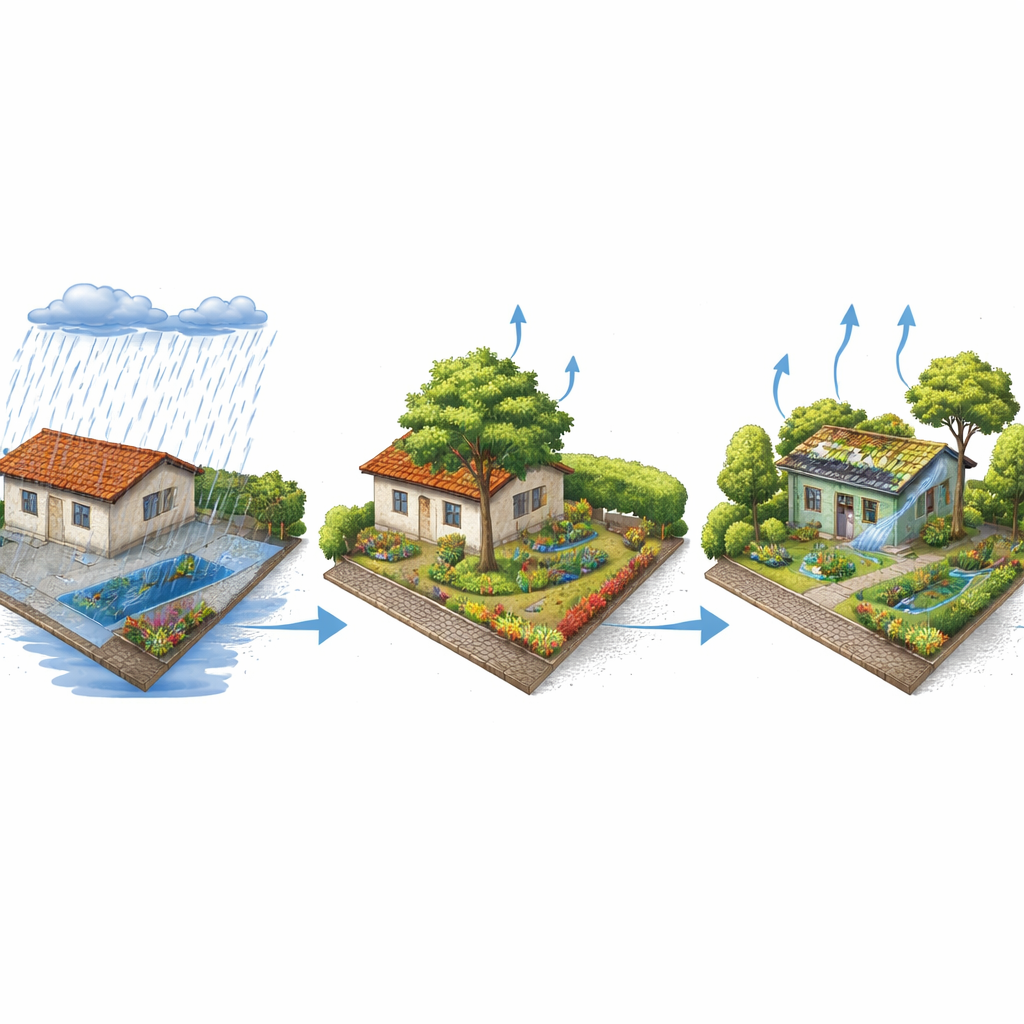
How to unlock everyday greening
To understand how these barriers and possible remedies interact, the team combined statistical analysis of survey responses with a workshop of planners, officials, experts and community representatives. They found that several levers can ease many problems at once. Increased and more reliable public funding clearly reduces financial constraints. Training residents and officials in simple landscape design and maintenance makes greening cheaper and more effective. Awareness campaigns and community outreach can chip away at the idea that concrete equals progress, instead framing greenery as a sign of a modern, comfortable and resilient home. Better coordination between city departments, traditional land authorities and private actors can help local rules and building approvals actively require or reward micro-scale greening.
What this means for fast-growing cities
The study concludes that small, citizen-led patches of nature can play a big role in making rapidly growing African cities cooler, safer and more livable—but only if policies, financing and culture align with what residents value. In low-income areas, the priority is affordable, ground-level measures like hedges, shade trees and food-producing trees, supported by micro-finance and plot designs that reserve space for plants. Middle-income neighborhoods need help with design quality, drought-tolerant species and ongoing care. High-income districts can lead with building-integrated greenery, backed by clearer rules and better institutional coordination. Overall, combining diverse funding sources, practical training, public awareness and flexible, inclusive planning can turn thousands of concrete yards into a connected network of small green spaces that collectively strengthen urban resilience.
Citation: Enu, K.B., Zingraff-Hamed, A., Lupp, G. et al. Overcoming barriers to micro-scale greening in rapidly urbanizing Sub-Saharan African cities: empirical insights from Ghana. npj Urban Sustain 6, 58 (2026). https://doi.org/10.1038/s42949-026-00372-7
Keywords: urban greening, nature-based solutions, micro-scale green infrastructure, Sub-Saharan African cities, flood and heat resilience