Clear Sky Science · en
China’s mega-city clusters grab water resources and carbon credit from vulnerable hinterlands
Why city growth hides a water and carbon problem
Modern cities feel far removed from the rivers, farms, and coalfields that keep them running. Yet every bag of rice and kilowatt of electricity pulled into a city also pulls in hidden water use and carbon costs from somewhere else. This study looks closely at China, where giant urban regions such as Beijing–Tianjin and the Yangtze River Delta power national growth. The authors show that these mega-city clusters depend heavily on less developed inland regions for both water-intensive goods and carbon-heavy energy, creating an unseen environmental debt that threatens long-term fairness and stability.
How hidden water and carbon move around the country
To trace these hidden flows, the researchers used detailed economic data linking ten major regions and five broad sectors of China’s economy between 2002 and 2017. They focused on two ideas. First is “virtual water”: the freshwater used to grow crops or make products that are later shipped elsewhere. Second is “virtual carbon credit”: the climate value of land and ecosystems that absorb carbon, effectively allowing other places to emit more. By combining regional water use, carbon emissions, and trade patterns in a multi-regional input–output model, they mapped where these invisible resources originate and where they end up.
Who supplies and who benefits
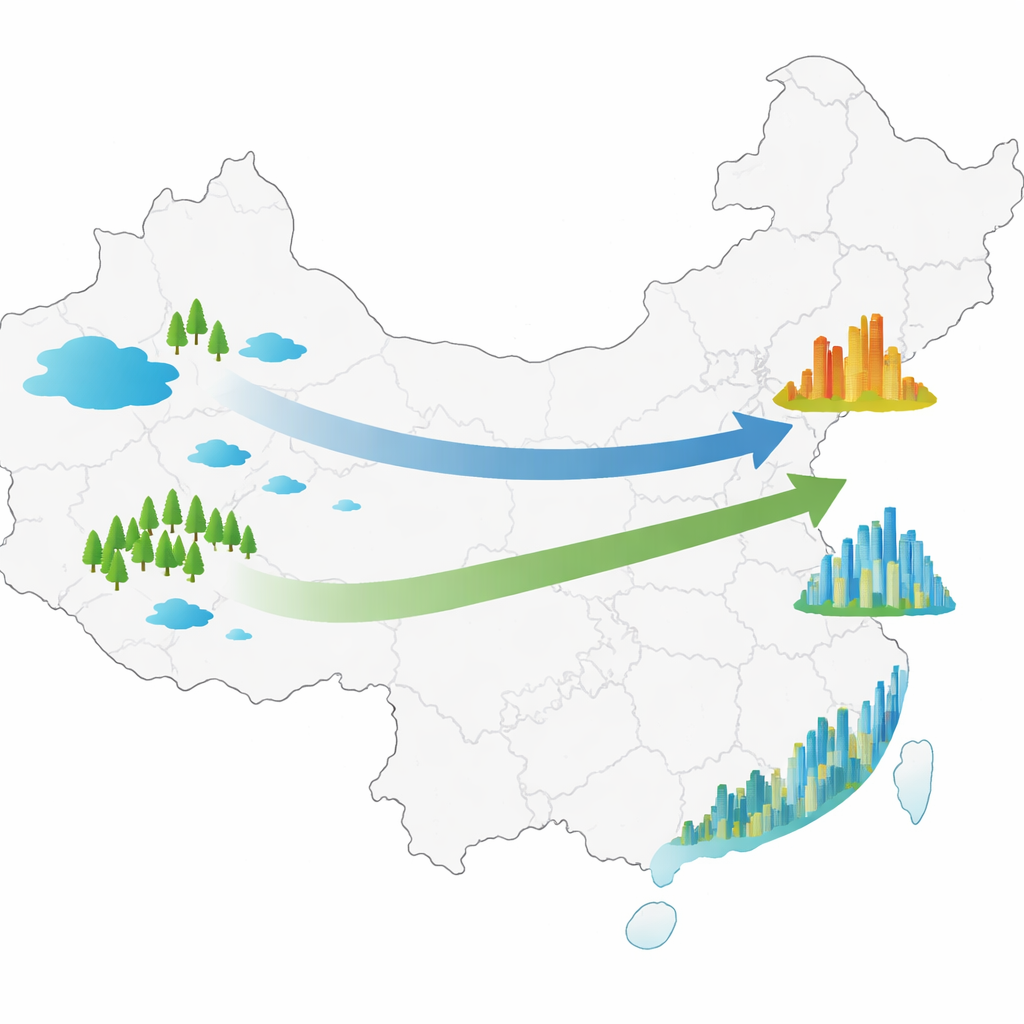
The results reveal a clear divide. Water-scarce but resource-rich northern and western regions grow most of China’s grain and produce most of its energy and minerals. These areas export large amounts of virtual water and carbon credits to coastal mega-city clusters. Over the study period, 72% of virtual water and 85% of virtual carbon credits flowed from inland regions toward affluent coastal cities. Those cities show relatively low local water use and direct emissions, yet their consumption footprints are much higher once imports are counted. In contrast, inland regions bear heavier environmental pressure, with water and carbon stress rising even as they earn comparatively little from the trade.
Strain on water, climate, and local economies
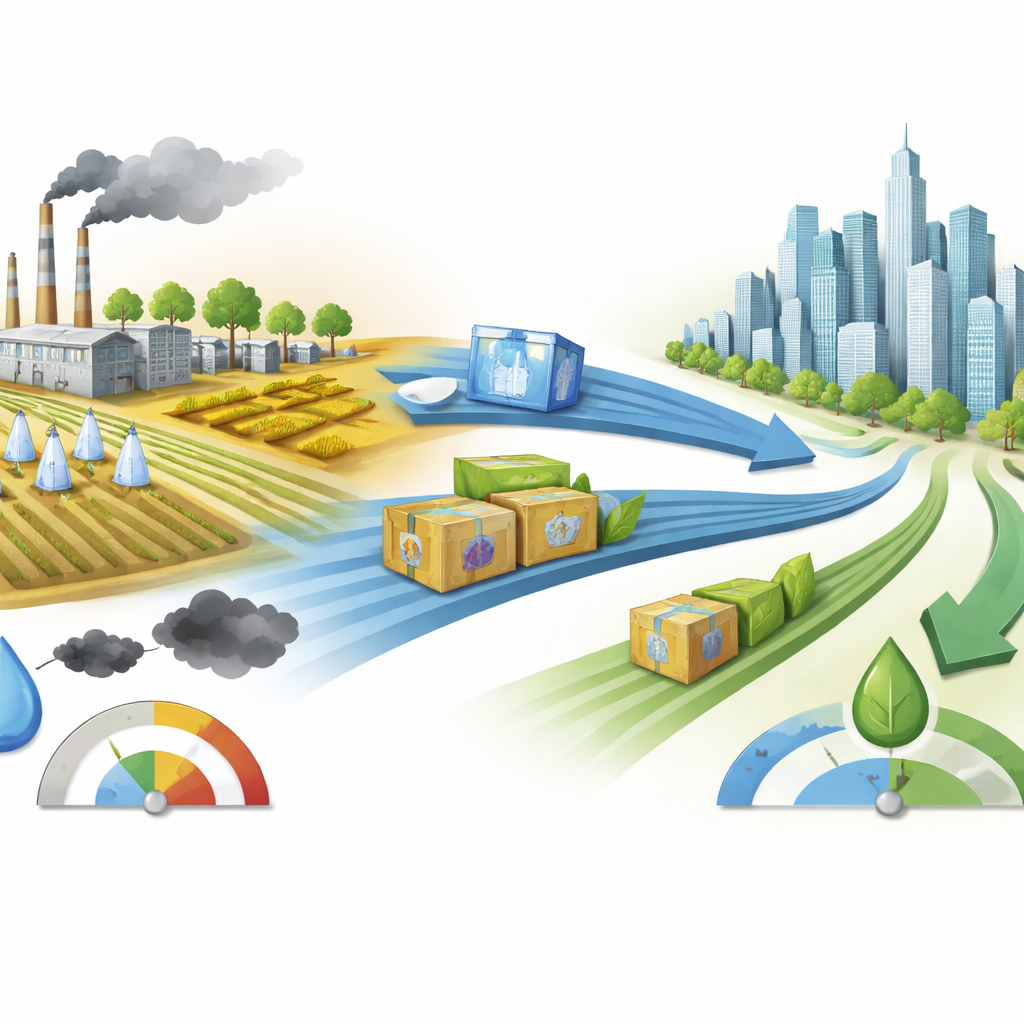
By comparing real-world conditions with a “no-trade” scenario, the authors show that trade allowed mega-city clusters to ease their own water and climate stress by passing it on to inland suppliers. Water stress indices remained below crisis levels nationally only because hinterland regions shouldered more of the burden. For carbon, some city clusters still faced extreme pressure even after outsourcing, highlighting how hard carbon neutrality will be under current growth patterns. Economically, virtual water and carbon trade helped boost China’s overall GDP but held back development in many exporting areas. Inland regions effectively sacrificed 6–9% of potential yearly output so that coastal regions could grow faster, echoing the familiar global pattern where rich centers profit from poorer peripheries.
A new way to judge trade and advantage
Traditional trade analysis tools, such as the widely used revealed comparative advantage index, look only at money flows and export strength. The authors argue this misses a crucial piece: environmental strain. They introduce a new Environment–Trade Comparative Advantage (ETCA) index that blends economic performance with local water shortage and carbon neutrality stress. When this ecological lens is added, several supposed “star” sectors in mega-city clusters lose their edge, while some inland regions gain standing because they provide essential goods despite high pressures. Overall, older metrics were found to overvalue resource-hungry sectors by 18–35%, while ETCA better reflects which patterns of trade are both productive and environmentally fair.
What fairer and safer growth could look like
The study concludes that ignoring these hidden flows undermines the very idea of sustainable cities. The authors propose a mix of production shifts, consumer tools, and financial compensation. Water- and carbon-intensive goods should be made in places with plentiful water and strong ecosystems, while drier and more fragile areas focus on higher-value, less resource-heavy industries. Labels that show a product’s water and carbon footprints—and the stress level of its place of origin—could help consumers choose more responsibly. Most importantly, they model compensation schemes where city regions pay exporting areas for the environmental costs they export, which could cut regional gaps by up to 40%. In everyday terms, the paper argues that city prosperity should no longer rest on invisible withdrawals from vulnerable hinterlands, and that smart accounting of virtual water and carbon can guide more balanced, resilient development.
Citation: Huang, H., Fan, M., Zhang, X. et al. China’s mega-city clusters grab water resources and carbon credit from vulnerable hinterlands. npj Urban Sustain 6, 55 (2026). https://doi.org/10.1038/s42949-025-00279-9
Keywords: virtual water, carbon footprint, urban sustainability, China mega-city clusters, environmental equity