Clear Sky Science · en
Structural basis of Fumosorinone-mediated allosteric inhibition of PTP1B for cancer immunotherapy
Turning the immune system back on
Cancer often grows not just because tumor cells divide quickly, but because they learn how to hide from the immune system. This study explores a natural compound that helps immune cells wake up inside tumors, offering a potential new way to support cancer immunotherapy.
A molecular brake on immunity
Our immune cells constantly rely on chemical signals that tell them when to attack and when to stand down. One key controller of these signals is a protein called PTP1B, which acts like a brake inside cells. In healthy situations this brake helps keep metabolism and inflammation in balance. In cancer, however, PTP1B can dampen the activity of T cells and other immune cells, giving tumors a better chance to escape detection. That has made PTP1B an attractive drug target, but designing medicines that block it without disrupting related proteins has been difficult.
A fungus-derived helper for immune cells
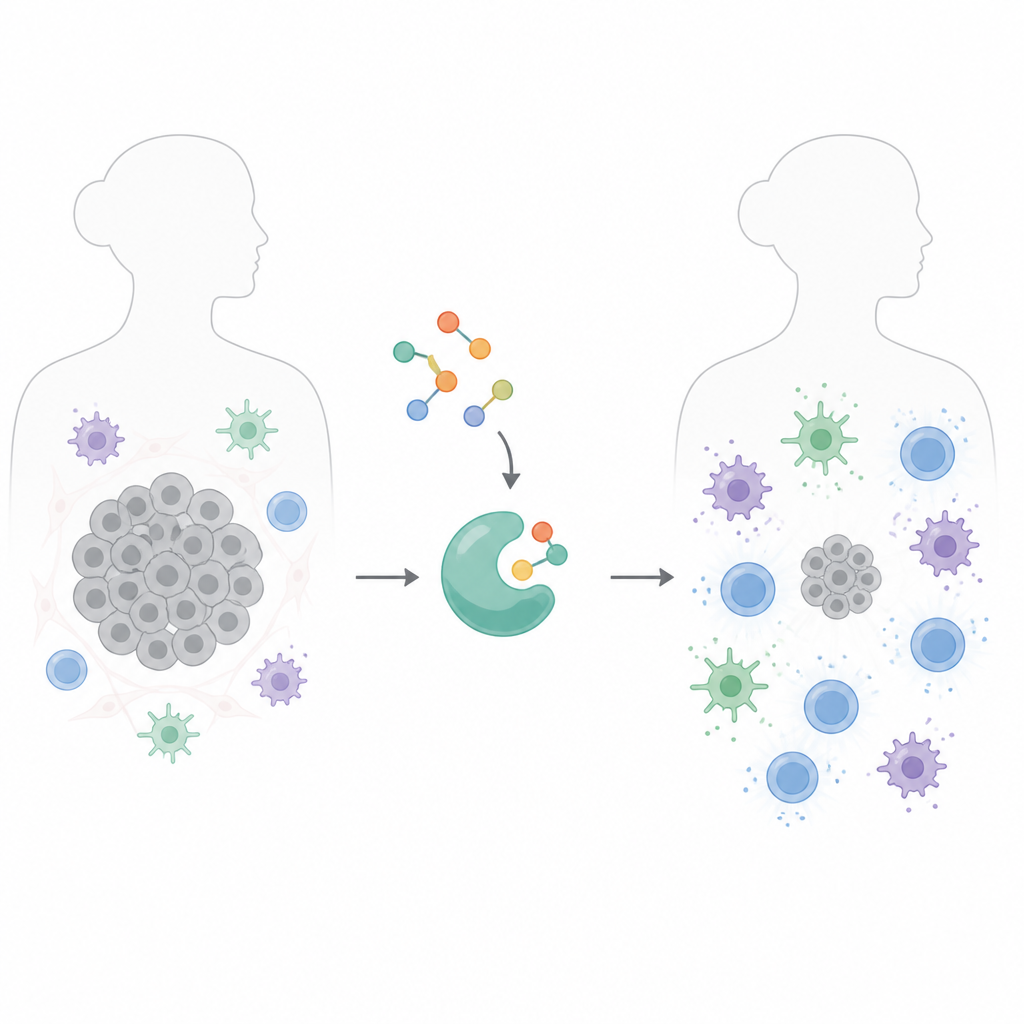
The researchers focused on Fumosorinone, or FU, a small molecule produced by a fungus. They tested FU in mice that carried colon or bladder tumors. When the animals received FU by mouth, their tumors grew more slowly and the mice lived longer, without obvious signs of toxicity. Looking inside the tumors, the team saw more CD8 “killer” T cells and CD4 helper T cells, and these cells carried molecular hallmarks of stronger attack functions. Macrophages, another type of immune cell, also shifted from a quiet, wound-healing state toward a more inflammatory, tumor-fighting state. At the same time, tumor cells treated with FU displayed features known as immunogenic cell death, which can turn dying cancer cells into a kind of vaccine that further stimulates immune defenses.
How FU disarms a signaling enzyme
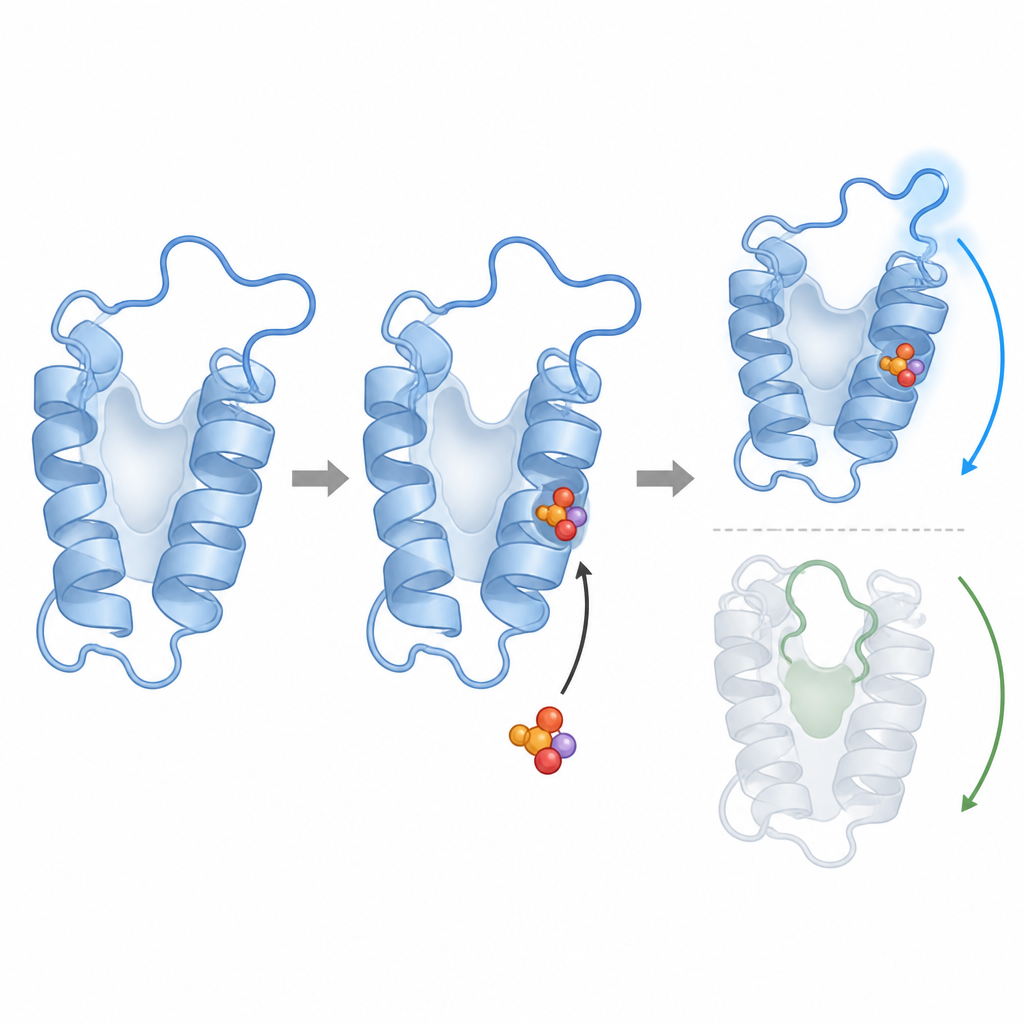
To understand how FU works at the atomic level, the team purified the PTP1B protein and examined how the compound affected its activity. Enzyme tests showed that FU does not compete directly with the usual substrate of PTP1B. Instead, it lowers the enzyme’s maximum speed while leaving its affinity for substrate nearly unchanged, behavior that points to an indirect form of inhibition. Precise biophysical methods confirmed that FU binds tightly and specifically to PTP1B. X ray crystallography then revealed that FU nestles into a previously unknown pocket on the surface of the protein, away from the main reaction center. By occupying this pocket, FU stabilizes a relaxed form of PTP1B in which a flexible loop near the active site remains open and cannot close around its target, effectively switching the enzyme off.
Selectivity and new drug leads
Because many related enzymes share similar active sites, off target effects are a major concern for this kind of drug design. The newly found FU pocket, however, is poorly conserved across the wider enzyme family and is closely matched only in PTP1B and its near twin, TCPTP. Tests with several family members confirmed that FU potently blocks PTP1B and, to a lesser extent, TCPTP, while having little impact on others. Using the three dimensional structure of FU bound to PTP1B as a template, the researchers then searched a virtual library of more than a million molecules and identified additional compounds that fit the same pocket. One of these, called PI 1, proved about as strong as FU in laboratory assays and interacts with many of the same amino acids, marking it as a promising starting point for further optimization.
What this could mean for future cancer care
Together, the findings show how a natural product can shut down a key immune brake at a very specific site on its surface, thereby boosting antitumor immunity in mice. For non specialists, the key message is that FU does not simply poison cells; it gently retunes the immune microenvironment so that existing immune cells become more willing and able to attack cancer. The structural map of its binding pocket offers a clear guide for chemists to design more drug like molecules that work in the same way. While much more testing will be needed before such compounds can be considered for patients, this study outlines a precise route toward new immunotherapy drugs that act from inside immune cells rather than on their outer receptors.
Citation: Zhang, J., Lin, L., Gong, N. et al. Structural basis of Fumosorinone-mediated allosteric inhibition of PTP1B for cancer immunotherapy. Commun Biol 9, 729 (2026). https://doi.org/10.1038/s42003-026-10329-2
Keywords: cancer immunotherapy, PTP1B, natural products, tumor microenvironment, allosteric inhibition