Clear Sky Science · en
The multifaceted physiological roles of fungal laccases
Fungi’s Hidden Helpers
Fungi quietly shape our world: they recycle wood, cause devastating crop diseases, partner with insects, and sometimes infect humans. At the heart of many of these actions is a single type of enzyme called laccase. This review article explores how fungal laccases, once famous mainly as industrial tools for breaking down pollutants, actually play many crucial roles in helping fungi survive, attack, defend, and cooperate in their natural environments.
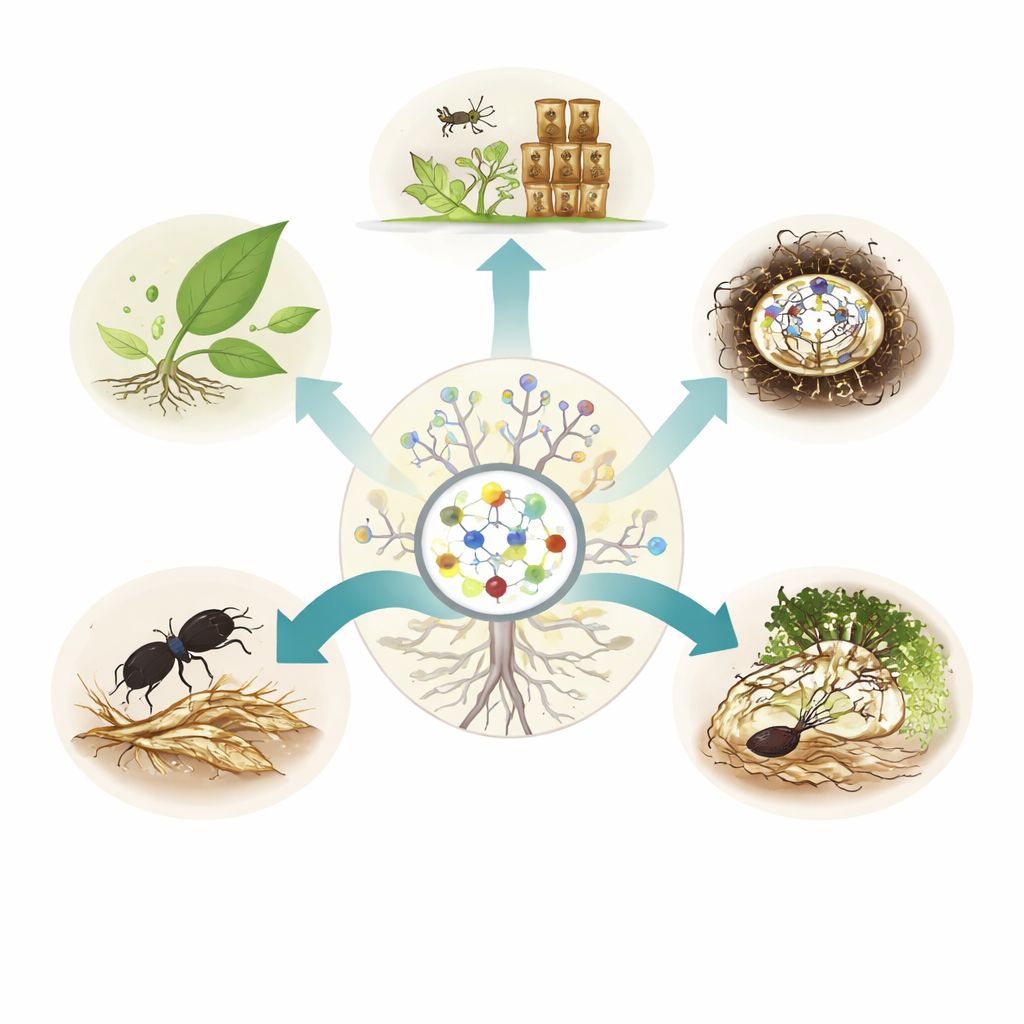
How One Enzyme Does So Many Jobs
Laccases are proteins that use copper atoms to pull electrons from a wide variety of small molecules, while turning oxygen into harmless water. This simple chemistry is surprisingly powerful. Laccases can act directly on plant-derived compounds or work through tiny “shuttle” molecules that carry reactive charges deeper into tough materials like wood. Small changes in the shape of each laccase, how much sugar decorates it, and when its gene is switched on give different fungal species a whole toolbox of slightly different versions. Together, these variations allow fungi to tune laccase activity to specific needs, from reshaping their own cell walls to disarming chemicals made by plants and animals.
Unlocking Food from Tough Plant Material
Many fungi live on dead wood and crop residues, where the real food—energy-rich sugars—are locked behind a stubborn shield of lignin, the dark substance that makes wood rigid. Laccases help breach this shield. When fungi grow on lignin-rich material, they boost production of laccases, which then nibble away at lignin’s complex structure and, with the help of mediator molecules, crack bonds that other enzymes cannot reach. Genetic experiments show that fungi lacking key laccase genes are far worse at degrading lignin, while strains engineered to produce more laccase do a better job of opening plant cell walls. In nature, this means laccases are central to how fungi turn seemingly indestructible plant matter back into accessible nutrients.
Building Color and Armor
Fungal laccases also help make pigments that act like sunscreen, camouflage, and armor. In many species, they drive the final steps that turn colorless precursors into dark melanins coating spores and infection structures, protecting them from sunlight, drying, and chemical attack. In others, laccases stitch together pairs of smaller molecules into striking red, yellow, or brown dyes that toughen cell walls or act as chemical weapons against competing microbes. Disrupting laccase genes often changes the color of spores or fruiting bodies and makes them more vulnerable to stress. These pigment pathways are usually built into tight gene clusters, underscoring that some laccases are specialized household tools working inside fungal cells, not just general cleaners secreted into the environment.
Tools for Attack, Evasion, and Defense
Laccases are deeply involved in fungal battles with plants, animals, and other microbes. For plant pathogens, laccase activity helps darken and harden appressoria—tiny, pressurized infection pads that punch through leaves. Other laccases neutralize or reshape defensive chemicals that plants release, such as tannins in chestnut trees or flavonoids in grapevines and avocados, tipping the balance in favor of the invader. In human pathogens like Cryptococcus and Talaromyces, laccases influence how fungal cells withstand attack by immune cells, partly by altering how iron and reactive oxygen are handled inside our bodies. At the same time, laccases protect fungi from antibiotics, toxic byproducts, and even hostile neighbors by detoxifying harmful compounds and helping reinforce the outer matrix of the fungal colony.
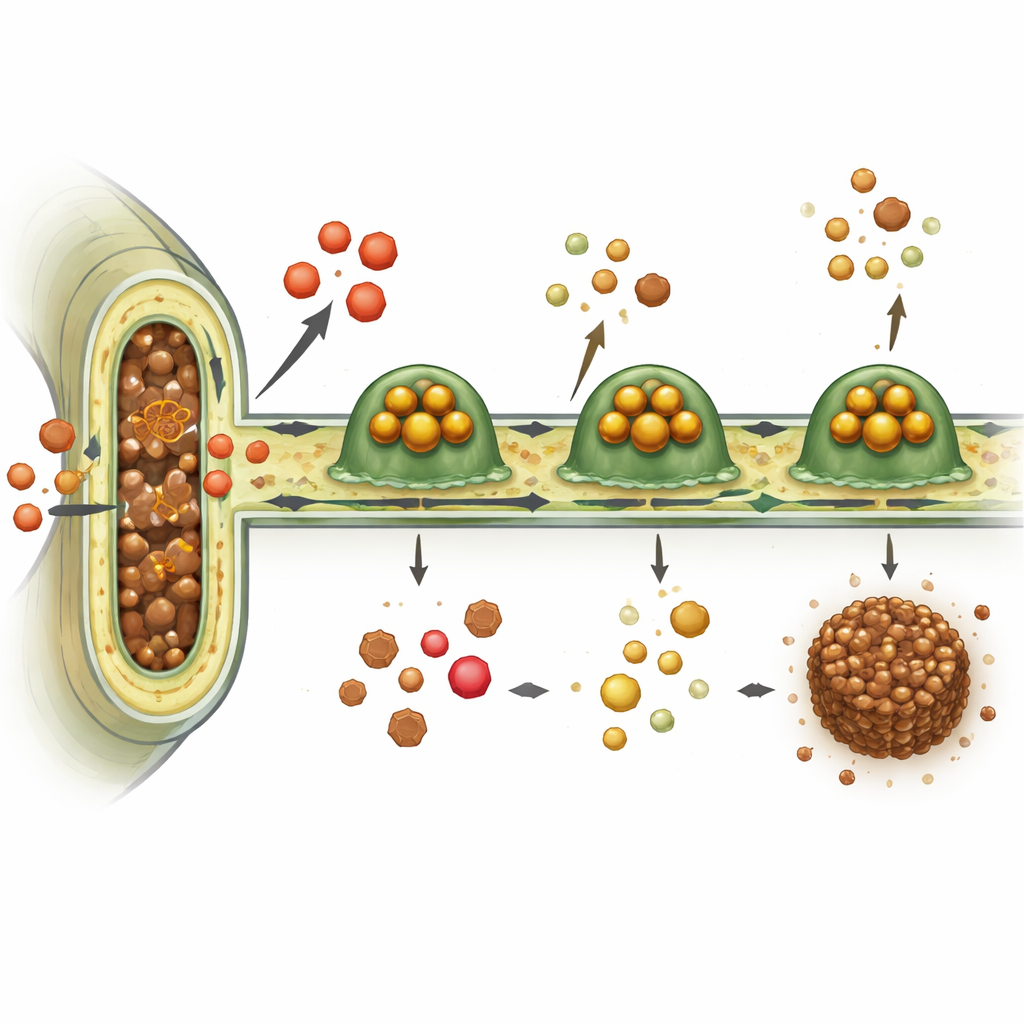
Guiding Growth and Teamwork
Beyond combat, laccases help coordinate fungal growth and shape. Changing laccase levels can delay or speed up the formation of fruiting bodies, alter the thickness and texture of cell walls, and affect spore production and surface stickiness. Many fungi carry families of overlapping laccase genes that turn on in different tissues or life stages, providing backup and fine control. Laccases even support surprising alliances: in leaf-cutting ant farms, a particular laccase made by the cultivated fungus is packed into special food bodies, survives passage through the ant gut, and is deposited on fresh leaves in the garden, where it detoxifies plant chemicals both for the fungus and for the ants that depend on it.
Why This Matters
By tracing laccases across these many roles, the article argues that they are not just biochemical curiosities but central “interface managers” for fungi, translating chemical messages from their surroundings into changes in structure, behavior, and survival. Understanding these roles can help scientists design better antifungal treatments that target virulence without harming beneficial species, improve enzyme mixtures for turning plant waste into fuels and materials, and even engineer fungi that form more stable partnerships with crops or insects. In everyday terms, laccases help decide whether a fungus becomes a decomposer, a disease, or a partner—and learning to guide that decision could have wide-reaching benefits for agriculture, medicine, and sustainable technology.
Citation: Li, J., Zhang, J., Pi, C. et al. The multifaceted physiological roles of fungal laccases. Commun Biol 9, 621 (2026). https://doi.org/10.1038/s42003-026-10224-w
Keywords: fungal laccase, plant–fungus interactions, lignin degradation, fungal pathogenicity, enzyme-based bioremediation