Clear Sky Science · en
Aging promotes a RAGE-dependent increase in breast cancer metastasis
Why age can change the story of breast cancer
Many women are diagnosed with breast cancer later in life, and statistics show that older patients are more likely to die from the disease. Yet most laboratory studies on breast cancer use young animals, which do not reflect the aging bodies of many real patients. This study asks a simple but important question: what is it about growing older that makes breast tumors more likely to spread, and can we point to a specific molecule as a key culprit?
Watching tumors travel in young and old bodies
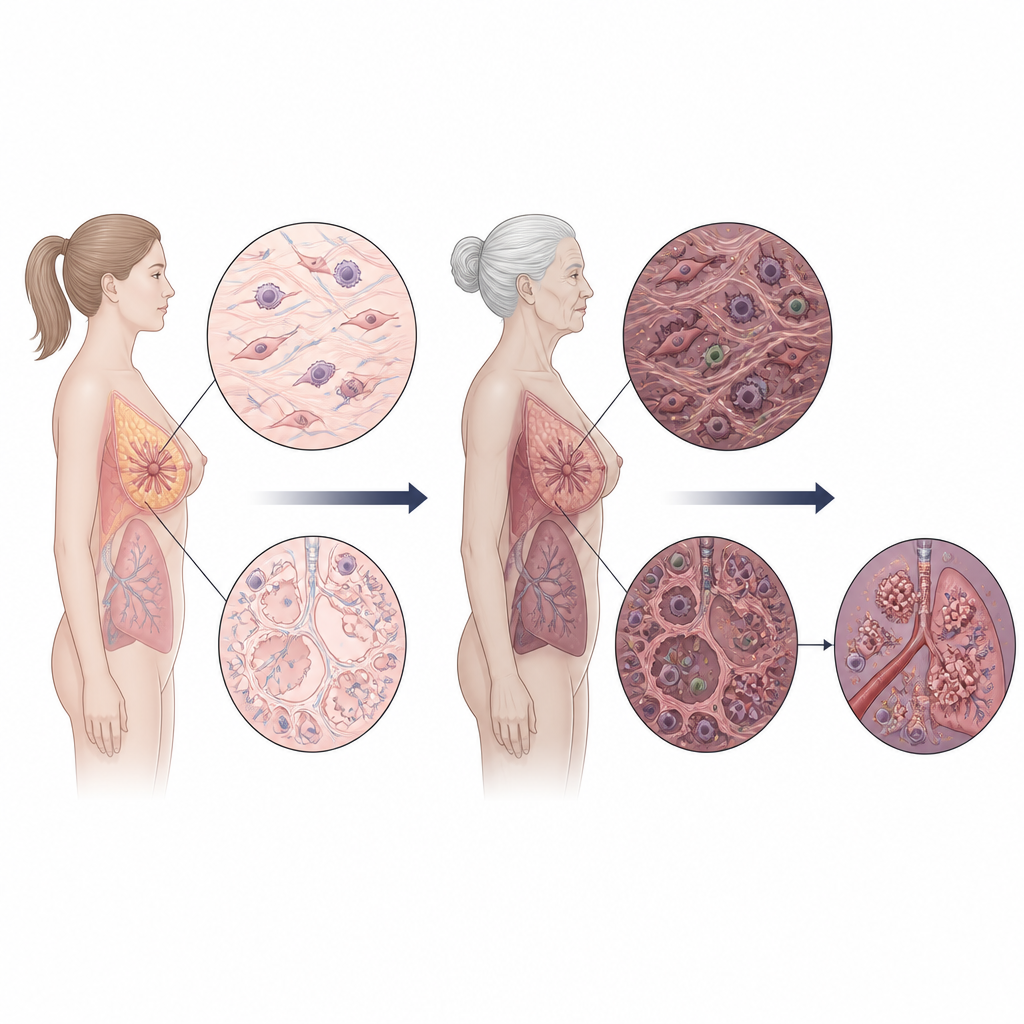
To explore this, the researchers implanted several types of aggressive mouse breast tumors into young and aged mice. The original tumors in the breast grew at similar or only slightly higher rates in older animals, but the number of cancer spots that appeared in the lungs was strikingly higher in the aged group. When tumor cells were instead injected directly into the bloodstream, skipping the early steps of leaving the breast, aging alone did not increase lung colonization. This pattern suggests that older bodies mainly help tumors during the early stages of escape from the breast and entry into circulation, rather than during the final seeding of distant organs.
A sensor that turns age related damage into danger signals
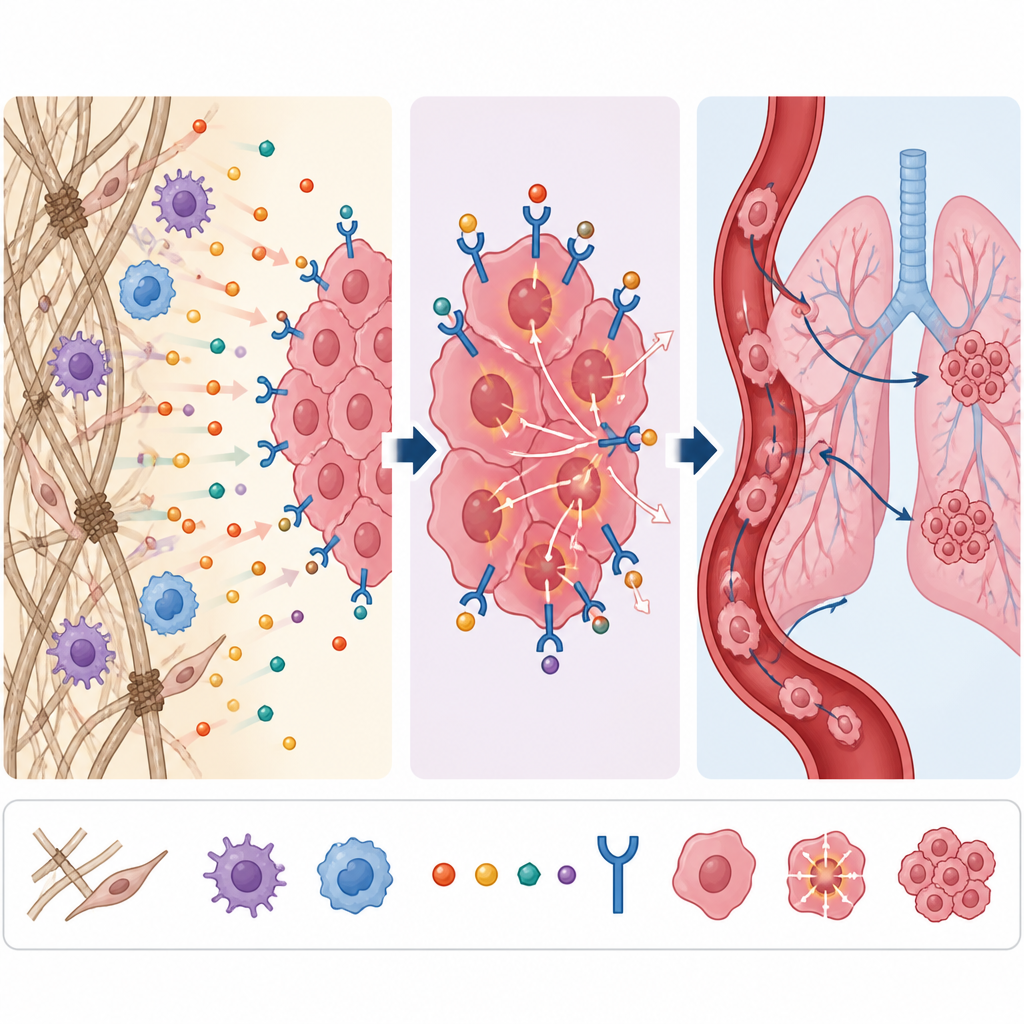
The team focused on a cell surface protein called RAGE, which acts like a sensor for various molecules that build up with age and inflammation. In older mice with breast tumors, the researchers found higher amounts of sticky, sugar related damage products and small inflammatory proteins surrounding the cancer and in the lungs. Many of these signals are made by immune cells that accumulate with age. They latch onto RAGE on cancer cells and surrounding cells, sending growth and movement cues. When mice were bred so that their normal tissues lacked RAGE, the age related surge in lung metastases was almost completely blocked, even though the tumors themselves were the same.
How aging reshapes the tumor neighborhood
By analyzing gene activity in tumors from young and old mice, the scientists saw that aging pushes cancers toward a more invasive state. In aged hosts with normal RAGE, tumors turned on programs linked to tissue remodeling, new blood vessel growth, low oxygen response, and cell migration. They also ramped up a host of inflammatory and immune related pathways. In contrast, when RAGE was missing from the host, these age linked gene changes were greatly reduced. Blood and tumor samples from older mice also carried a richer mix of inflammatory messengers that can summon myeloid cells and dampen anti tumor immunity, again in a way that depended on RAGE.
Signals in the blood that coax tumors to invade
The researchers then tested whether factors circulating in the blood of aged mice could directly influence tumor behavior. When breast cancer cells were exposed in the lab to serum from older normal mice, they became far more invasive than when exposed to serum from young mice. Serum from aged mice lacking RAGE lost much of this effect. Drugs that block RAGE or one of its key partners, a protein pair called S100A8/9, sharply reduced the ability of aged serum to drive tumor cell movement through a barrier. Blocking certain chemokine receptors that sense myeloid cell attracting signals also lowered invasion, tying together aging, RAGE, and inflammatory traffic as a single pro metastasis network.
Clues from human breast cancers
To see whether these mouse findings matter for people, the team examined large genetic datasets from human breast tumors. Patients whose cancers had higher levels of the human RAGE gene tended to have shorter periods without disease progression. This link was especially strong in women diagnosed at older ages. When the researchers looked for human versions of the aging and RAGE driven gene patterns seen in mice, tumors that scored high for these signatures also showed poorer outcomes, particularly in older patients. Single cell data further revealed that individual cancer cells carrying these aging related signatures were enriched for inflammatory and invasion linked pathways.
What this means for patients and future treatments
Taken together, the work suggests that aging does not just add years; it quietly reshapes the tissues and immune cells around a breast tumor in ways that help cancer spread. The RAGE protein sits at the center of this shift, converting age related damage and inflammation into signals that help tumor cells move, survive, and seed distant organs. Because drugs that target RAGE have already been tested for other conditions, the study raises the possibility that such treatments could one day be used alongside standard cancer therapies to reduce metastasis risk in older patients, without needing to attack the cancer cells directly.
Citation: Miller, P., Chopra, S., Magna, M. et al. Aging promotes a RAGE-dependent increase in breast cancer metastasis. Commun Biol 9, 661 (2026). https://doi.org/10.1038/s42003-026-10022-4
Keywords: aging, breast cancer metastasis, RAGE signaling, tumor microenvironment, inflammation