Clear Sky Science · en
Tick saliva reprograms macrophages into immunosuppressive hubs that regulate T-cell immunity in Rhipicephalus microplus infestation
Why Ticks Are More Than Just a Nuisance
Anyone who has pulled a tick off a pet or seen one on cattle knows they are stubborn bloodsuckers. But beneath that simple image lies a sophisticated biological trick: tick saliva can quietly turn off the body’s defenses right where the tick feeds. This study unravels how saliva from the cattle tick Rhipicephalus microplus transforms key immune cells into “peacekeepers” that dampen inflammation, opening the door for long, undisturbed feeding and easier spread of tick-borne diseases.
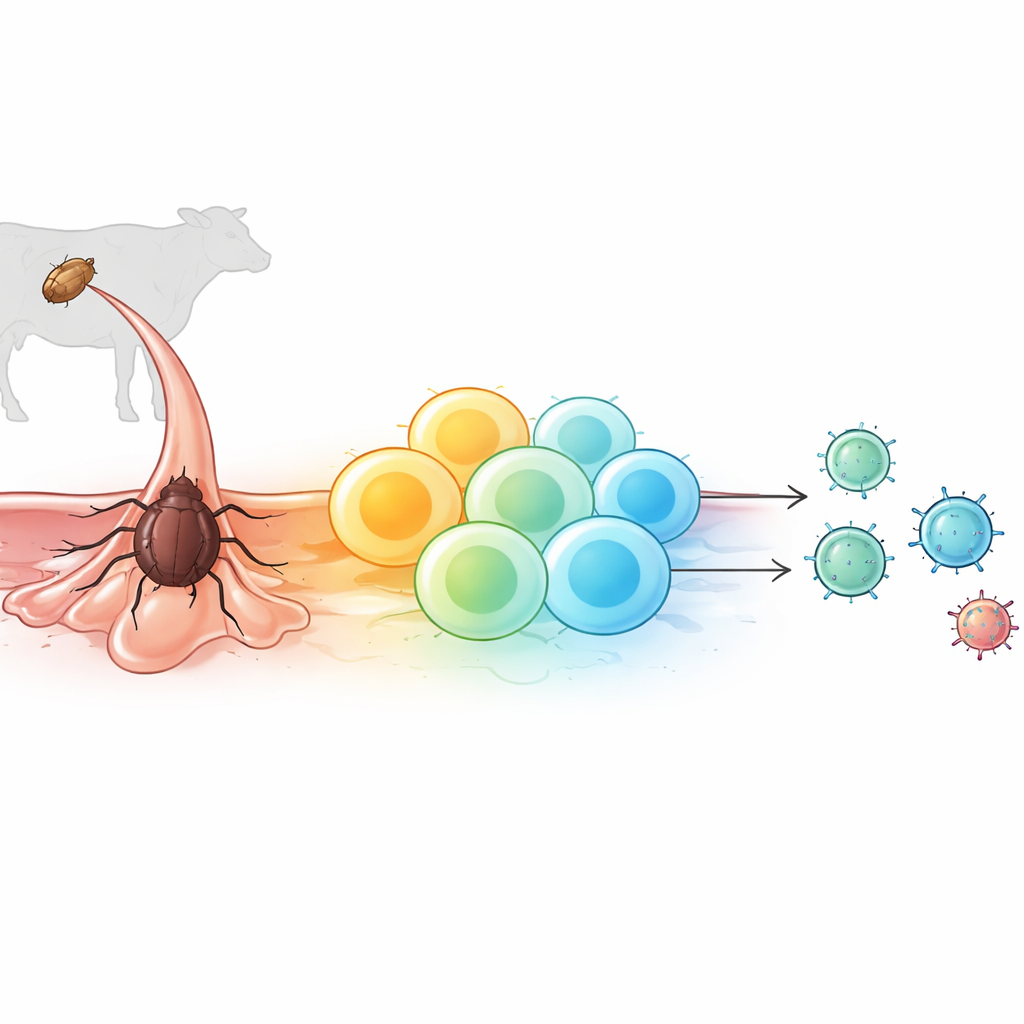
A Silent Battle at the Bite Site
When a tick pierces the skin, it does more than sip blood. Its saliva contains a cocktail of molecules that interfere with the host’s immune system. The researchers focused on cattle, an economically important host for R. microplus, and examined how tick saliva reshapes immune responses in blood cells. Normally, T cells—white blood cells that help coordinate and kill infections—produce inflammatory signals to fight invaders. Here, the team found that tick saliva reduced key inflammatory messengers from both helper (CD4⁺) and killer (CD8⁺) T cells, while boosting calming, anti‑inflammatory signals. This shift helps explain why ticks can stay attached for days without provoking a strong reaction.
Macrophages Turn from Fighters to Soothers
A central discovery of the work is that macrophages—large immune cells that both sense danger and alert T cells—act as the main hub for this immune shutdown. When the scientists removed CD14⁺ cells (a group that includes monocytes and macrophages) from mixed immune cell samples, tick saliva no longer suppressed inflammatory T‑cell signals. This showed that T cells are not directly silenced by saliva; instead, macrophages are reprogrammed and then, in turn, calm down T cells. Using gene‑activity profiling, the team demonstrated that macrophages exposed to tick saliva switched from a “fighter” profile, rich in pro‑inflammatory genes, to a “soother” profile, marked by genes linked to tissue repair and suppression of immune reactions.
Rewiring the Local Immune Network
Tick‑conditioned macrophages did more than simply tone down inflammation. They lowered surface molecules needed to show fragments of pathogens to T cells, and reduced partner signals required for full T‑cell activation. At the same time, these macrophages produced less of the chemical “scent trails” (chemokines) that normally call additional T cells and monocytes into the area. As a result, fewer fresh immune cells are recruited to the bite site. Meanwhile, the macrophages and nearby T cells began producing high levels of IL‑10 and TGF‑β, two powerful calming factors. Regulatory T cells, a specialized subset that restrains excessive immunity, expanded and became particularly rich sources of these suppressive signals, forming a reinforcing loop with the reprogrammed macrophages.
Proof in the Skin
To see whether this macrophage‑centered suppression actually occurs where ticks feed, the researchers examined skin from cattle with attached ticks and from unaffected areas. Under the microscope, the tick‑bitten skin contained many more cells producing IL‑10, especially macrophages and T cells, than untouched skin. This pattern matched the behavior seen in the laboratory, suggesting that real tick bites build a local “quiet zone” in the skin. Within this zone, inflammation is held in check, fewer new defenders arrive, and the normal alarm system that would expose pathogens to T cells is muted.
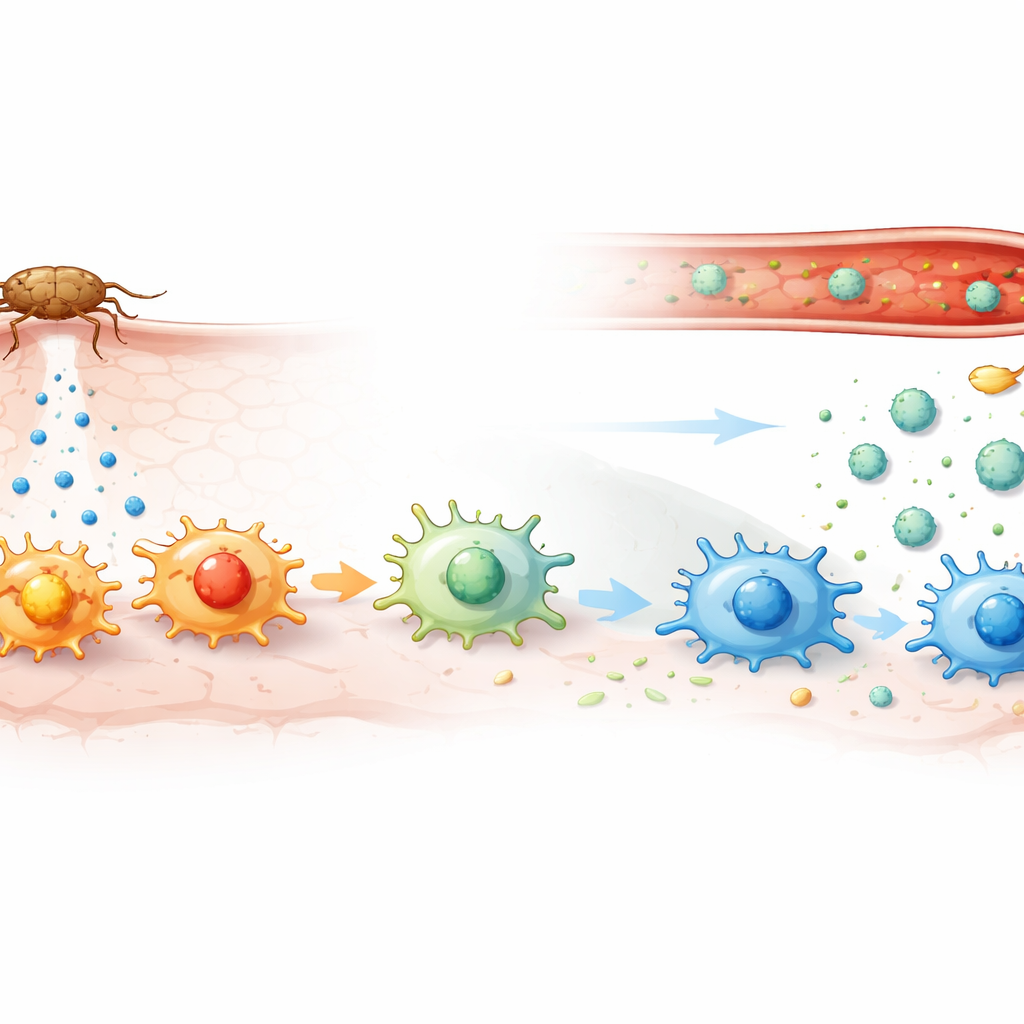
What This Means for Animals and Disease
In plain terms, the study shows that cattle tick saliva turns nearby macrophages into immunosuppressive organizers that dampen both early and later immune defenses. By reducing how strongly T cells respond, limiting how many immune cells are called in, and favoring regulatory cells over attack cells, the tick creates a safe pocket in the skin where it can feed for days and where microbes it carries have a better chance to survive and spread. Understanding this macrophage‑centered “hub” could guide new strategies to disrupt tick feeding, improve vaccines, or block transmission of tick‑borne infections in livestock and potentially other animals.
Citation: Nakamura, H., Okagawa, T., Maekawa, N. et al. Tick saliva reprograms macrophages into immunosuppressive hubs that regulate T-cell immunity in Rhipicephalus microplus infestation. Commun Biol 9, 581 (2026). https://doi.org/10.1038/s42003-026-09981-5
Keywords: tick saliva, macrophage polarization, immune suppression, regulatory T cells, tick-borne diseases