Clear Sky Science · en
Single-nucleus transcriptomics illuminates sex differences during murine Escherichia coli pyelonephritis
Why kidney infections do not affect everyone the same way
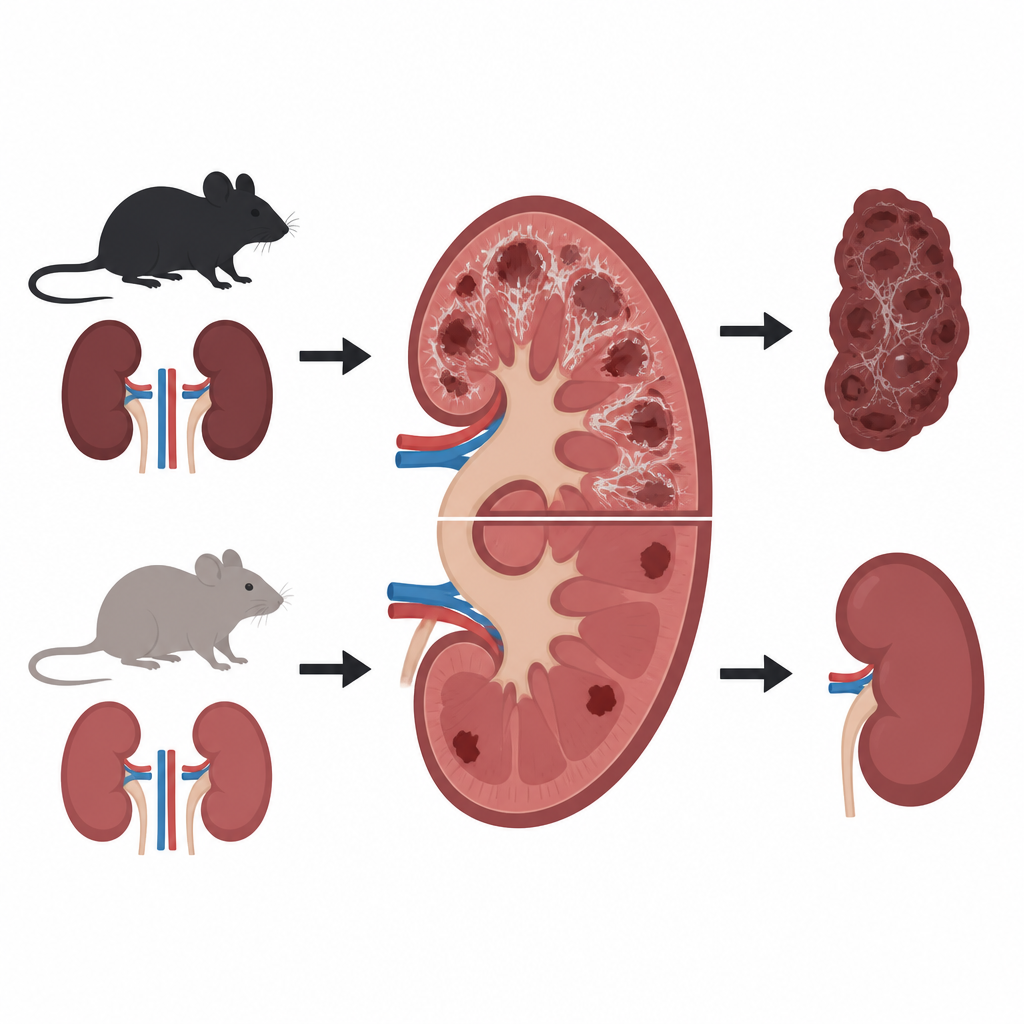
Urinary tract infections are common, yet men and women often experience them very differently. Women get more infections overall, but when the bacteria reach the kidneys, men are more likely to suffer lasting damage and scarring. This study uses a powerful genetic “census” of individual kidney cell nuclei in mice to ask a simple question with complex roots: how does biological sex change the way each tiny part of the kidney reacts to the same bacterial attack?
Looking closely at infected kidneys, cell by cell
Researchers infected male mice, female mice, and females exposed to male hormones with a strain of Escherichia coli that commonly causes urinary tract infections. Five days after bacteria were placed in the bladder, when germs had climbed to the kidneys but before damage was uniform, the team isolated the nuclei from kidney cells and sequenced their RNA. This produced a detailed snapshot of gene activity in nearly a quarter of a million cells, grouped into all the major kidney cell types. By comparing infected mice with saline-treated controls, they could separate “healthy” cells from those already sensing or responding to injury, even when both existed side by side in the same organ.
Male and female kidneys start from different baselines
Before considering infection, the scientists found that sex alone strongly shaped kidney gene activity. As expected, males expressed Y-linked genes and more androgen-responsive genes. But deeper analysis showed that many inflammation-related control switches, known as transcription factor regulons, were already somewhat active in male kidneys even after simple saline exposure. In contrast, female kidneys at baseline leaned more toward routine metabolic and housekeeping pathways. This suggests that male kidneys may live closer to a “primed” or low-level injury state, which could influence how they react when bacteria invade.
Focused female response, diffuse male response
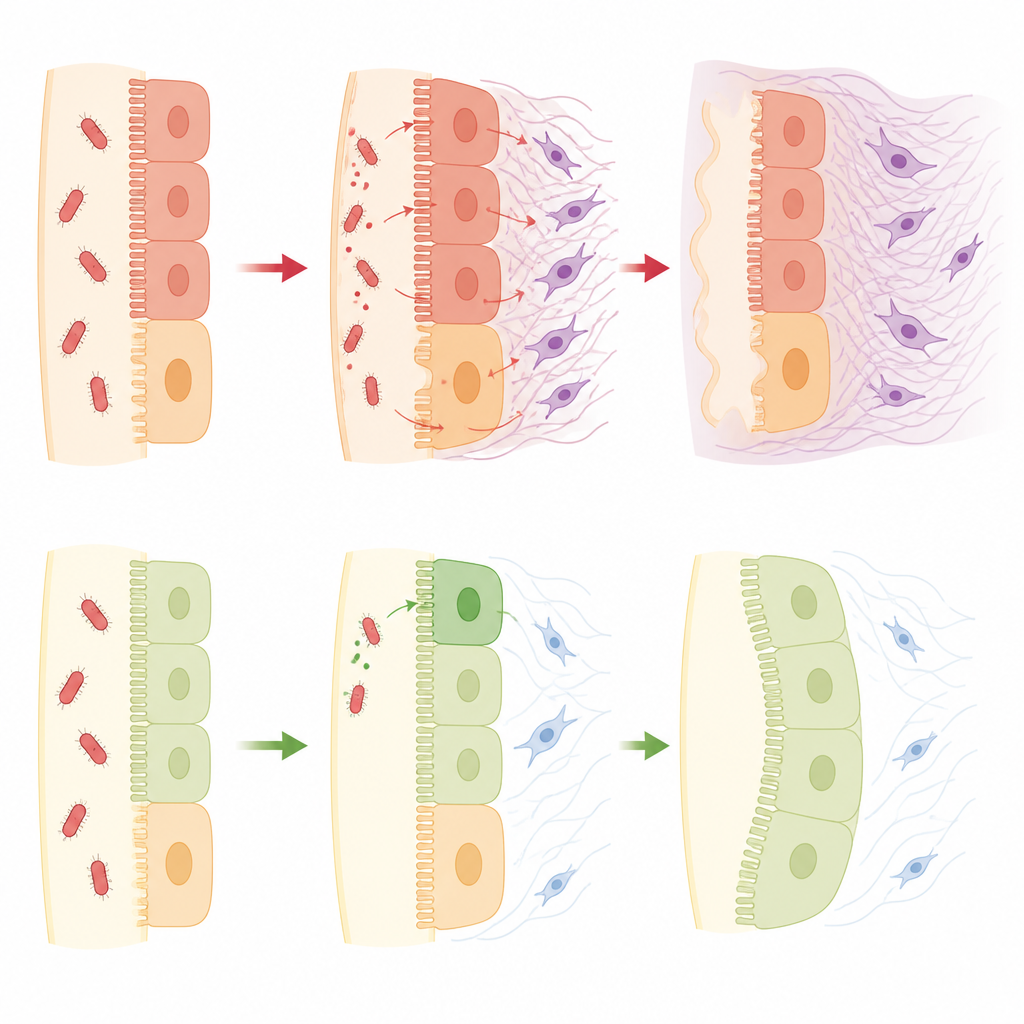
The team then zoomed in on two key regions of the nephron: the collecting duct, where bacteria first make contact with kidney tissue, and the proximal tubule, which is critical for recovery after many types of injury. In females, infection triggered a strong but tightly focused response. Specific cell subsets, such as medullary principal cells in the collecting duct and clearly injured proximal tubule cells, sharply turned on genes linked to inflammation, signaling, and repair, while neighboring healthy cells stayed more distinct. In males, more cell types across these regions showed infection-related changes, but each cell’s response was weaker. Healthy and injured clusters blended together in analysis, implying that large stretches of male kidney tissue slide into an “injury-like” state rather than reserving it to clearly damaged zones.
Molecular clues to scarring and healing
Several genes and signaling patterns hinted at why male kidneys scar more readily. In collecting duct cells from infected males, a fibrosis-linked gene called Spp1 was broadly active, and microscopy confirmed its protein was spread widely across tubules, a pattern associated with myofibroblast activation and scarring. In females, Spp1 was more confined. In the proximal tubule, females showed strong, localized activation of kynureninase (Kynu), part of a pathway tied to controlled inflammation and repair; males had lower, more diffuse Kynu and more signs of pathway inhibition, which other studies link to harmful tissue remodeling. When the researchers examined predicted communication between kidney cells, male cells more often used signals connected with fibrosis and cell death, whereas female cells favored messages that support blood vessel survival, recruit reparative immune cells, and limit bacterial growth.
What this means for people with kidney infections
Even though male and female mice carried similar amounts of bacteria at the time studied, their kidneys were reacting in very different ways. Female kidneys mounted a high-intensity, well-targeted defense that separated injured from healthy areas and promoted repair. Male kidneys spread a milder but more widespread strain-like response across many cell types and engaged more pathways linked to scarring. For patients, this work suggests that sex is not just a background detail but a core factor in how kidneys sense and respond to infection. Understanding these cellular conversations may eventually guide sex-aware strategies to protect kidneys from long-term damage after urinary tract infections.
Citation: Hreha, T.N., Manson, A.L., Collins, C.A. et al. Single-nucleus transcriptomics illuminates sex differences during murine Escherichia coli pyelonephritis. Commun Biol 9, 711 (2026). https://doi.org/10.1038/s42003-026-09946-8
Keywords: kidney infection, urinary tract infection, sex differences, single cell RNA sequencing, renal scarring