Clear Sky Science · en
Dynamic gut responses to sepsis uncovered by multi-omics profiling in a rodent model
Why the gut matters in a whole-body infection
Sepsis is a life-threatening reaction to infection that can shut down multiple organs, yet doctors still lack targeted treatments. This study focuses on an unexpected but crucial player in sepsis: the gut. By tracking how the intestine’s cells, microbes, and molecules change in real time during sepsis in mice, the researchers uncover how the gut both suffers from and shapes this dangerous condition, pointing to new ideas for diagnosis and therapy.
Following sepsis from lungs to gut
To mimic a common real-world scenario, the team triggered pneumonia in mice using a bacterium that often causes severe hospital infections. This lung infection led to sepsis without directly injuring the intestines, allowing the scientists to watch how the gut responded as a downstream target. They collected gut tissue and feces at several time points and applied a suite of “omics” tools that read out gene activity in single cells, identify proteins, profile small molecules called metabolites, and map the makeup of the gut microbiome. 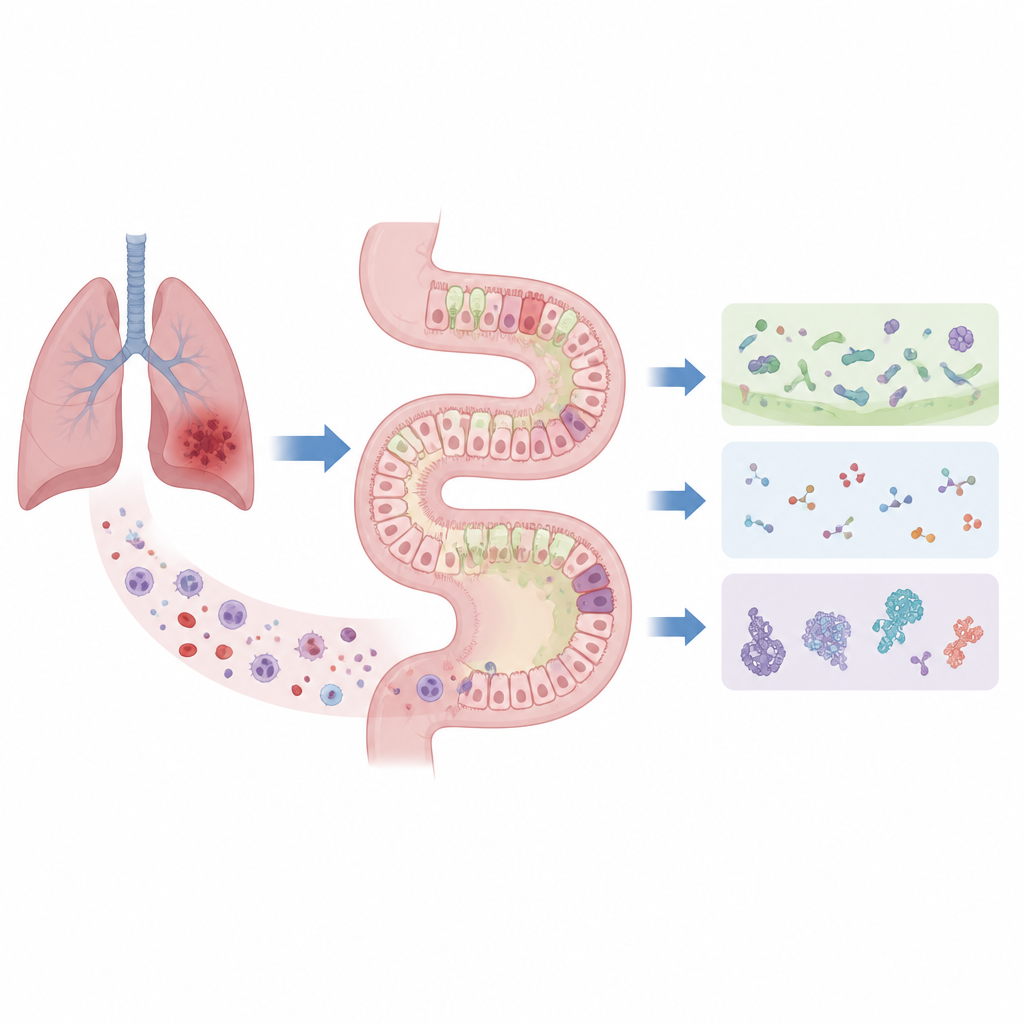
Immune guardians under stress
Inside the gut wall, immune cells that normally keep peace with resident microbes showed striking shifts. Long-lived gut macrophages, which usually help maintain barrier integrity and dampen excessive inflammation, altered their gene activity and lost some ability to respond to external signals as sepsis unfolded. Meanwhile, short-lived monocyte-derived macrophages surged early and then crashed, suggesting a rapid but unsustainable response. T cells, another arm of immunity, also changed in number and behavior. Certain helper and memory T cells declined, while killer-like T cells and natural killer T cells fluctuated, and their energy-handling pathways rewired over time. Together, these changes portray a gut immune system that initially rallies, then becomes exhausted and less capable of fine-tuned control.
Specialized gut lining cells step into defense
The intestinal lining is not just a passive wall; it is made of diverse cell types that can sense and respond to danger. The study revealed new functional subgroups among these cells. A major class of absorptive cells, called colonocytes, split into two distinct types based on a molecule named Tmigd1. Tmigd1-positive colonocytes dialed up genes involved in fighting infections and detecting viral material, especially in the middle phase of sepsis, hinting that they act as front-line sentinels. Mucus-producing goblet cells, which usually provide a slippery barrier, also showed hidden variety. A subset lacking a protein called Sytl2 turned out to be key for passing bits of gut contents to underlying immune cells. When these Sytl2-negative goblet cells were selectively removed, key immune cells in the gut were less activated, and structures that shuttle antigens through the mucus layer became rarer, suggesting that these goblet cells help educate the immune system during sepsis.
Support cells, microbes, and molecules in motion
Beneath the epithelium, structural cells such as fibroblasts and myofibroblasts, which help shape the crypts where stem cells live, also changed their communication patterns. Some fibroblast subsets strengthened signals related to collagen and growth factors early on, then weakened them later, altering how the tissue repairs and remodels itself. 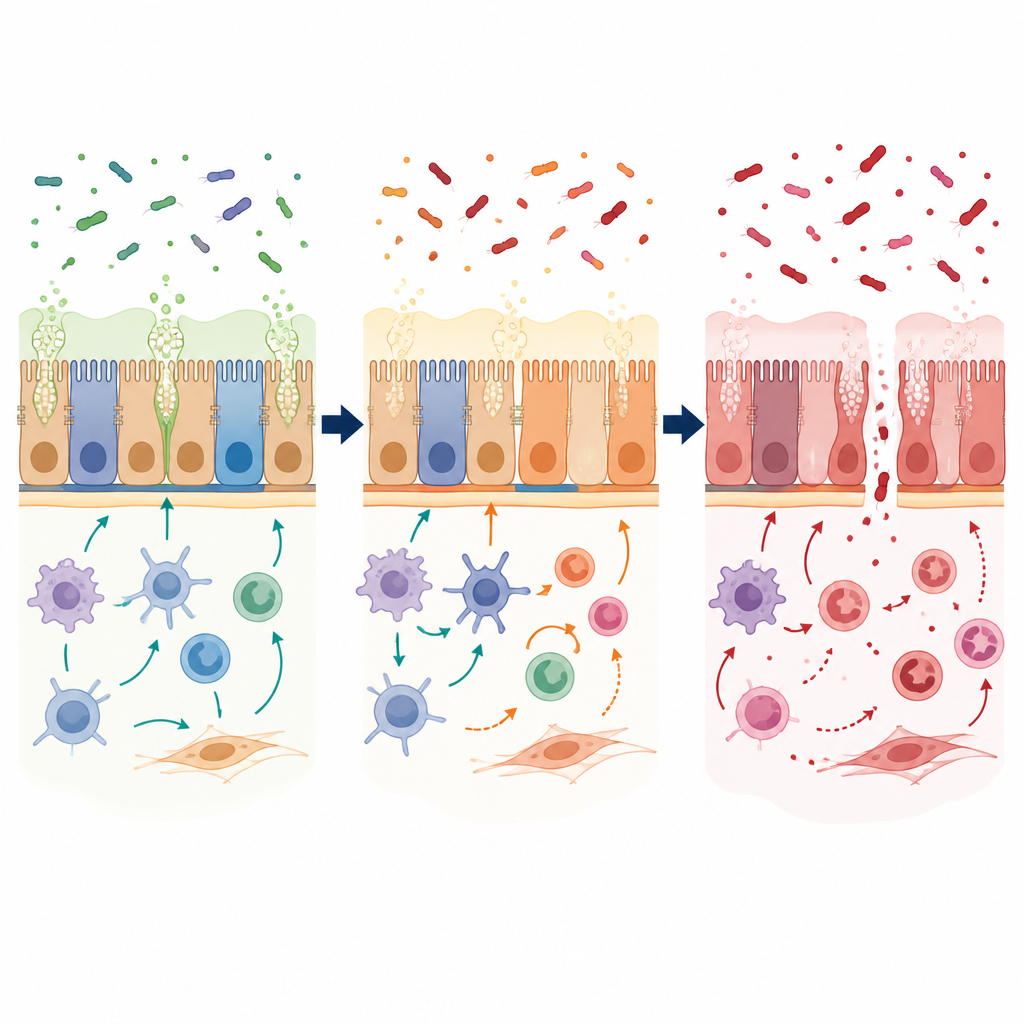
What this means for future sepsis care
By weaving together cellular, microbial, metabolic, and protein data, this work paints a detailed picture of how the gut responds to sepsis over time. Rather than acting only as a victim of systemic inflammation, the intestine emerges as an active player whose immune cells, lining cells, support cells, and resident microbes all shift roles as sepsis progresses. For a lay reader, the main message is that treating sepsis may require looking beyond the bloodstream to the gut ecosystem as a whole. The newly identified cell subtypes and coordinated patterns across microbes and metabolites offer a set of candidate targets for future therapies aimed at stabilizing the gut barrier and immune balance during severe infections.
Citation: Lei, J., Qi, J., Zhai, J. et al. Dynamic gut responses to sepsis uncovered by multi-omics profiling in a rodent model. Commun Biol 9, 687 (2026). https://doi.org/10.1038/s42003-026-09940-0
Keywords: sepsis, gut microbiome, intestinal barrier, single-cell analysis, multi-omics