Clear Sky Science · en
β-arrestin1 orchestrates endosomal signaling to regulate translational control of circadian light entrainment
How Light Keeps Our Internal Clocks on Time
Anyone who has struggled with jet lag or late-night screen time has felt what happens when the body’s clock falls out of sync with the day. This study explores how a specific molecular helper inside brain cells, called beta-arrestin1, helps translate light entering the eyes into precise adjustments of the brain’s master clock, keeping daily rhythms aligned with sunrise and sunset.
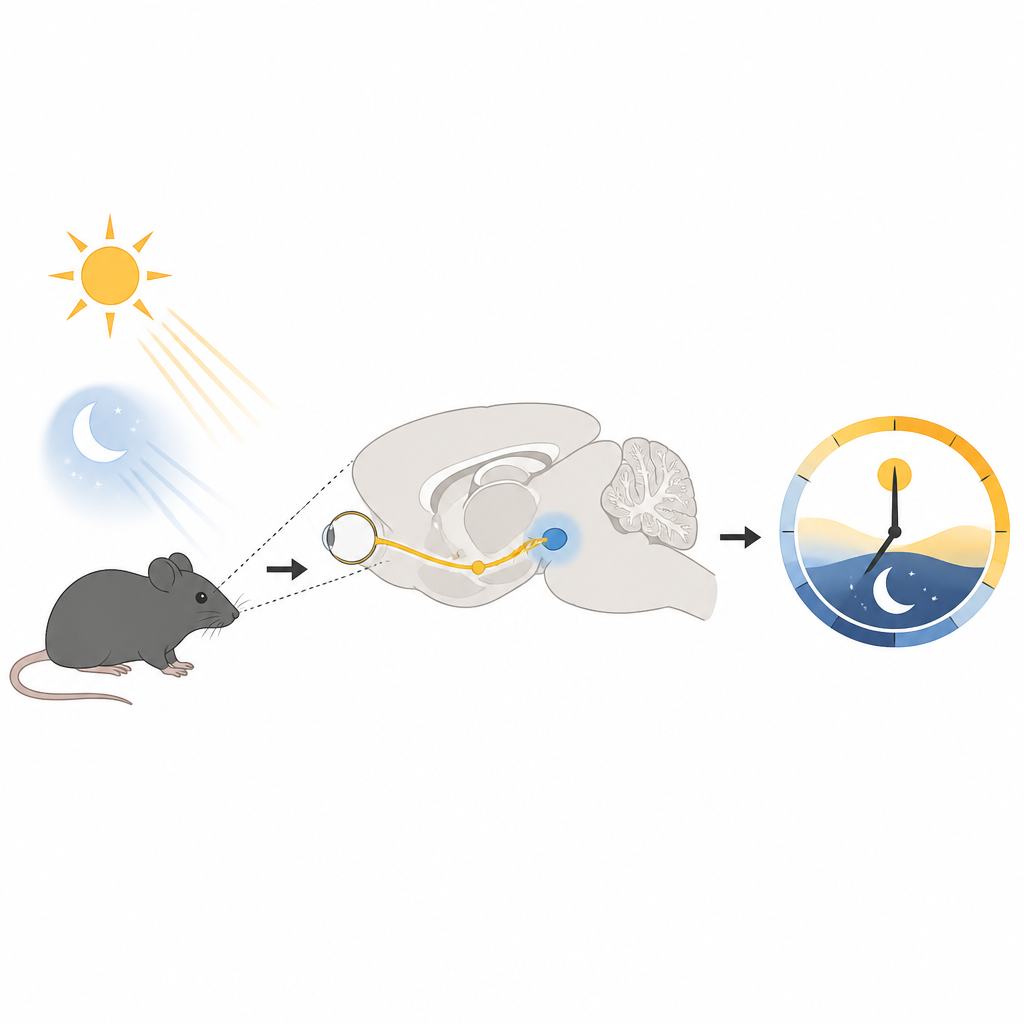
Meet the Brain’s Timekeeper
In mammals, a tiny region deep in the brain called the suprachiasmatic nucleus acts as the master timekeeper. It coordinates daily cycles of sleep, hormone release, and body temperature. This clock is reset by light signals that travel from the eye along a special pathway to this brain region. Inside these clock cells, a set of genes and proteins rise and fall in a 24-hour loop, and light can nudge this loop forward or backward so that our internal time matches the outside world.
A Molecular Helper with a Special Job
Many of the light-driven signals in the clock use receptors on the cell surface that belong to a large family known as G protein-coupled receptors. One of these, called PAC1, responds to a messenger released from retinal fibers when light hits the eye. The researchers focused on two closely related helper proteins, beta-arrestin1 and beta-arrestin2, which are known to guide how such receptors are turned on, turned off, and moved around inside cells. By studying mice that lacked either one or the other, they found that only beta-arrestin1 was crucial for normal responses to light, including how quickly animals adjusted to simulated jet lag and how strongly their activity rhythms shifted after a brief light pulse at night.
Light Signals Move Inside the Cell
The team discovered that beta-arrestin1 does more than simply shut off surface receptors. In normal mice, a nighttime flash of light caused PAC1 receptors in clock neurons to be pulled into small internal sacs called endosomes. These endosomes serve as signaling hubs, where beta-arrestin1 helps assemble a chain of protein switches, notably a pathway involving ERK, RSK1, and a ribosomal protein called S6. This chain boosts the cell’s protein-making machinery at just the right moment. In mice lacking beta-arrestin1, PAC1 receptors failed to move efficiently into endosomes, and the activation of this internal signaling pathway was strongly reduced.
From Signals to New Clock Proteins
Resetting the clock requires not only turning genes on but also making enough of their protein products. The authors showed that, even though light still triggered normal bursts of gene activity in beta-arrestin1–deficient mice, the actual production of key clock proteins called PER1 and PER2 was blunted in the core of the master clock. Using a method that tags newly made proteins, they found that light normally increases overall protein production in the clock region, but this boost disappeared when beta-arrestin1 was missing. This points to a specific role for beta-arrestin1 in controlling translation, the step where protein-building machinery reads genetic messages and assembles new proteins.
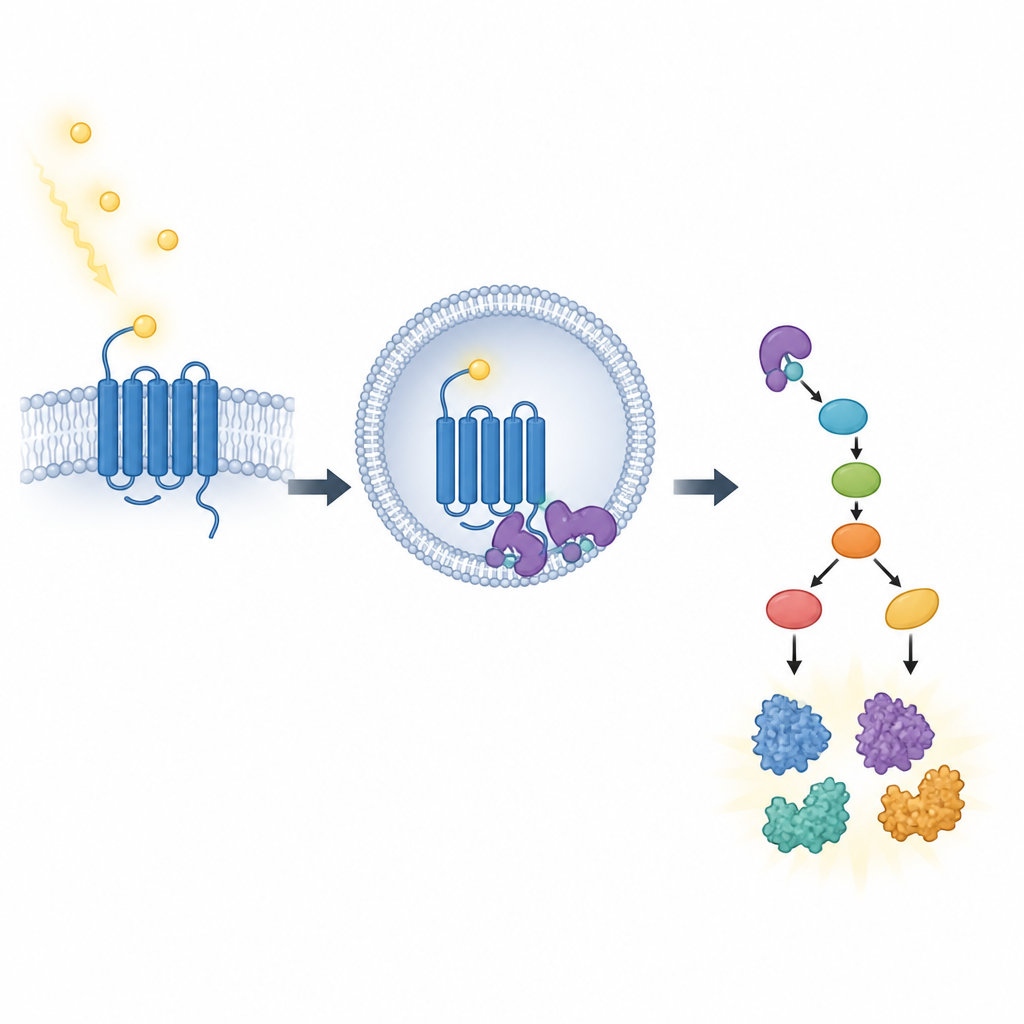
Balancing Surface and Internal Signals
The study also weighed the contributions of more traditional surface-level signaling routes against these internal endosomal signals. By using drugs to block different branches of the pathway in brain slices and cultured cells, the researchers found that signaling from endosomes made the largest contribution to the activation of the ERK pathway in response to light-like stimuli. Signals that stayed at the cell surface through other routes played smaller, supporting roles. In the absence of beta-arrestin1, some surface-based responses remained, helping explain why early gene activity was preserved even though protein production was impaired.
Why This Matters for Daily Life
Together, the findings reveal that endosomes inside clock cells act as important relay stations for light information, and that beta-arrestin1 is a key coordinator at these stations. Rather than simply switching receptors off, beta-arrestin1 helps route them inward to trigger a protein-making program that ensures the clock can reset properly. For a layperson, this means that how well we adapt to new time zones or irregular light schedules depends not just on whether our brain sees light, but also on how that light drives the cell’s internal machinery to build the right clock proteins at the right time.
Citation: Mascarenhas, B., Seecharran, S., Boehler, N.A. et al. β-arrestin1 orchestrates endosomal signaling to regulate translational control of circadian light entrainment. Commun Biol 9, 645 (2026). https://doi.org/10.1038/s42003-026-09905-3
Keywords: circadian rhythms, beta-arrestin1, suprachiasmatic nucleus, light entrainment, PAC1 receptor