Clear Sky Science · en
KRT17 promotes triple negative breast cancer through activation of Wnt signaling and γδ T-cells recruitment
Why this matters for patients
Triple negative breast cancer is one of the most dangerous forms of breast cancer, and it hits Black American women especially hard. This study asks a pressing question: is there a biological reason some tumors are more aggressive in certain patients, and could that difference point to new treatment options?
A structural protein with a dark side
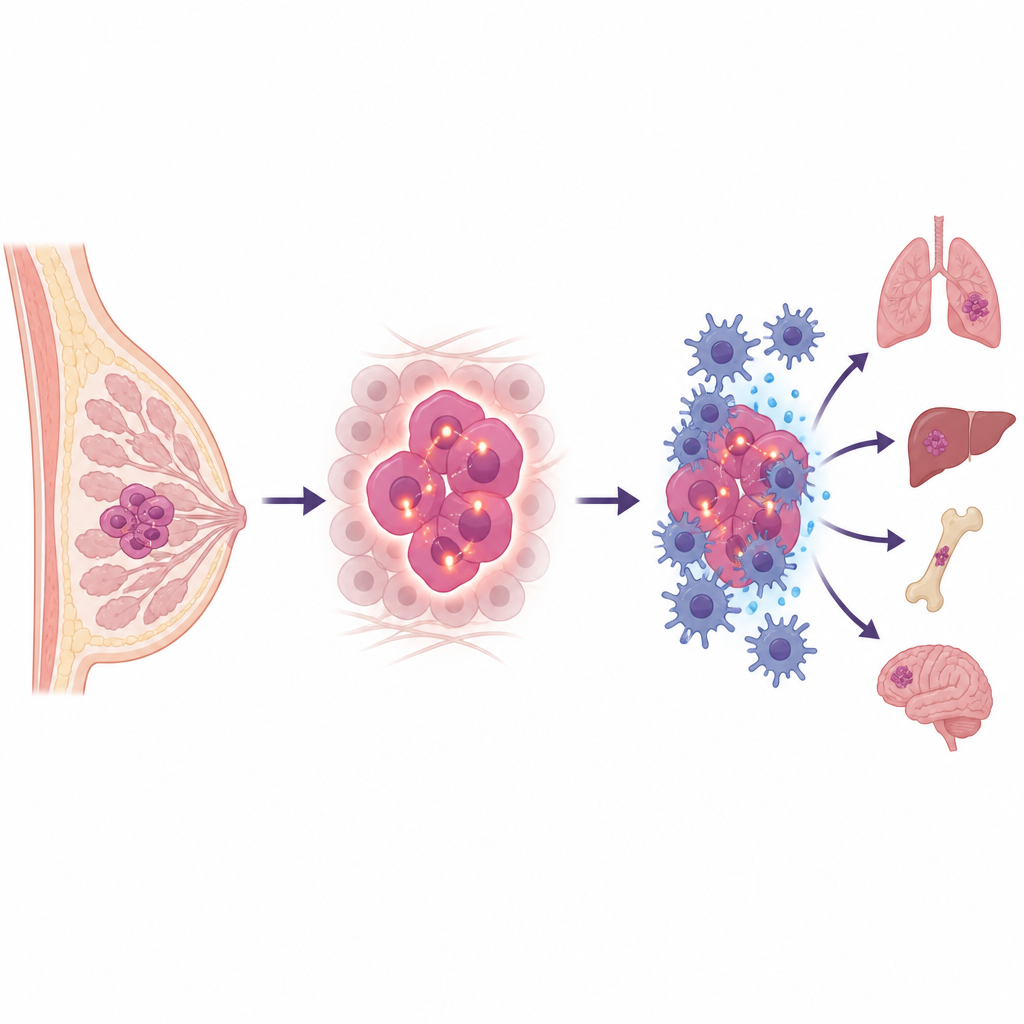
The researchers focus on a protein called keratin 17, or KRT17, which normally helps give cells their internal scaffolding. By examining patient databases and tumor samples, they discovered that KRT17 levels are especially high in triple negative breast cancers compared with other breast cancer types. Among triple negative cases, tumors from Black American women showed higher KRT17 protein than those from White American or Asian women, and high KRT17 was linked with shorter survival and more frequent spread to lymph nodes and distant organs.
Connecting KRT17 to tumor growth and spread
To test whether KRT17 was simply a marker or an active driver, the team used mouse models of triple negative breast cancer. When they reduced KRT17 in aggressive tumor cells, those cells formed fewer colonies in dishes, created fewer self-renewing “spheres” that stand in for cancer stem cells, and produced smaller tumors in mice. The number of metastases in lungs and lymph nodes dropped as well. These effects were strong in triple negative models, but much weaker in non triple negative breast cancer cells, suggesting that KRT17 has a special role in this hard-to-treat subtype.
A cell signaling route that fuels stem-like cells
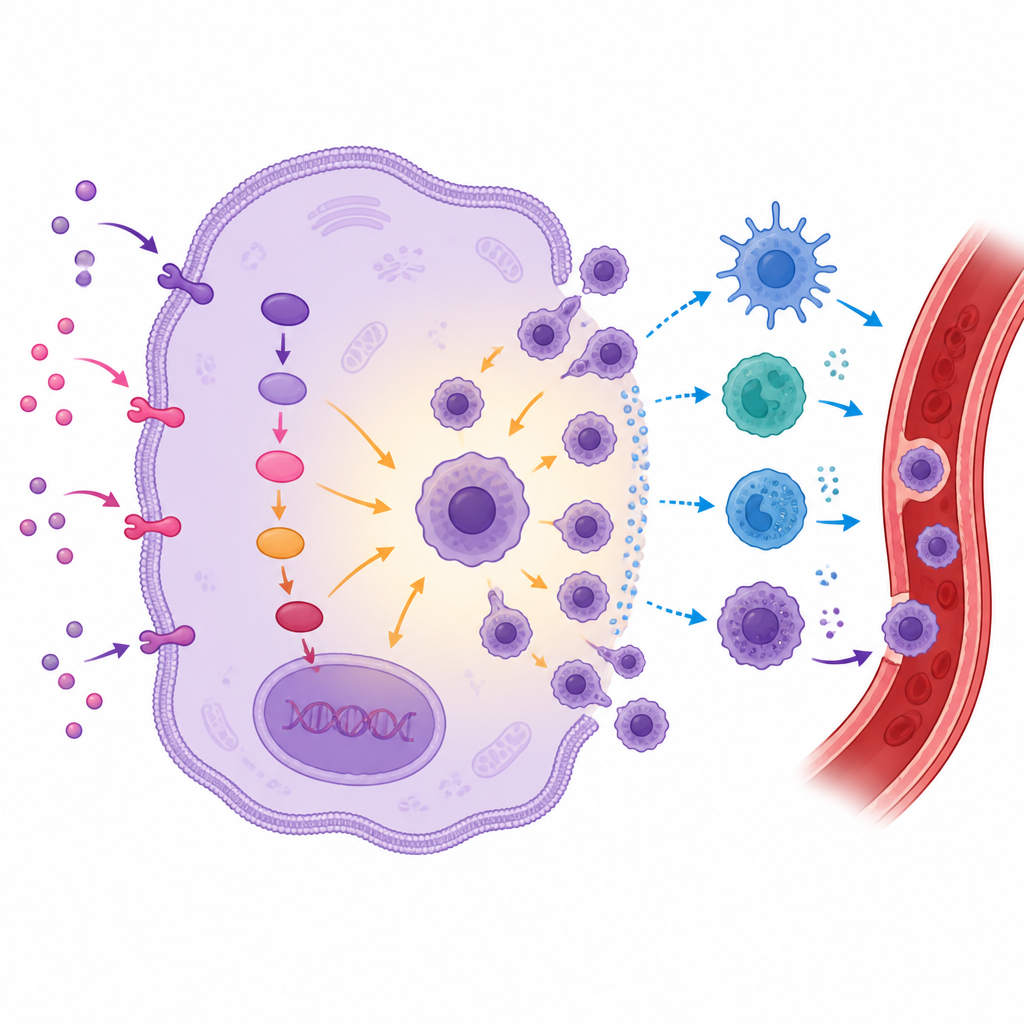
Digging deeper, the scientists used single cell gene analysis to compare tumor cells with and without KRT17. Cells rich in KRT17 showed higher activity in a growth-control network known as Wnt signaling, which is already known to support cancer stem cells and aggressive behavior in many tumors. When KRT17 was knocked down, key Wnt target genes dropped, and a fluorescent reporter that lights up when Wnt is active became much dimmer. In patient-derived cells from Black American women, KRT17 levels tracked with higher amounts and nuclear accumulation of the Wnt messenger protein beta catenin, consistent with a more strongly switched-on pathway.
Immune cells that help the wrong side
The study also uncovered a surprising link between KRT17, Wnt signaling, and the immune system. Tumors with abundant KRT17 contained more of a specialized immune cell type called gamma delta T cells, which in this context appear to support metastasis, and fewer cancer killing CD8 T cells. When KRT17 was reduced, gamma delta T cells fell and CD8 cells rose. Blocking Wnt signaling with a drug called LGK 974 in mouse models slowed tumor growth, reduced cancer stem cell numbers, lowered gamma delta T cells, and boosted CD8 cells. Directly depleting gamma delta T cells cut lung metastases, while depleting CD8 cells had the opposite effect, reinforcing their contrasting roles in tumor spread.
Why racial differences in tumors may point to new targets
Importantly, the same pattern emerged in human samples. Triple negative tumors and blood from Black American women carried more gamma delta T cells than those from White American women, and their tumors showed higher KRT17, stronger Wnt signaling, and more stem-like tumor features. When KRT17 was reduced in patient-derived organoids from Black American women, the organoids shrank, and blocking Wnt signaling made them shrink further. The data suggest that KRT17 may weaken a natural brake on beta catenin, allowing Wnt signaling to stay switched on, which in turn promotes stem-like tumor cells and attracts pro-metastatic immune cells.
What this could mean for future care
Taken together, the findings paint KRT17 as more than a simple marker. In triple negative breast cancer, especially in tumors from Black American women, high KRT17 appears to drive a chain reaction that boosts a growth pathway, expands cancer stem cells, and recruits immune cells that help tumors spread. This raises the possibility of using KRT17 levels to identify patients at higher risk and of testing Wnt-targeting drugs like LGK 974 as part of a tailored treatment strategy. While larger clinical studies will be needed, the work offers a concrete biological explanation for some of the unequal outcomes seen in this disease and suggests specific points where therapy might intervene.
Citation: Panneer Selvam, C., Thacker, G., Kim, U. et al. KRT17 promotes triple negative breast cancer through activation of Wnt signaling and γδ T-cells recruitment. Commun Biol 9, 676 (2026). https://doi.org/10.1038/s42003-026-09897-0
Keywords: triple negative breast cancer, KRT17, Wnt signaling, gamma delta T cells, cancer stem cells