Clear Sky Science · en
An endoplasmic reticulum membrane-mimetic GPC3 mRNA nanovaccine for specific immunotherapy of hepatocellular carcinoma
Teaching the Immune System to Spot Liver Cancer
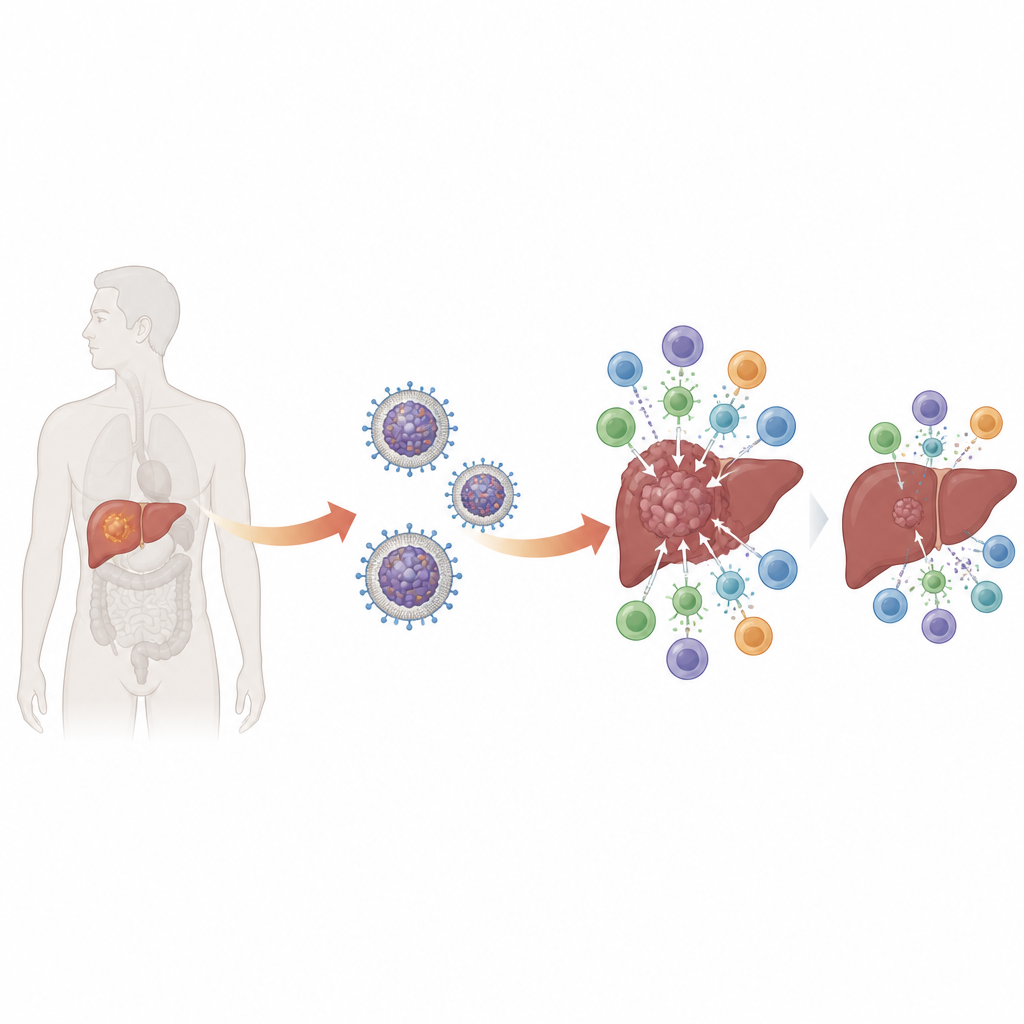
Liver cancer is often diagnosed late and can be difficult to treat with surgery or drugs alone. This study explores a new kind of cancer vaccine that teaches the immune system to recognize and attack liver tumors more precisely, using fragile genetic instructions called mRNA that must be carefully protected and delivered inside cells.
Why Cancer Vaccines Need Better Delivery
Cancer vaccines work by showing the immune system special markers from tumor cells so that immune cells learn to hunt them down. mRNA vaccines are especially attractive because they do not alter our DNA and can be designed quickly. However, naked mRNA is unstable in the body and is easily broken down before it reaches the right immune cells. Many current delivery packages are either too toxic, too complex, or poor at helping mRNA escape the small sacs inside cells where cargo is often trapped and degraded. These hurdles have limited how well mRNA cancer vaccines perform in real tumors, especially in liver cancer.
Building a Smarter Vaccine Package
The researchers designed a layered nanoparticle that tackles several of these problems at once. At its heart is a biodegradable plastic called PLGA that is already used in medical products. They modified this material with a run of genetic letters known as poly T, which can gently bind to the poly A tail found at the end of every mRNA strand, much like matched zipper teeth. This hydrogen bonding lets the particle condense and hold the mRNA firmly without relying on strong positive charges that can harm cells. Around this core, they added a simple fat-based shell and then cloaked the whole structure with pieces of membrane taken from the endoplasmic reticulum, a natural compartment inside cells rich in proteins that help move and present antigens.
Guiding Cargo Safely Inside Immune Cells
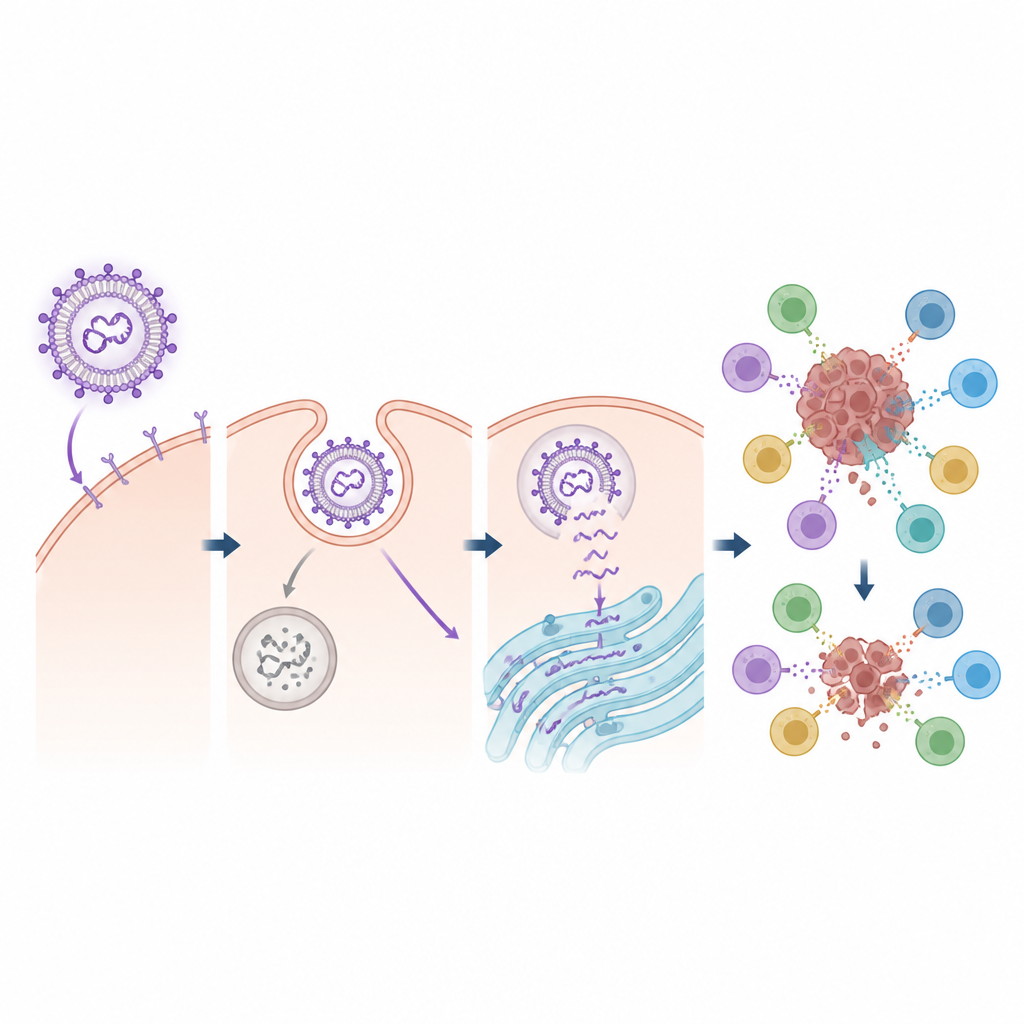
Once assembled, the team tested how these nanovaccines behaved in immune cells called dendritic cells, which act as scouts for the immune system. The coated particles were small, stable, and carried mRNA that resisted breakdown far longer than unprotected strands. Microscopy showed that standard lipid particles tended to end up in lysosomes, the cell’s recycling bins, where cargo is often destroyed. In contrast, the membrane-cloaked particles were taken up mainly through a route linked to tiny pits called caveolae and were then guided toward the endoplasmic reticulum instead of lysosomes. This detour meant more mRNA survived, was translated into protein, and triggered stronger activation and maturation of dendritic cells, preparing them to alert T cells.
Training the Immune System to Target Liver Tumors
For the vaccine’s message, the scientists chose glypican-3, a protein found at high levels on many liver cancer cells but not on most healthy tissues. In mice with liver tumors, the nanovaccine carrying glypican-3 mRNA gathered in nearby lymph nodes, where immune cells congregate. Compared with control treatments, it greatly boosted the presence of killer T cells and helper T cells inside tumors, reduced suppressive regulatory T cells, and shifted tumor-associated macrophages toward a more attack-ready state. Tumors in treated mice shrank dramatically, with a tumor inhibition rate close to 99 percent, and key organs showed no obvious signs of toxicity.
Lasting Protection and Tumor-Specific Action
The team also wanted to know whether the vaccine would remember the cancer. Mice whose tumors had been cleared with the nanovaccine resisted a second challenge with the same tumor cells, helped by an increased pool of central memory T cells in the spleen that can spring into action on re-exposure. When the same vaccine was tested against a melanoma model that barely expresses glypican-3, it did not improve outcomes, showing that the response depends on the chosen target and is not a blanket boost to immunity.
What This Could Mean for Future Liver Cancer Care
In simple terms, this work introduces a carefully engineered shell around an mRNA message that lets immune cells read it efficiently and safely, then remember what they have learned. By combining a liver cancer–specific marker with a delivery system that steers mRNA away from cellular waste pathways and toward productive use, the nanovaccine turned the mouse immune system into an effective, long-term defender against liver tumors. While much more testing is needed before use in people, the strategy offers a clear path toward more precise and durable immunotherapy for hepatocellular carcinoma.
Citation: Zeng, T., Gao, Q., Qu, J. et al. An endoplasmic reticulum membrane-mimetic GPC3 mRNA nanovaccine for specific immunotherapy of hepatocellular carcinoma. Commun Biol 9, 644 (2026). https://doi.org/10.1038/s42003-026-09891-6
Keywords: mRNA cancer vaccine, hepatocellular carcinoma, glypican-3, nanoparticle delivery, cancer immunotherapy