Clear Sky Science · en
Identification of pharmaceuticals and environmental contaminants as obesogens inducing a locomotion-independent thrifty phenotype
Hidden Helpers of Weight Gain
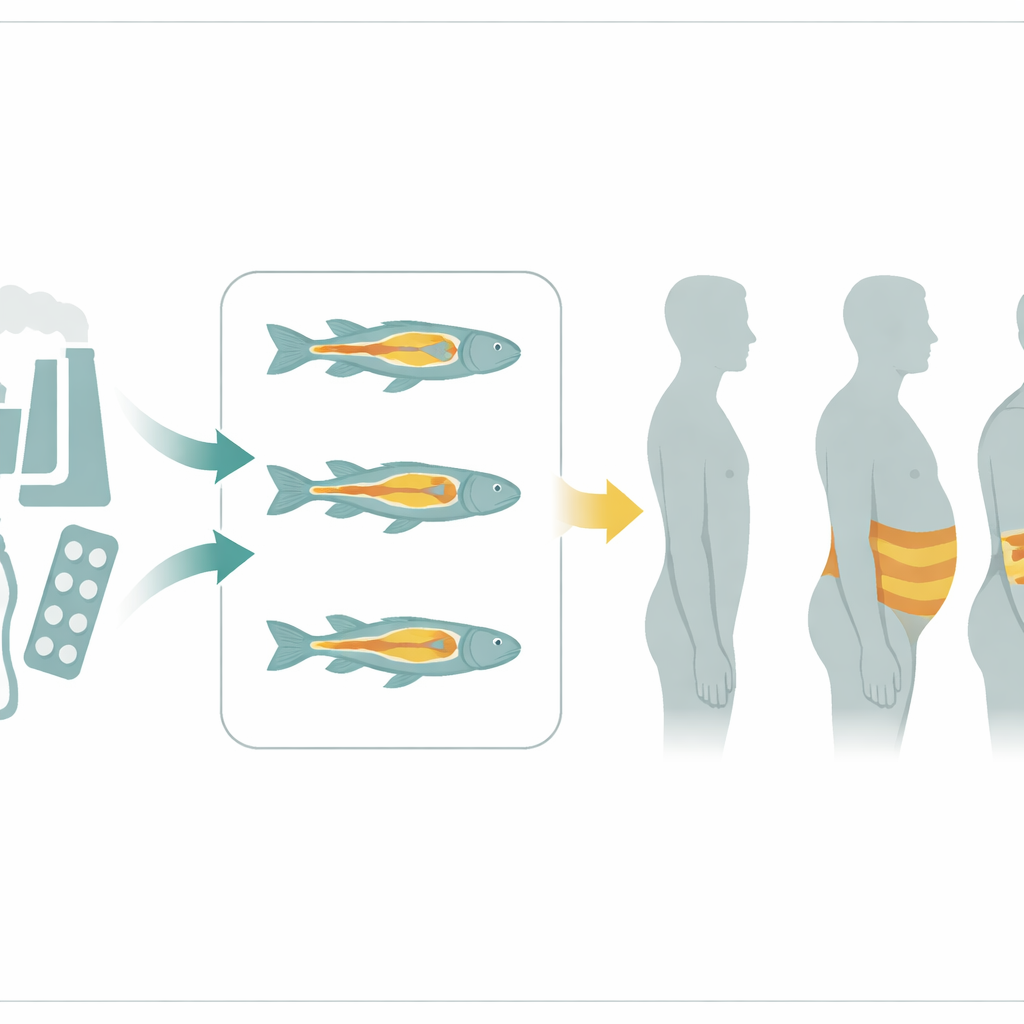
Many people think obesity is simply about eating too much and moving too little, but this study suggests another, more hidden player: common chemicals in our environment and medicines we take. The researchers show that some substances can quietly nudge the body into hanging on to fat even during short periods without food, potentially setting the stage for lifelong weight problems.
A Body Programmed to Save Every Calorie
The work is built around the idea of a “thrifty phenotype” – a body that has been programmed to conserve energy. This concept originally came from observations in humans: babies who experience poor nutrition before birth can grow into adults whose bodies are extremely efficient at storing calories, which becomes harmful when food is plentiful. The authors ask whether modern chemicals can push the body toward a similar thrifty state, making it harder to burn fat and easier to gain weight.
Small Fish as Stand-Ins for Human Metabolism
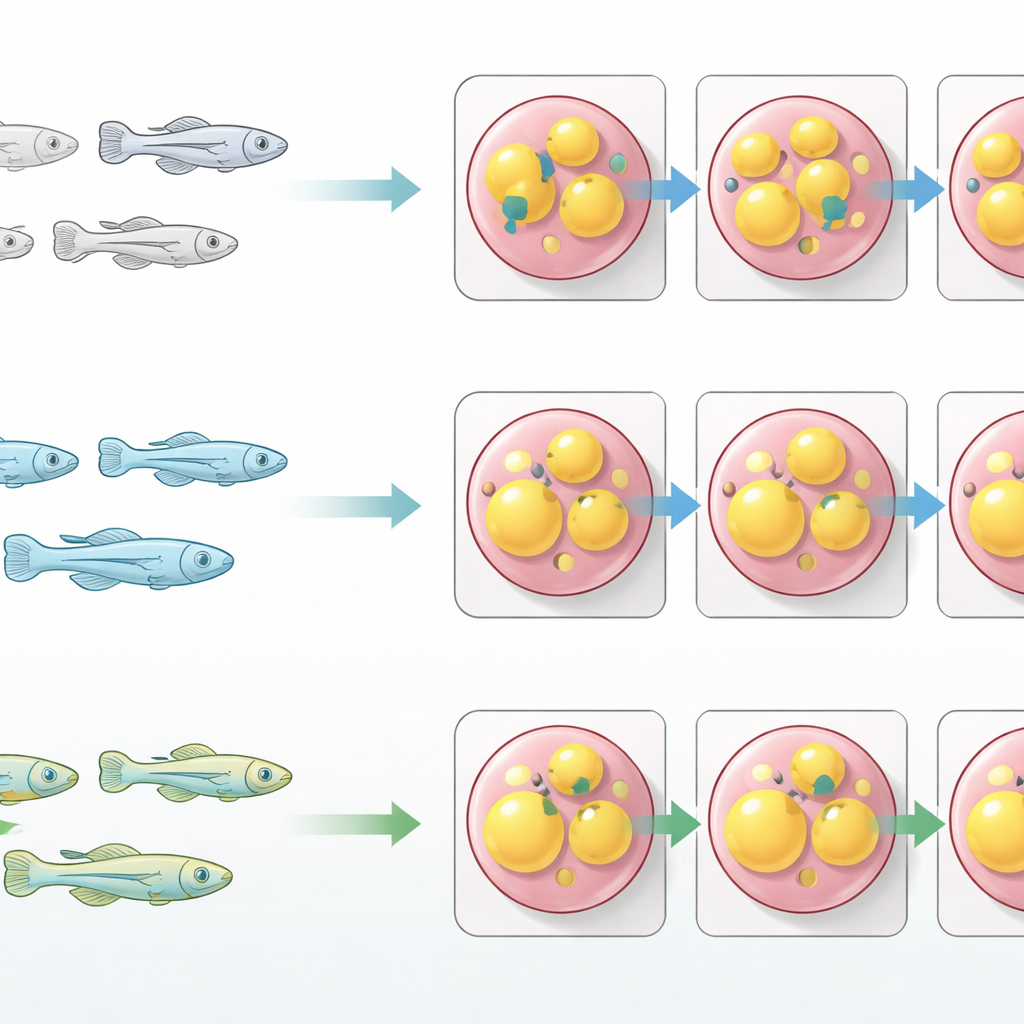
To explore this, the team used zebrafish, a tiny freshwater fish whose organs and fat tissue work in many ways like ours. They relied on a specialized “zebrafish obesogenic test,” which measures changes in the size of fat stores inside individual fish. Young zebrafish were first well fed, then fasted for 24 hours. During this short fast, normal fish naturally shrink their fat cells as they tap into stored energy. By comparing how much fat was lost in fish exposed to different chemicals versus unexposed fish, the researchers could see which substances interfered with this normal slimming process.
Chemicals That Block Fat Loss
Among thirteen pharmaceuticals and environmental contaminants examined, five clearly stood out. The environmental pollutant tributyltin and the diabetes drug rosiglitazone were used as known “obesogens” that had previously been shown to promote fat storage. Added to these, three widely encountered substances—amiodarone (a heart drug), dibutyl phthalate (a plasticizer), and triclosan (an antimicrobial found in personal-care products)—also prevented fat loss during fasting. In these exposed fish, fat cells in specific regions barely shrank, or even grew, over the 24-hour fast, in sharp contrast to the pronounced fat loss seen in control animals. A dose–response analysis revealed that tributyltin was the most potent, with the other four compounds requiring higher concentrations to produce similar thrifty effects.
Not Just About Moving Less
Many people assume that gaining weight from chemicals must come from feeling sluggish and burning fewer calories through movement. To test this, the researchers measured how far individual fish swam over a full day while exposed to the same substances. One compound, diazepam (a sedative), cut swimming activity roughly in half but did not alter fat loss at all, suggesting that reduced movement alone did not trigger the thrifty state. Conversely, tributyltin strongly promoted fat conservation without changing swimming behavior, and the other obesogenic chemicals had mixed or minimal effects on activity. When the team compared changes in fat stores with changes in movement across all chemicals and doses, there was no meaningful correlation. This indicates that the thrifty phenotype they observed arises from deeper metabolic changes rather than simple reductions in physical activity or food intake.
Why These Findings Matter Beyond the Fish Tank
The study highlights that several chemicals people encounter as medicines or pollutants can directly rewire how the body handles energy, making it hold on to fat even under conditions that should promote fat burning. While the experiments were done in zebrafish, the pathways that control fat storage and energy balance are highly conserved in vertebrates, raising concern that similar effects could occur in humans, particularly when exposure happens early in life. The authors argue that fighting the obesity pandemic may require more than lifestyle advice: it may also demand reducing our exposure to “obesogens” that quietly program the body into a thrifty, obesity-prone state independent of how much we move.
Citation: Al Kassir, S., Mercé, T., Bourcier, L.M. et al. Identification of pharmaceuticals and environmental contaminants as obesogens inducing a locomotion-independent thrifty phenotype. Commun Biol 9, 571 (2026). https://doi.org/10.1038/s42003-026-09842-1
Keywords: obesogens, thrifty phenotype, zebrafish, environmental chemicals, metabolism