Clear Sky Science · en
Single-nucleus multi-omics analysis of mouse small-intestinal Lgr5+ cell populations reveals Foxa3-induced Paneth cell-lineage differentiation
Why the Gut’s Hidden Builders Matter
Deep in the folds of the small intestine, tiny stem cells work nonstop to rebuild the lining that protects us from food, microbes, and injury. When this renewal process goes wrong, it can contribute to disorders like inflammatory bowel disease and poor healing after damage. This study takes a close look at these stem cells in mice, revealing unexpected diversity among them and uncovering a key molecular switch, called Foxa3, that helps guide certain stem cells to become Paneth cells—specialized guardians that support gut health and fight infection.
Mapping the Neighborhood at the Base of the Gut
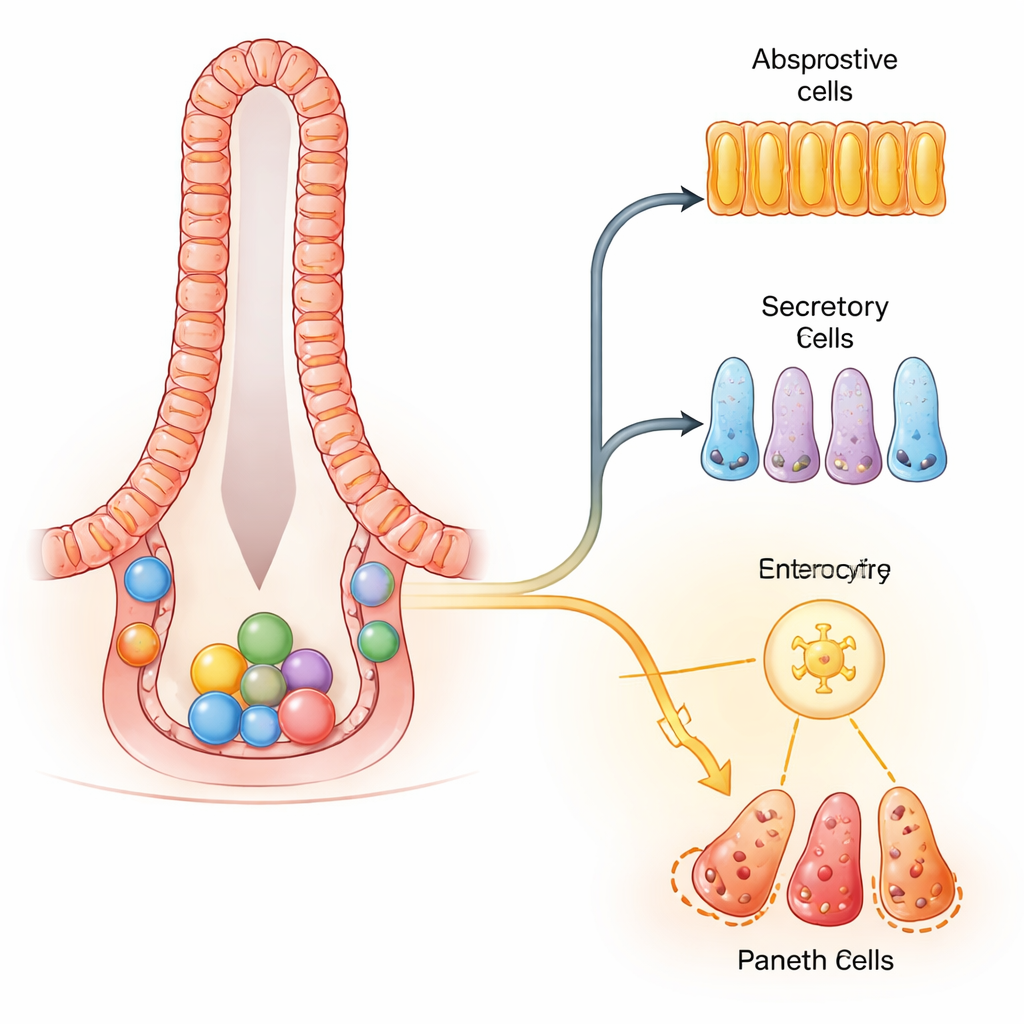
The researchers focused on cells that produce a marker called Lgr5, long thought to label a single, powerful type of intestinal stem cell. Using advanced “multi-omics” methods, they measured both gene activity and how tightly or loosely DNA is packaged inside thousands of individual cells from the mouse small intestine. This allowed them to see not only which genes were turned on, but also which regions of the genome were accessible and ready to be used. Their analysis showed that cells carrying the Lgr5 marker are not one uniform group; instead, they fall into six distinct subtypes, each with different roles and future fates.
Different Paths for Absorbing and Protecting
From this detailed map, the team reconstructed how stem cells move along branching developmental paths. One major route leads to absorptive cells, which cover the villi—fingerlike projections that take up nutrients. Along this path, stem cells first pass through rapidly dividing “transit-amplifying” cells before maturing. A second major route leads to secretory cells, which include mucus-producing goblet cells, hormone-secreting enteroendocrine cells, tuft cells, and Paneth cells. Importantly, some Lgr5+ stem cells are more quiet and long-lived, acting as reserve precursors that are biased toward making these secretory cell types.
A Hidden Switch for Secretory Guardians
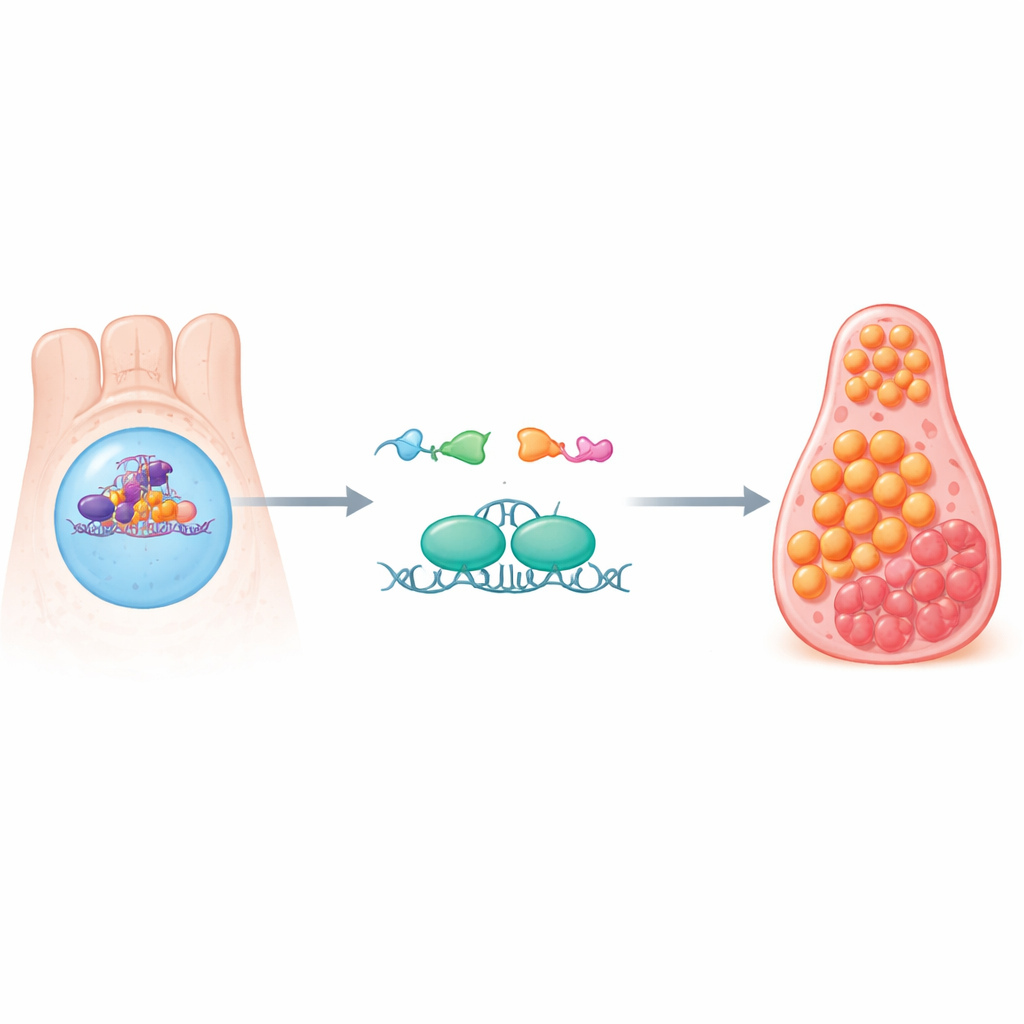
By linking gene expression with DNA accessibility, the researchers searched for master regulators that differ between these paths. They found that one protein, Foxa3, stands out in stem cells destined for the secretory track, especially in those thought to be Paneth cell precursors. Foxa3 is a transcription factor—a protein that binds DNA and turns sets of genes on or off. In the secretory-biased cells and in mature Paneth and goblet cells, Foxa3 and its target regions in the genome were both highly active and accessible, suggesting that Foxa3 helps open up the DNA needed to launch the secretory program.
Testing What Happens When the Switch Is Turned Down
To test Foxa3’s function directly, the team grew miniature guts, or organoids, from mouse intestinal stem cells in the lab and used genetic tools to reduce Foxa3 levels. When Foxa3 was knocked down, genes that normally mark Paneth cells and goblet cells dropped in activity, while markers of absorptive cells increased. Microscopy confirmed that organoids with less Foxa3 contained fewer Paneth cells and more absorptive cells, indicating that Foxa3 is needed to push stem cells toward becoming secretory defenders rather than simple nutrient absorbers.
How Foxa3 Talks to Metabolic Controllers
The researchers then asked how Foxa3 exerts this influence. They found that many of the genes reduced by Foxa3 knockdown belong to a signaling network controlled by PPAR proteins, well-known regulators of metabolism and cell identity. Using a technique that pinpoints exactly where Foxa3 binds on DNA, they showed that Foxa3 attaches directly to control regions near several PPAR genes and their downstream targets. Previous work has linked PPAR activity to the formation and function of Paneth cells. Putting these pieces together, the study proposes that Foxa3 promotes Paneth cell differentiation largely by boosting the PPAR pathway, which in turn supports the specialized antimicrobial and supportive roles of these cells.
What This Means for Gut Health
In simple terms, this work shows that not all Lgr5+ stem cells are equal, and that a key factor, Foxa3, helps decide whether certain stem cells become protective Paneth cells instead of ordinary absorptive cells. Because Paneth cells help maintain the stem cell niche and defend against microbes, understanding how they are formed could open new avenues for treating gut diseases where this balance is disturbed, such as Crohn’s disease or ulcerative colitis. By charting both the diversity of intestinal stem cells and the Foxa3–PPAR control system that guides Paneth cell development, the study provides a detailed blueprint that may one day help scientists design therapies to restore a healthy intestinal lining.
Citation: Deng, X., Sun, S., Lu, C. et al. Single-nucleus multi-omics analysis of mouse small-intestinal Lgr5+ cell populations reveals Foxa3-induced Paneth cell-lineage differentiation. Commun Biol 9, 470 (2026). https://doi.org/10.1038/s42003-026-09736-2
Keywords: intestinal stem cells, Paneth cell differentiation, Foxa3, single-cell multi-omics, PPAR signaling