Clear Sky Science · en
Mapping the marine distribution of eulachon (Thaleichthys pacificus) in the Northeast Pacific using environmental DNA
A Hidden Fish with a Big Story
Along the chilly shores of the U.S. West Coast lives a small, oily fish that few people have heard of but that many coastal cultures have long relied on: the eulachon, or "candlefish." These fish are now threatened in much of their range, yet they spend nearly all of their lives offshore, out of sight and hard to study. This paper shows how traces of genetic material drifting in seawater—environmental DNA, or eDNA—can be used like a high‑tech tracking dye to reveal where these elusive fish live in the ocean and which habitats may be most important for their survival.
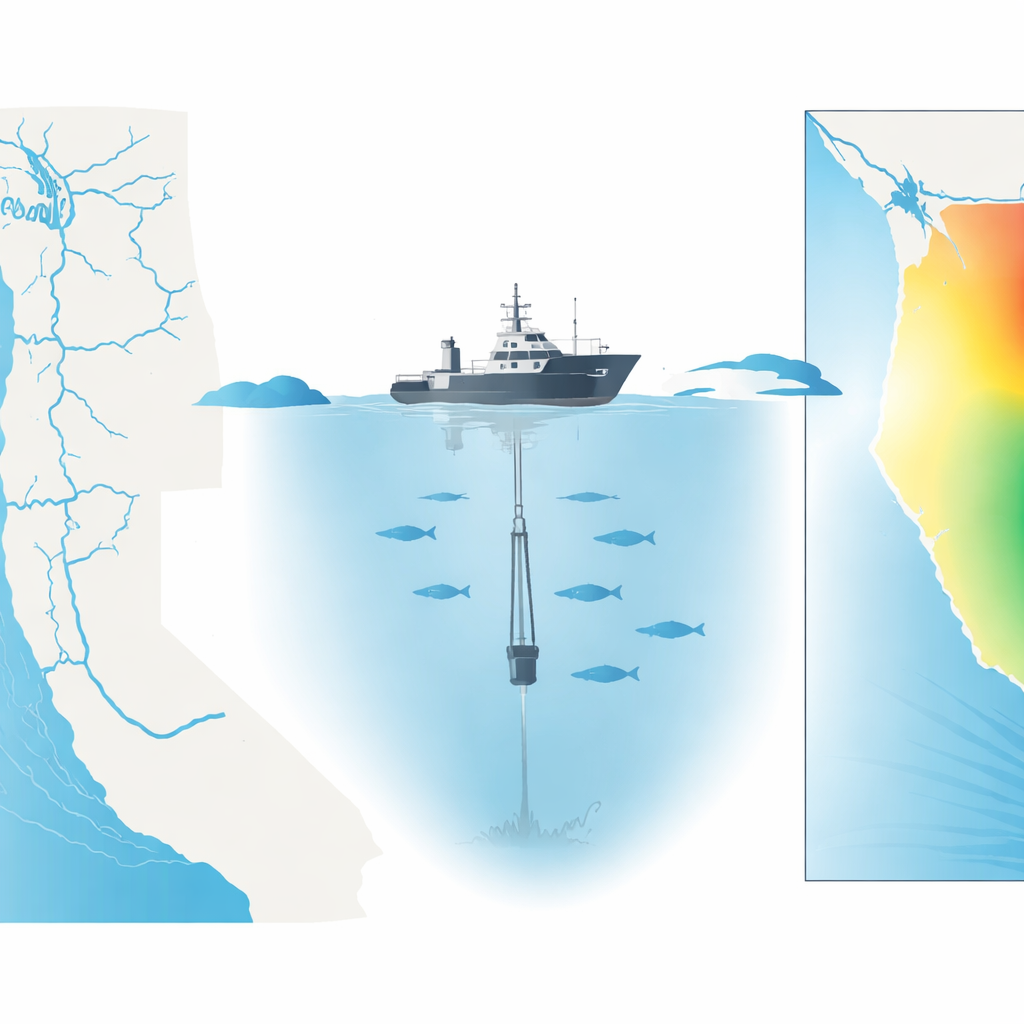
Listening for Life in a Bucket of Water
Instead of chasing fish with nets or hooks, the researchers collected thousands of water samples at night from a research vessel working along the coasts of California, Oregon, and Washington in 2019 and 2021. Each sample was filtered and analyzed in the lab using a test that recognizes only eulachon DNA. If any genetic fragments from the species were present—shed as mucus, scales, or waste—the test would amplify them, revealing a hidden signal of the fish’s presence. Because each sample had multiple lab replicates and strict controls against contamination, the team could turn this yes‑or‑no signal into a more confident measure of how much eulachon DNA was in different places and depths.
Turning DNA Clues into a Seafloor Map
To move from scattered water samples to a full picture of where eulachon are likely to live, the scientists built a statistical model that treated the DNA in each bottle as a window into the true, but unobserved, distribution of the fish. They combined the DNA measurements with information on ocean temperature, depth, seafloor shape, river outflow, and the abundance of krill—tiny shrimp‑like animals that eulachon love to eat. Using this model, they projected DNA concentrations onto a fine‑scale grid covering roughly 200,000 square kilometers of ocean and three depth layers (surface, 50 meters, and 150 meters), effectively "painting" an atlas of likely eulachon habitat in space and time.
Where the Fish Actually Turn Up
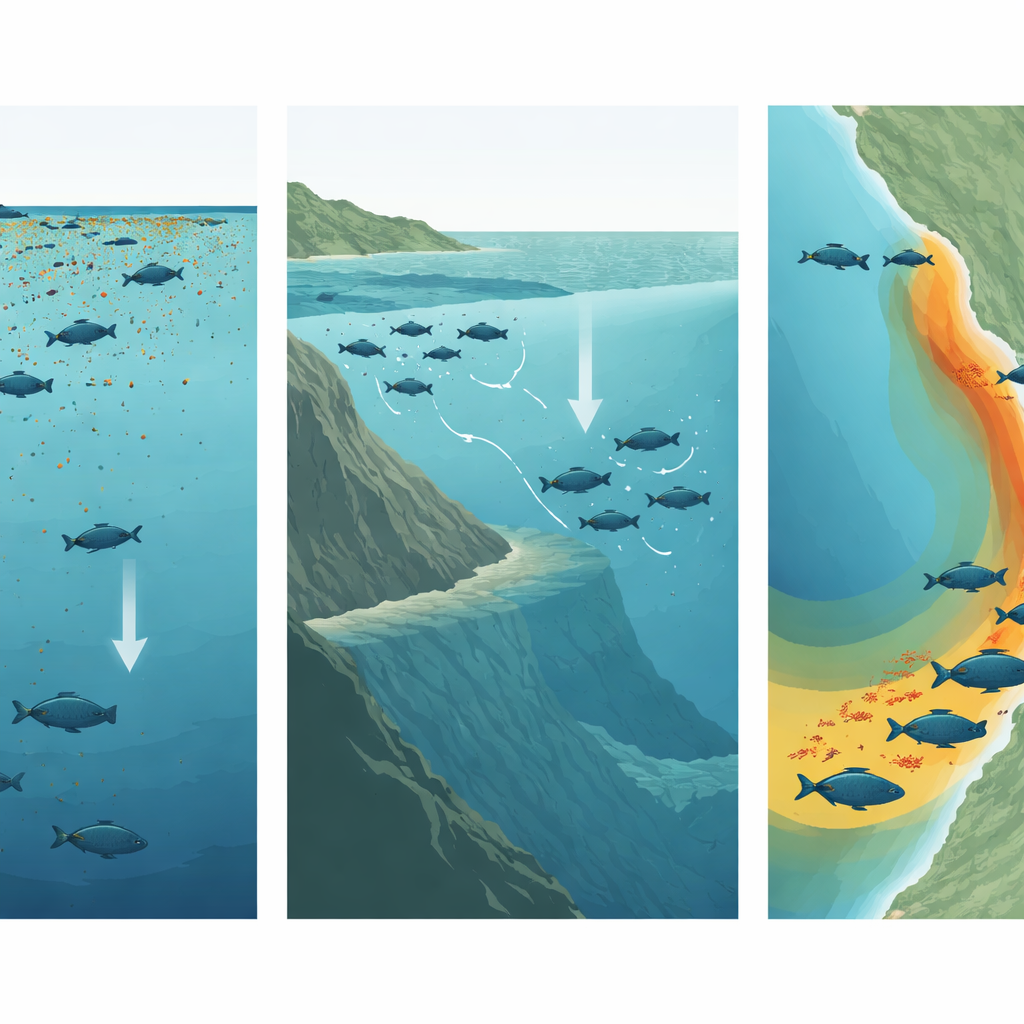
The map revealed that eulachon are more widespread along the U.S. West Coast than earlier records suggested, with particularly strong signals off central Oregon and Washington. Intriguingly, the team also detected eulachon DNA south of the southernmost known spawning river, hinting that the species may range farther down the California coast than previously thought. Across the region, DNA levels were highest near the surface, even though adult eulachon have often been described as bottom‑oriented fish. This pattern, combined with prior observations of fish and their krill prey rising toward the surface at night, supports the idea that eulachon may undertake nightly vertical migrations to feed.
Hotspots of Food and Flow
Another clear message from the DNA map is that eulachon tend to gather where the ocean is especially productive. High DNA concentrations were found near the 150‑meter depth contour, around offshore banks like Heceta and Stonewall off Oregon, and near the mouth and plume of the Columbia River and the energetic waters of the Juan de Fuca eddy. These areas are known "buffets" for marine life, where upwelling, complex seafloor shapes, and river outflow concentrate nutrients and prey such as krill. The model showed that eulachon DNA increased in warmer surface waters above about 11 degrees Celsius and with higher krill abundance, reinforcing the picture of a fish that tracks rich feeding grounds rather than simply hugging the bottom everywhere it goes.
What This Means for Saving a Small Fish
For a threatened species that spends most of its time offshore, conservation planning has long relied on limited snapshots from river spawning runs and fishing bycatch. This study shows that non‑destructive eDNA sampling, combined with modern spatial modeling, can fill in those blind spots by providing a three‑dimensional, coast‑wide picture of where eulachon are most likely to be found. The work identifies promising hotspots for future study and potential protection, suggests that eulachon populations have recently increased, and offers a flexible toolkit that can be reused for other rare or vulnerable marine species. In plain terms, the authors demonstrate that by reading the genetic "dust" left in seawater, we can finally start to see where these elusive fish live and feed—and use that knowledge to help keep them from disappearing.
Citation: Liu, O.R., Shelton, A.O., Ramón-Laca, A. et al. Mapping the marine distribution of eulachon (Thaleichthys pacificus) in the Northeast Pacific using environmental DNA. Commun Biol 9, 465 (2026). https://doi.org/10.1038/s42003-026-09733-5
Keywords: environmental DNA, eulachon, marine conservation, species distribution, California Current