Clear Sky Science · en
Obesogenic effects of warm temperature involve feeding adaptation by preoptic area leptin receptor neurons
Why room temperature matters for body weight
Most of us think of temperature as a matter of comfort, not calories. But this study reveals that the warmth of the air around us can quietly steer how much we eat, how much energy we burn, and whether our bodies store fat. By studying mice, the researchers uncover a brain circuit that senses warm surroundings and adjusts meal size and feelings of fullness, helping explain why cozy, climate‑controlled environments may subtly encourage weight gain.
Warmth, eating, and hidden weight gain
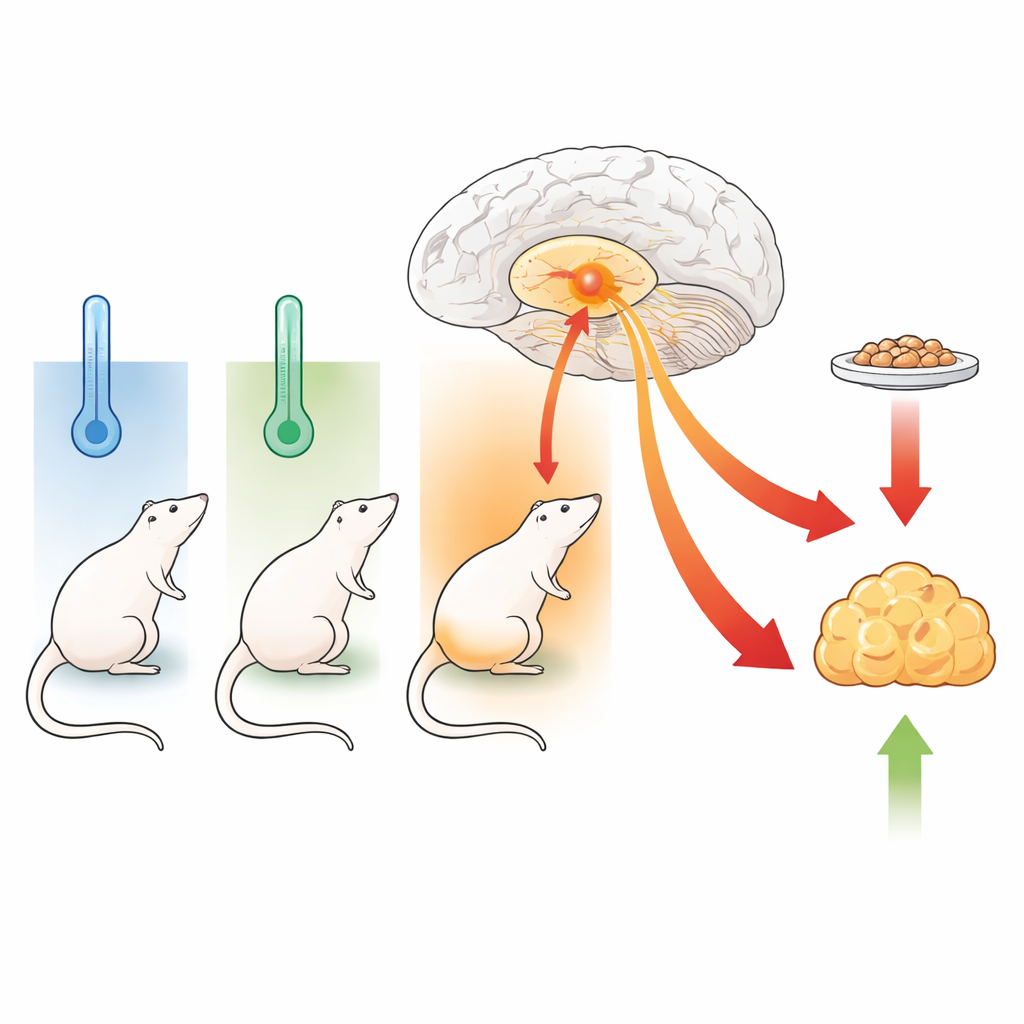
The team first asked what happens to body weight when mice live in cold, room‑temperature, or warm air. In the short term, changing the ambient temperature strongly shifted both food intake and energy use, but body weight stayed almost the same because these forces balanced each other. Over weeks, however, a different picture emerged. Mice kept in warm conditions ate a bit less than those at cooler temperatures, yet they burned much less energy. As a result, they accumulated more body fat, while cold‑exposed mice stayed lean. This showed that warmth can be “obesogenic”: it promotes fat gain not by making animals overeat, but by reducing the calories they spend to keep warm.
A warm switch deep in the brain
To understand how temperature changes feeding behavior, the researchers turned to a small region deep in the brain called the preoptic area. This region is classically known for controlling body temperature, but the study focuses on a particular set of cells there that carry receptors for leptin, a hormone released from fat tissue. These leptin‑sensitive neurons turn on when the environment is warm. Using designer receptors that let them specifically activate these cells in mice, the scientists could mimic the effect of warm air even when the animals were kept cold. Switching on this preoptic population immediately reduced food intake, especially when the mice would normally eat more, such as after fasting or during cold exposure. Importantly, this reduction in eating was not simply because the animals moved less; their activity levels changed little, pointing to a direct effect on appetite and satiety.
How warmth reshapes meals, not just calories
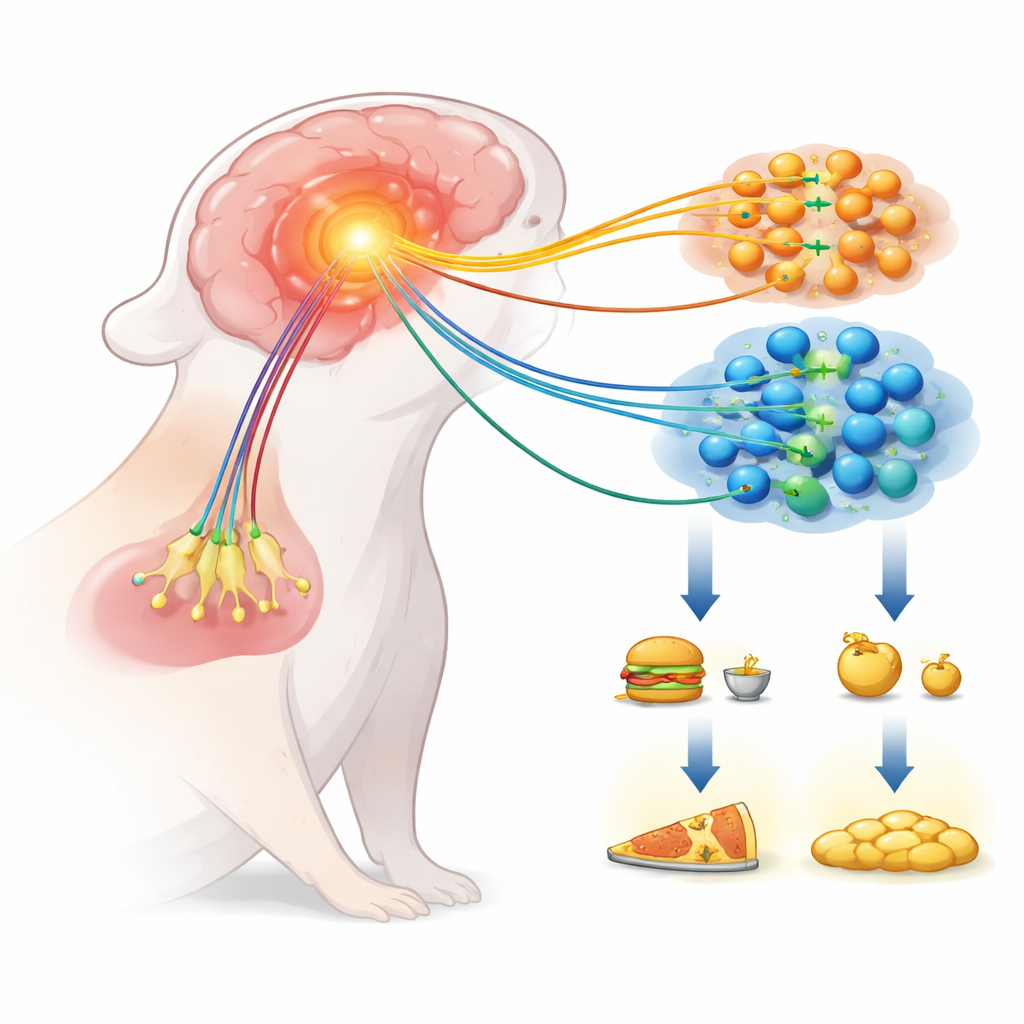
Rather than only counting how much food disappeared from the cage, the researchers examined the fine structure of feeding: how big each meal was, how long it lasted, how often mice returned to eat, and how long they stayed satisfied afterward. Warm air reshaped meals in a specific way. Mice took smaller, shorter meals and showed longer periods of satiety between them, but the number and timing of meals stayed nearly the same. When the preoptic leptin‑sensitive neurons were artificially activated at normal room temperature, mice showed a very similar pattern: total food intake dropped mainly because each meal became smaller and more satisfying. This indicates that the warm‑sensing circuit acts as a “meal brake,” helping to decide when a meal should end rather than whether to start one.
Links to downstream satiety pathways
The study then mapped where these preoptic neurons send their signals. Their axons reached classic feeding centers in the hypothalamus, including regions that host the melanocortin system—a well‑known regulator of hunger and fullness. Within this system, one group of cells promotes satiety, while another drives hunger, and both converge on neurons carrying a receptor called MC4R. The researchers showed that activating the preoptic warm‑sensing neurons strongly suppressed eating when the melanocortin system would normally be in a “hungry” state, such as after fasting. They also found that directly stimulating MC4R with a drug reduced food intake more at cold temperatures, supporting the idea that temperature changes how sensitive these downstream circuits are. Warm conditions altered activity in specific MC4R‑containing neurons and boosted the activation of satiety‑related cells in part of the arcuate nucleus, a key feeding hub, suggesting a pathway from environmental warmth to the machinery that decides meal size.
What this means for body weight and health
Taken together, the findings show that warm surroundings do more than save us from shivering. They engage a dedicated brain circuit—leptin‑responsive neurons in the preoptic area—that senses both temperature and the body’s energy status, then tunes how large our meals are and how full we feel afterward. Over time, the reduced energy cost of staying warm outweighs the modest drop in eating, making chronic warmth a risk factor for fat gain. Understanding this circuit helps explain how modern climate‑controlled lifestyles might contribute to rising obesity and suggests that targeting these warm‑sensing brain pathways could offer new strategies for treating metabolic and eating disorders.
Citation: Kaiser, L., Lee, N., Zaunbrecher, K. et al. Obesogenic effects of warm temperature involve feeding adaptation by preoptic area leptin receptor neurons. Commun Biol 9, 475 (2026). https://doi.org/10.1038/s42003-026-09723-7
Keywords: ambient temperature, appetite control, hypothalamus, leptin, energy balance