Clear Sky Science · en
High-throughput screening of small molecule Wnt/β-catenin activators for hair and nail growth
Why this research matters for everyday life
Hair thinning and slow-growing or damaged nails are common worries, yet today’s treatments are limited and don’t work for everyone. This study explores a new way to boost the body’s own repair programs that control how hair and nails grow. By scanning thousands of existing medicines and natural compounds, the researchers looked for small molecules that could nudge these programs back into action, opening the door to future creams or solutions that help regrow hair and strengthen nails.
The shared engine behind hair and nail growth
Although hair and nails look very different, they are both built from hard keratin and rely on a common internal control system often called the Wnt/β-catenin pathway. This system helps switch on stem cells that form new hair shafts and nail plates. Subtle differences in how related genes are turned on or off give hair its flexible fibers and nails their rigid plates. Proteins known as R-spondins, especially RSPO3 in hair and RSPO4 in nails, fine-tune this control, while other genes can act as brakes. Because this shared machinery runs both mini-organs, a single drug that safely boosts the right signals might help with problems in both hair and nails.
Hunting for helpful molecules at high speed
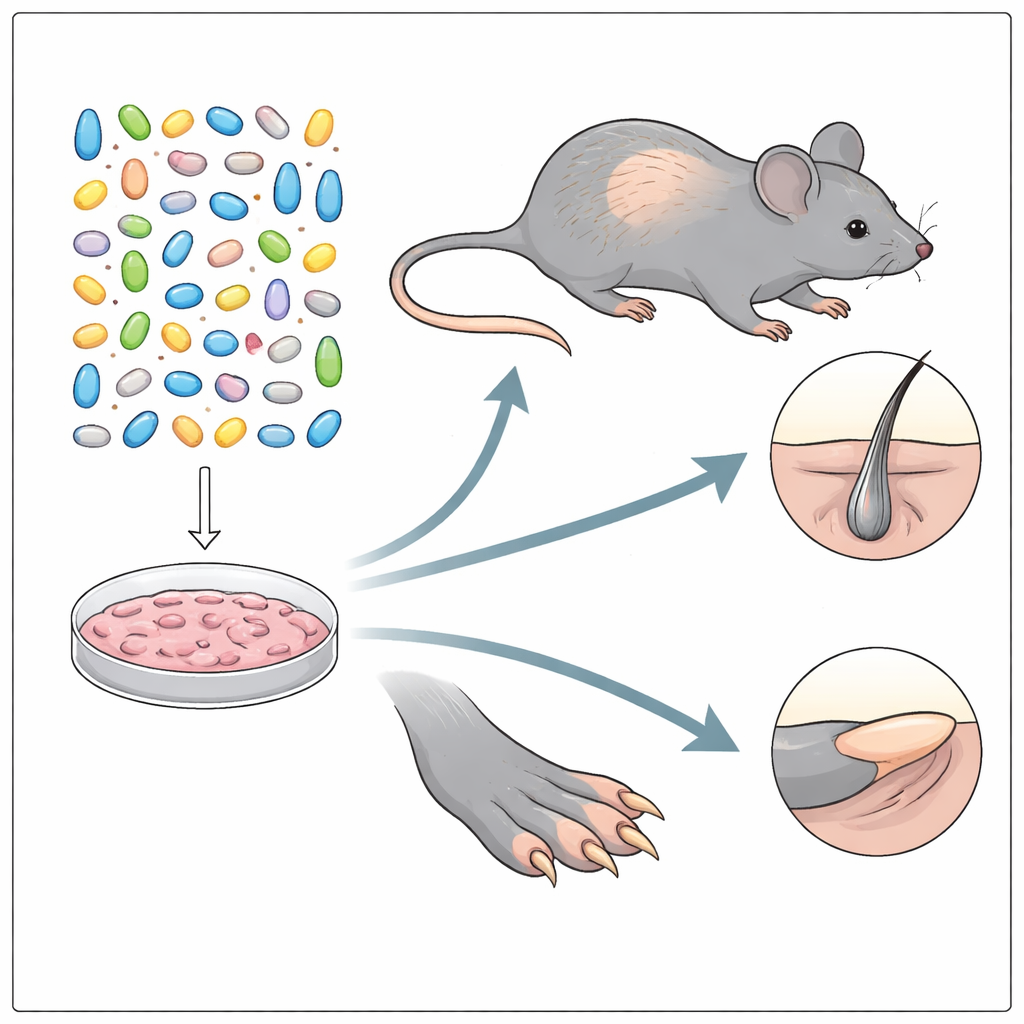
To find such molecules, the team used a high-throughput screening platform, a technology that lets scientists test thousands of compounds quickly in cells grown in tiny wells. They examined 5,170 substances, including many FDA-approved drugs and natural products, using human cells engineered to glow more brightly when Wnt signaling is active. Compounds that made the cells light up strongly, without killing them, were flagged as promising activators. From this massive search, nine drugs stood out, coming from three main groups: antiviral agents, anticancer drugs, and known Wnt-pathway boosters called GSK-3β inhibitors.
Zooming in on gene changes and mini hair–nail organs
The researchers then asked how these nine candidates affected real hair-related cells. They treated human dermal papilla cells—key “command centers” at the base of hair follicles—and measured changes in dozens of genes tied to growth control. Some compounds, such as aminoacridine and proflavine, strongly increased RSPO3 and RSPO4, while also dialing down certain natural brakes on the pathway. The team also built tiny three-dimensional “germs” that mimic early hair and nail structures by combining patient-derived skin cells in spheroids. When exposed to the test drugs, several compounds, especially imidocarb, noticeably lengthened these miniature hair and nail germs, suggesting they could encourage growth in living tissue.
Testing hair and nail growth in living animals
Next, the group moved to mouse models to see whether these molecular changes translated into visible regrowth. On shaved mouse backs, daily application of selected drugs was compared to minoxidil, a standard hair-growth medicine. Aminoacridine, particularly when combined with minoxidil, triggered earlier and more extensive darkening of the skin, a sign that follicles were entering the active growth phase. Over four weeks, this combination produced larger areas of new hair than minoxidil alone. For nails, the team trimmed mouse toenails and monitored regrowth with detailed CT imaging. Here, imidocarb and proflavine led to greater nail length increases than control treatments, underscoring their potential for boosting nail growth as well as hair-related markers.
What it could mean for future treatments
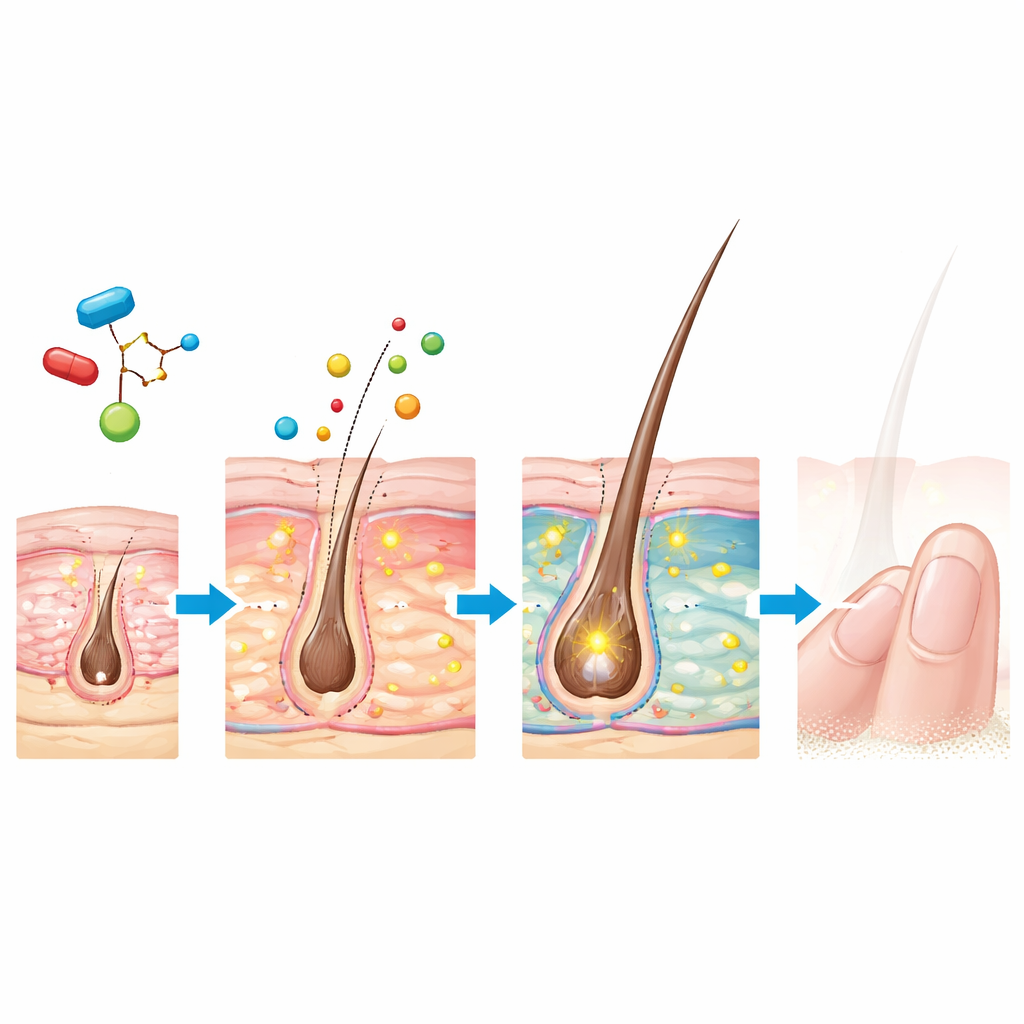
Taken together, the study shows that careful screening of existing drugs can uncover new uses for them in hair and nail regeneration. Aminoacridine, especially paired with minoxidil, emerged as a strong hair-growth candidate, while imidocarb and proflavine showed particular promise for nails. These compounds appear to work by gently amplifying the body’s own growth signals rather than forcing cells to divide in an uncontrolled way. Although the work is still at the laboratory and animal stage, and safety and dosing must be fully tested in humans, it charts a realistic path toward next-generation topical therapies that might one day help people restore fuller hair and healthier nails.
Citation: Abudureyimu, G., Jang, HS., Shim, J. et al. High-throughput screening of small molecule Wnt/β-catenin activators for hair and nail growth. Commun Biol 9, 525 (2026). https://doi.org/10.1038/s42003-026-09656-1
Keywords: hair regeneration, nail growth, Wnt signaling, drug repurposing, high-throughput screening