Clear Sky Science · en
Evaluating large language models for simplifying non-English medical consent with clinician involvement
Why clearer medical forms matter
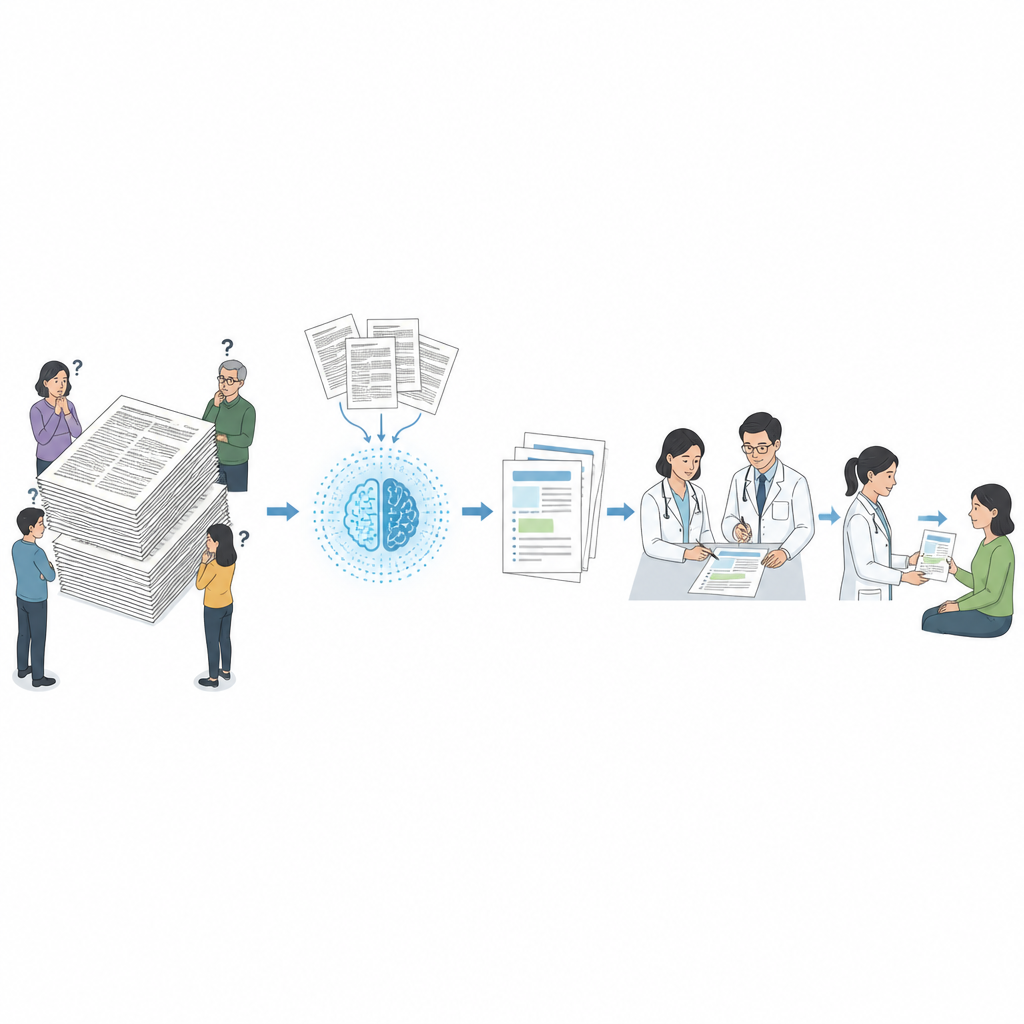
Before surgery, patients are asked to sign informed consent forms that explain what will happen and what could go wrong. In reality, many of these forms are long, crowded with technical words, and hard to follow, especially in languages with complex writing styles such as Chinese. This study asked whether large language models, a type of artificial intelligence used for text, could help rewrite Chinese surgical consent forms in simpler language, and how much added value doctors bring when they revise the computer’s draft.
Three versions of the same story
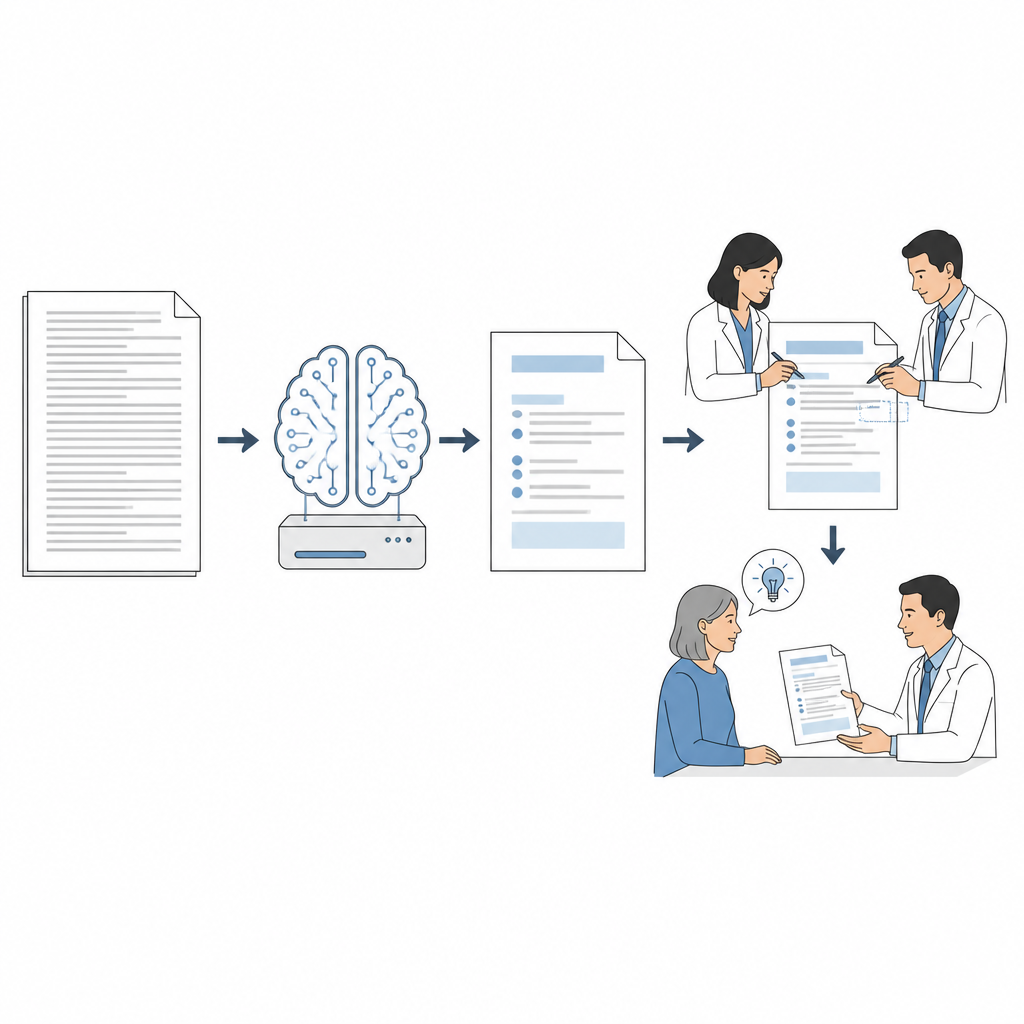
The researchers gathered official consent forms for liver surgery from nine hospitals across China. For each form they kept the original text, created a simplified version using an AI language model, and then asked an experienced liver surgeon to edit the AI version. This produced three versions of every document: original, AI only, and AI plus clinician. The team then compared these versions in four ways: basic text structure, how easy they were to read, how complete and accurate the medical information was, and how well non-specialists felt they understood the content.
AI makes the text shorter and easier
On structure and readability, the AI did what many patients might hope for. Compared with the original forms, the AI versions were noticeably shorter, with fewer characters and words, and shorter sentences that used more common vocabulary. A standard Chinese readability index showed that the AI texts were clearly easier to read. When lay reviewers scored how well they could understand each version, the AI rewrites outperformed the originals by a wide margin. In other words, the computer made the paperwork less intimidating and more approachable.
What gets lost when things are simplified
However, the study also found a trade off. Specialist surgeons rated how well each document described surgical risks, expected benefits, and possible alternatives. They judged that the AI only versions had weaker overall content, especially when it came to explaining risks. Important details were sometimes softened or left out as the language became simpler. Statistical models that accounted for differences between raters and documents confirmed that, on average, the AI drafts improved understanding but lowered the quality of risk information and overall medical soundness.
Doctors and AI working together
When clinicians carefully reviewed and edited the AI drafts, the picture changed. The combined AI plus clinician versions stayed shorter and easier to read than the originals, yet their risk descriptions and overall quality matched or even slightly exceeded the starting documents. Lay reviewers also gave these combined versions the highest comprehension scores of all. This suggests that AI is well suited to doing the first round of simplification, while human experts are needed to restore missing details, correct subtle errors, and make sure nothing vital is lost.
What this means for patients
This work shows that AI tools can help turn dense Chinese surgical consent forms into clearer, more readable documents, but they should not be left to work alone. The best results came when doctors used AI as a helper, then applied their clinical judgment to refine the text. For patients, this approach could mean forms that are easier to understand without sacrificing important information about risks, benefits, and choices, helping them make more informed decisions about their care.
Citation: Luo, J., Ma, J., Qiu, Y. et al. Evaluating large language models for simplifying non-English medical consent with clinician involvement. npj Digit. Med. 9, 405 (2026). https://doi.org/10.1038/s41746-026-02591-9
Keywords: informed consent, large language models, patient communication, medical AI, readability