Clear Sky Science · en
A randomized trial of a digitally delivered, home-based neuromodulation and mindfulness intervention for pain management in older adults with knee osteoarthritis
Why this matters for everyday knee pain
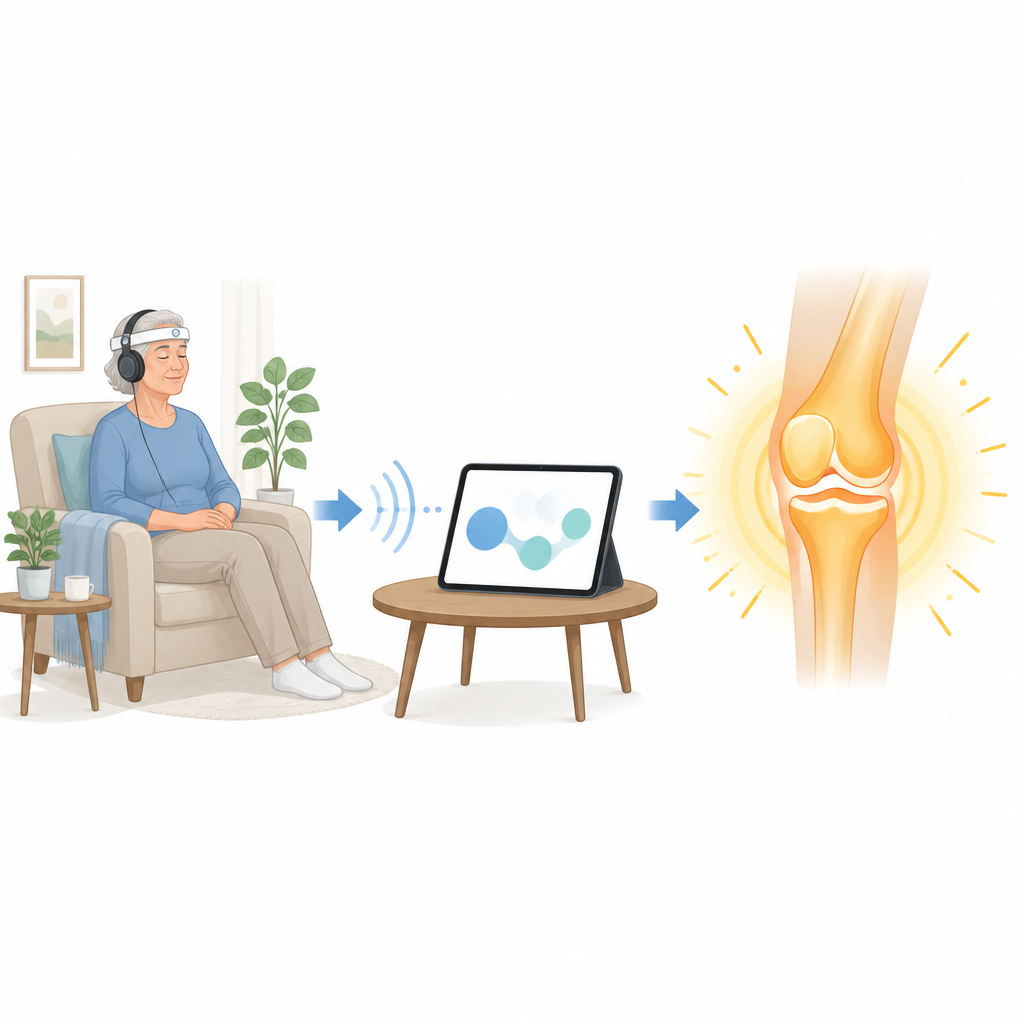
For many older adults, stiff and aching knees can turn simple tasks like climbing stairs or walking the dog into daily challenges. Pain medicines often bring limited relief and can cause side effects, leaving people searching for safer, at-home options. This study tested whether a digital, home-based program that combines gentle brain stimulation with guided mindfulness could quickly ease knee pain without a trip to the clinic.
A new kind of home pain session
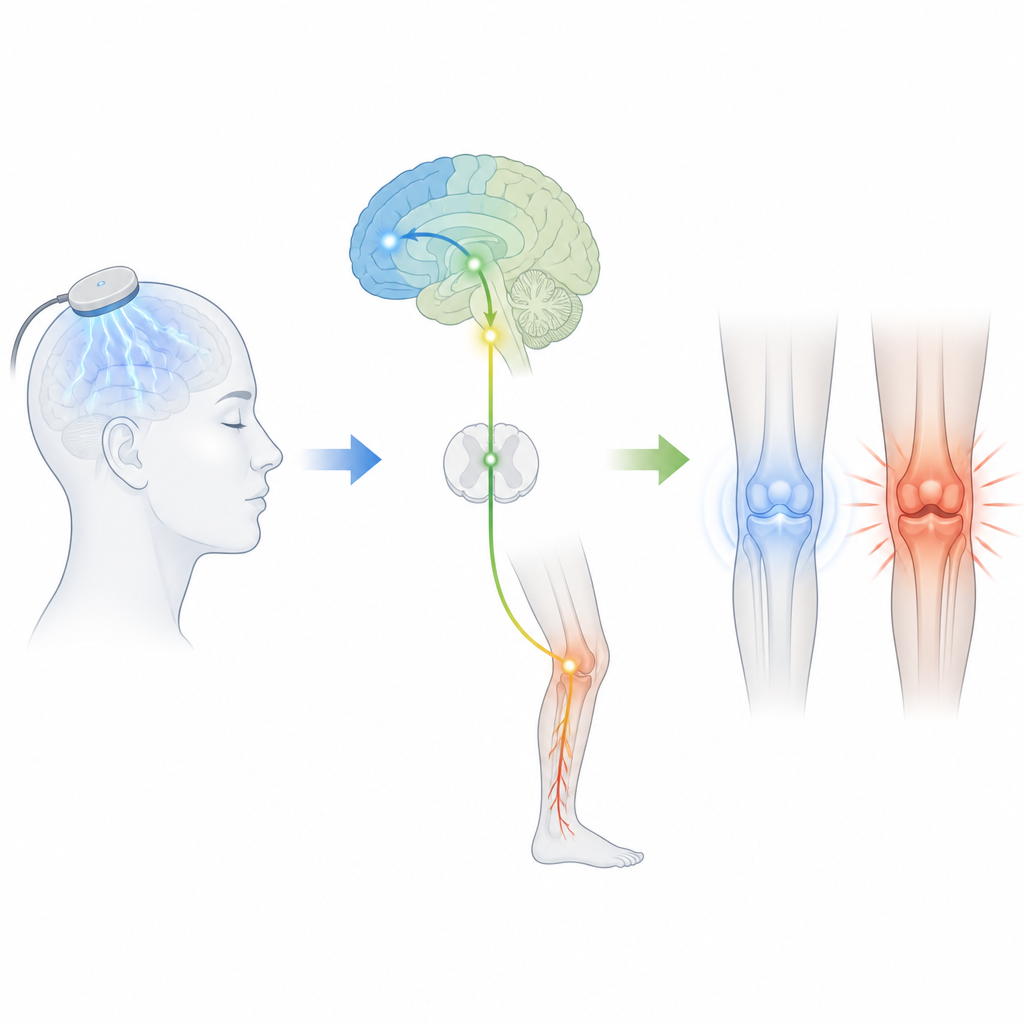
Researchers focused on older adults with knee osteoarthritis, a common wear-and-tear joint condition that often leads to chronic pain and disability. They built a two-week program that people could carry out entirely at home under remote supervision. During ten 20-minute sessions, participants used a small device that delivered a weak electrical current to specific areas on the scalp while, at the same time, listening to a guided mindfulness audio track that encouraged slow breathing, body awareness, and compassion. The idea was that the device would calm pain pathways in the brain while the meditation helped people relate differently to their pain.
How the study was set up
To fairly test the approach, 208 adults aged 50 to 85 with painful knee osteoarthritis were randomly assigned to one of four groups. One group received both active brain stimulation and active mindfulness. A second group received active brain stimulation with a simple relaxation recording instead of true mindfulness. A third group received only mindfulness plus pretend (sham) brain stimulation, and a fourth group received sham versions of both. Neither participants nor study staff knew who was in which group. Everyone completed the same schedule of ten home sessions over two weeks, with staff watching via secure video to check device placement and safety. Knee pain was rated on a 0 to 100 scale before treatment, at the middle and end of the two weeks, and then monthly for three months.
What happened to people’s pain
By the end of the two-week treatment, people who received real brain stimulation reported much larger drops in knee pain than those who did not, regardless of whether they practiced mindfulness at the same time. On average, the combined brain stimulation plus mindfulness group cut their pain scores by about 44 percent, and the brain stimulation plus relaxation group by about 37 percent. In contrast, the mindfulness-only group and the double-sham group showed smaller changes, suggesting that the electrical stimulation was the main driver of quick pain relief. However, when the researchers compared the two brain stimulation groups directly, the added mindfulness did not provide a clear extra benefit in this trial.
How long the relief lasted and who benefited most
When participants were followed for three months after treatment, the strong early gains began to fade. Pain scores in all groups drifted back toward their starting levels, and by three months none of the active treatments stood out clearly from the sham condition. This pattern suggests that a short, two-week course of sessions was not enough to create lasting relief for most people. The study also looked at whether traits like age, sex, or body weight influenced results. Body mass index, a measure related to weight, was linked to higher starting pain overall, and people with higher values in the combined treatment group appeared to gain somewhat more short-term benefit, hinting that heavier individuals might respond particularly well to this kind of approach.
What this means for people living with sore knees
To a layperson, the main message is that a carefully supervised, at-home brain stimulation program can quickly ease knee pain from osteoarthritis, at least for a few weeks, and it can be delivered safely and reliably using digital tools. In this study, adding a brief, recorded mindfulness practice did not clearly boost the pain relief beyond the stimulation itself, and the benefits did not last without continued sessions. The findings point toward a future in which older adults might manage joint pain with personalized, non-drug treatments done from their living rooms, but they also show that longer or repeated courses and stronger mindfulness support will be needed before such programs can offer steady, long-term comfort.
Citation: Park, J., Lee, C., Lin, L. et al. A randomized trial of a digitally delivered, home-based neuromodulation and mindfulness intervention for pain management in older adults with knee osteoarthritis. npj Digit. Med. 9, 397 (2026). https://doi.org/10.1038/s41746-026-02577-7
Keywords: knee osteoarthritis, home-based neuromodulation, mindfulness meditation, chronic pain relief, older adults