Clear Sky Science · en
Artificial intelligence assisted colorectal lesion detection in private practices a randomized controlled study
Why this matters for everyday health
Colonoscopy is one of the most powerful tools we have to prevent colon cancer, because doctors can find and remove growths called polyps before they turn dangerous. In recent years, many have hoped that artificial intelligence (AI) could act as an extra pair of eyes during these exams, spotting more of these tiny growths and saving more lives. This study asked a simple but important question: when AI is used in real-world private clinics with very experienced doctors, does it actually help find more risky growths, or does it mostly add complexity without clear benefit? 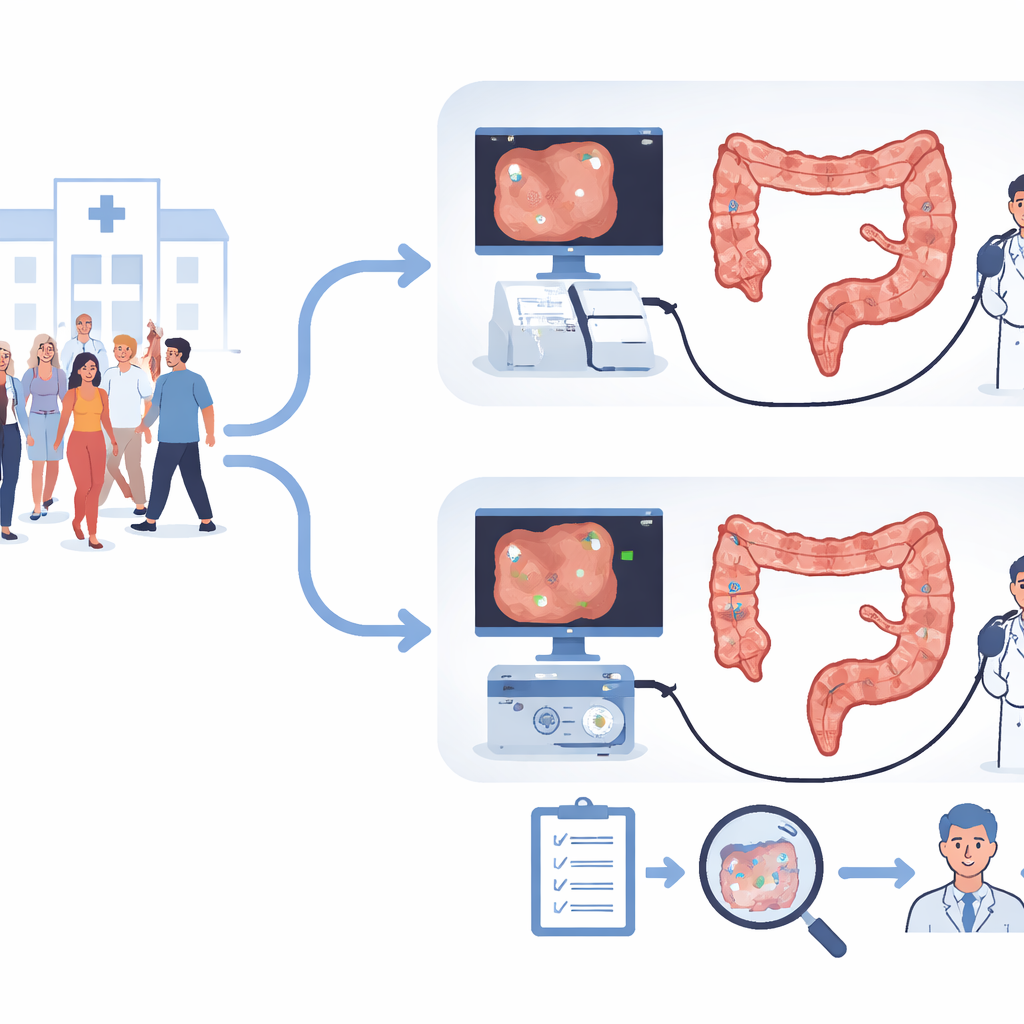
How colonoscopy and smart software work together
During a colonoscopy, a doctor guides a flexible camera through the large intestine, carefully scanning the inner surface for small bumps or flat patches that may be precancerous. The quality of this search can vary, depending on the doctor’s skill, the cleanliness of the bowel, and how easy the polyps are to see. AI tools for colonoscopy watch the video stream in real time and flag suspicious spots by drawing colored boxes around them on the screen. The idea is that such “computer-aided colonoscopy” might draw attention to subtle polyps the doctor might otherwise miss, boosting a key measure called the adenoma detection rate, or ADR—the percentage of patients in whom at least one precancerous polyp is found.
What this trial set out to test
The researchers conducted a randomized controlled trial, the gold standard for testing medical interventions, in five private outpatient endoscopy centers in Germany. More than 900 adults who were coming in for colon cancer screening or follow-up after earlier polyp removal were randomly assigned to one of two groups. In one group, doctors performed a standard colonoscopy. In the other, they used the same equipment plus an AI system called EndoMind that highlighted possible polyps on the main monitor. All 10 participating doctors were highly experienced, each with more than 10 years of practice and thousands of prior procedures. The two groups of patients were very similar in age, sex, reasons for colonoscopy, and known risk factors for colon cancer, allowing for a fair comparison of outcomes.
What the study found in real-world clinics
When the team compared results, they found that adding AI did not significantly increase the share of patients in whom at least one adenoma was detected. The ADR was about one-third in both groups (32.9% with standard colonoscopy versus 34.5% with AI support), a difference that could easily be due to chance. The overall number of polyps and serrated lesions (another type of risky growth) per exam was also similar. However, there were subtle shifts in what kinds of lesions were found: with AI, doctors detected a higher fraction of very small adenomas and more polyps in the left side of the colon, while slightly fewer larger adenomas were seen, especially in a stricter analysis limited to fully completed, well-prepared exams. The time doctors spent slowly withdrawing the scope—another important quality measure—did not change when AI was used. 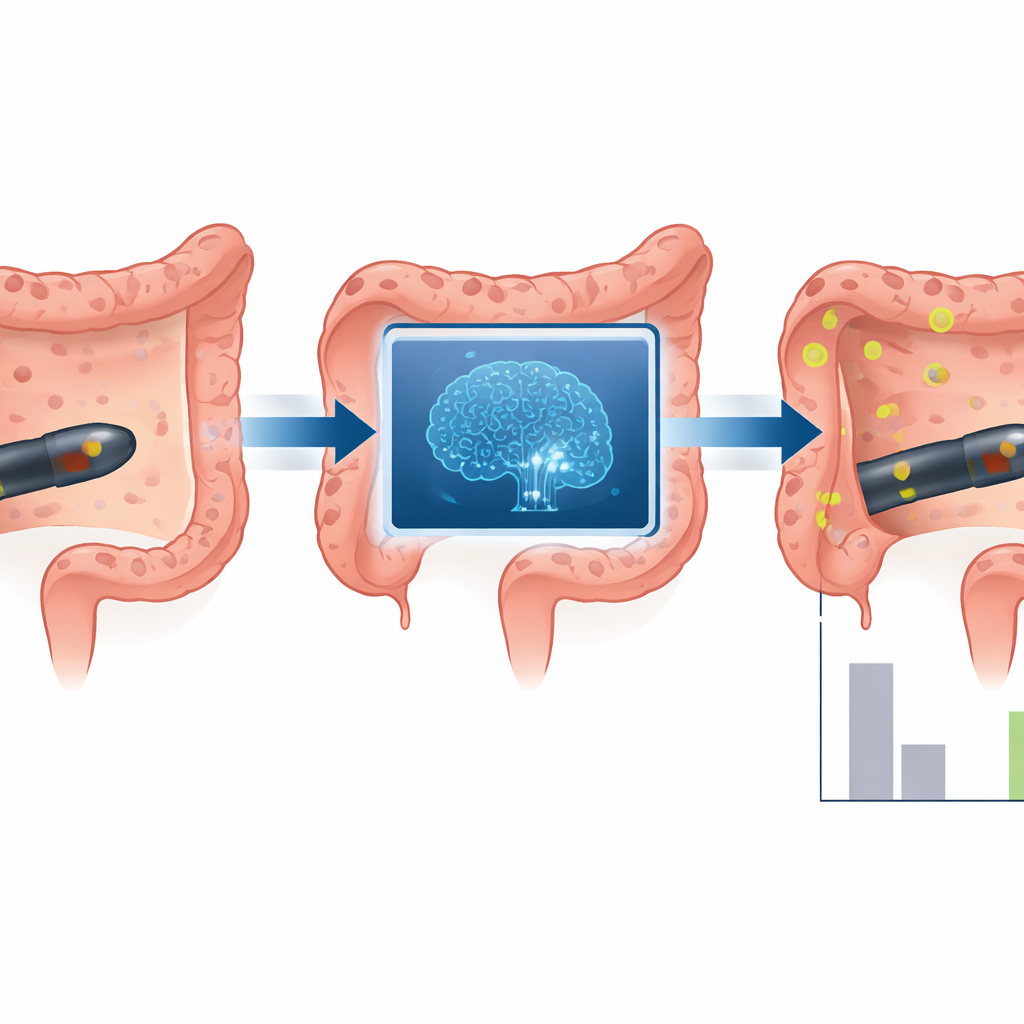
Why earlier studies looked more optimistic
Previous clinical trials, many of them done in academic hospitals or in populations with higher baseline risk, often reported impressive jumps in detection when AI systems were used. But this new work, along with several recent trials and meta-analyses, suggests the picture is more complicated. The benefit of AI appears to depend strongly on who the patients are, how common polyps are in that group, and how skilled the examiners already are. In settings where doctors already have high detection rates, there may simply be less room for AI to improve on their performance. The authors also note that many AI studies use broader or looser definitions of ADR, making head-to-head comparisons difficult and sometimes overstating how much improvement is achievable in routine screening populations.
What this means for patients and doctors
For patients, the key takeaway is reassuring: experienced endoscopists in everyday private-practice settings can already deliver high-quality colonoscopies, and adding AI on top did not clearly change the odds of finding at least one precancerous polyp in this study. AI may still be useful for spotting very small lesions, or in centers where baseline detection rates are lower, but it is not yet a magic solution. The authors argue that larger, carefully designed real-world trials and long-term registries are needed before strong recommendations for or against routine AI use in colonoscopy can be made. For now, the most important factors for patients remain getting screened on time and choosing providers who consistently perform thorough, high-quality exams.
Citation: Lux, T.J., Saßmannshausen, Z., Kafetzis, I. et al. Artificial intelligence assisted colorectal lesion detection in private practices a randomized controlled study. npj Digit. Med. 9, 284 (2026). https://doi.org/10.1038/s41746-026-02576-8
Keywords: colonoscopy, artificial intelligence, polyp detection, colorectal cancer screening, clinical trial