Clear Sky Science · en
Targeting histone deacetylation, cell cycle regulators and heat shock proteins as novel therapeutic strategies for penile cancers
Why this cancer study matters
Penile cancer is rare, but when it spreads, treatment options are limited and often life‑altering, sometimes requiring partial or total removal of the penis. Standard chemotherapy helps only some patients, and those who do not respond have very poor long‑term survival. This study takes a deep dive into the proteins and signals that drive penile cancer cells, with the goal of uncovering gentler, more precise drug strategies that could spare more tissue and improve outcomes.
Looking closely at cancer cell machinery
The researchers started by growing several cell lines directly from patients’ penile tumors and from tumors grown in mice. Rather than focusing on DNA mutations alone, they examined the full set of proteins inside the cells, the proteins secreted to the surroundings, and the same proteins carrying chemical “on/off” tags. This broad survey revealed recurring themes: cancer cells were rich in proteins that control how DNA is packaged (histones), proteins that help other proteins fold properly (heat shock proteins), and components of growth‑signal pathways, particularly those linked to blood vessel formation and responses to low oxygen. By comparing tumor cells with normal fibroblasts, they pinpointed protein patterns much more prominent in cancer, suggesting vulnerable points for new treatments.
New drug targets hiding in plain sight
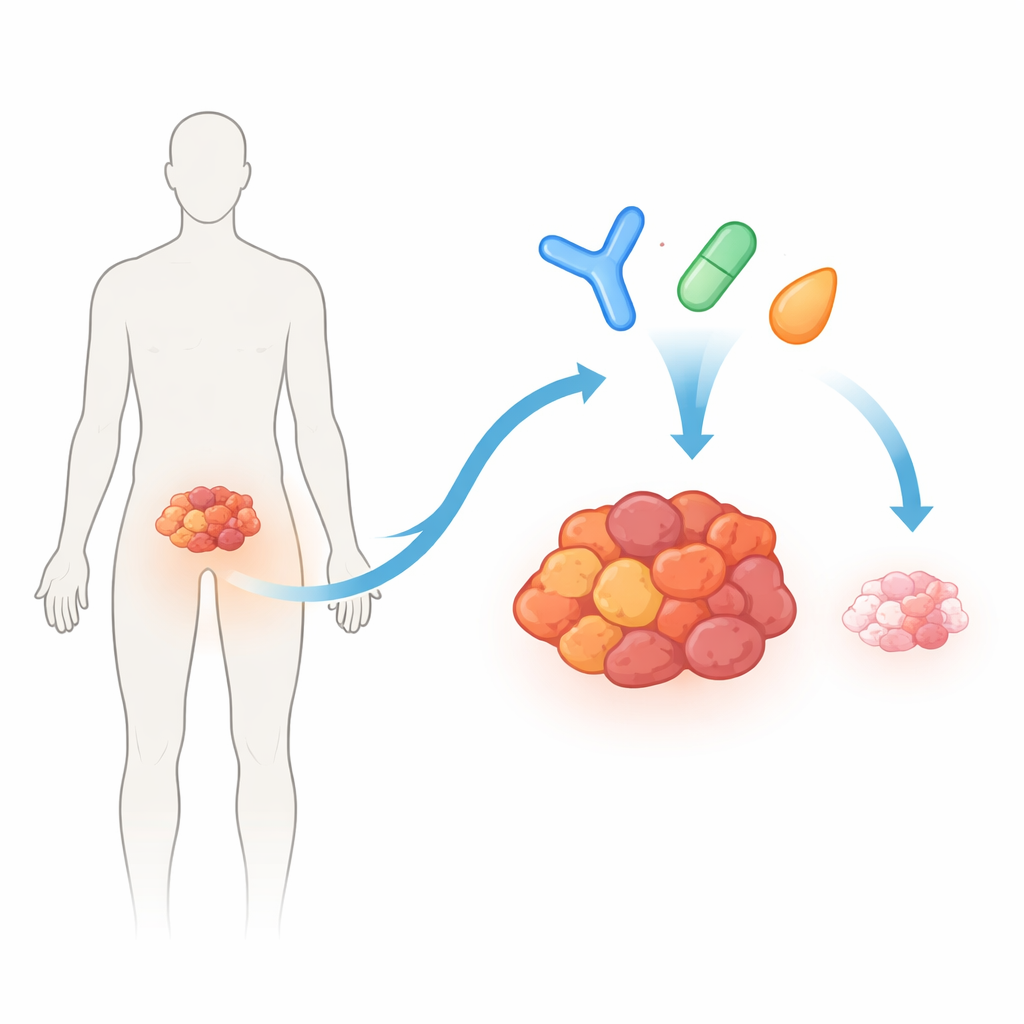
Several groups of proteins emerged as especially promising. First, core components of the cell’s packaging and unpacking system for DNA, known as histone‑modifying proteins, were over‑represented, implying that the cancer depends on an altered epigenetic landscape to keep growth genes switched on. Second, molecules that drive cell‑cycle progression, including those connected to the Wnt/β‑catenin pathway and the CDK4/6 engine that pushes cells to divide, showed strong activity. Third, multiple heat shock proteins, especially HSP70 and HSP90 families, were abundant and often phosphorylated, indicating that penile cancer cells lean heavily on protein‑folding chaperones to survive stress. Together, these findings drew a roadmap to three main drug target classes: histone deacetylases (HDACs), CDK4/6 cell‑cycle regulators, and HSP90 chaperones.
Putting potential medicines to the test
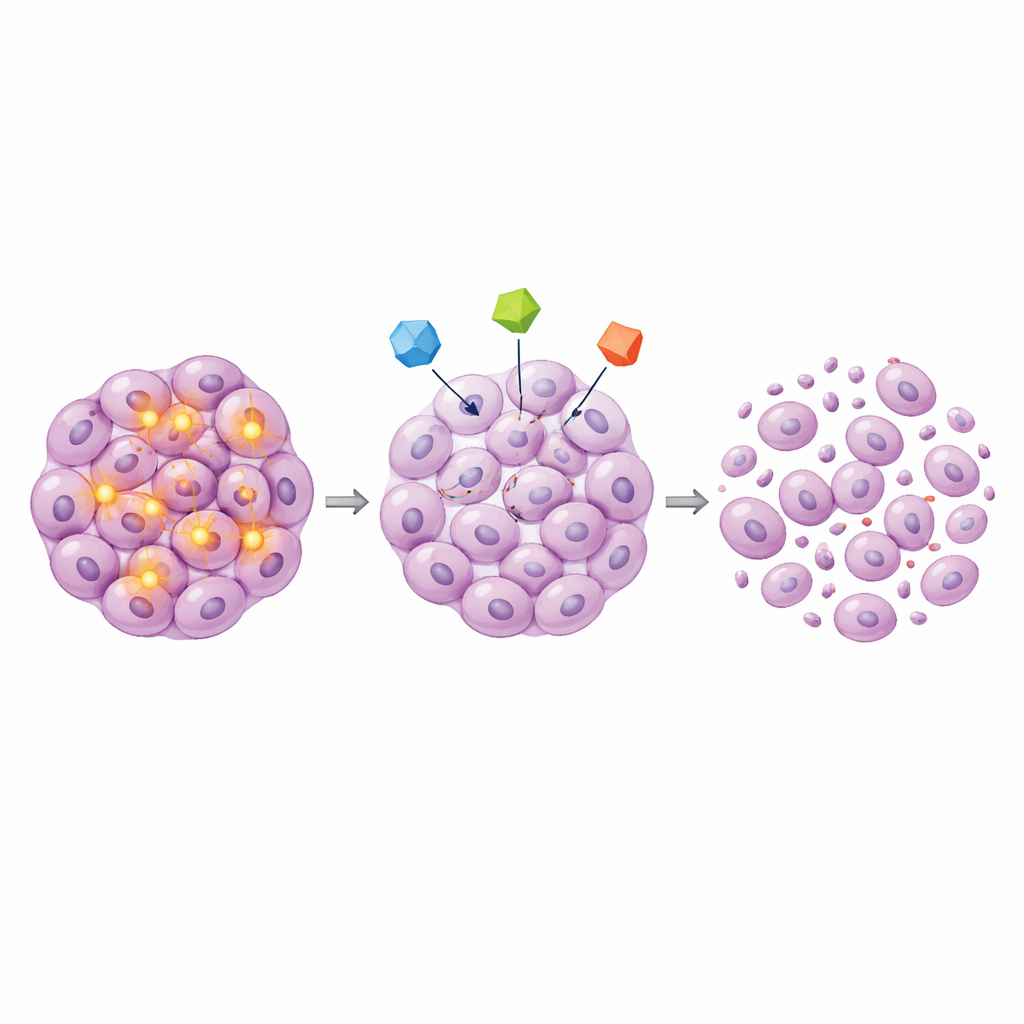
To see whether these vulnerabilities could be exploited, the team exposed penile cancer cells to a panel of fifteen agents, including standard chemotherapies and newer targeted inhibitors. Traditional drugs like cisplatin and some taxanes worked, but often only at higher doses and with highly variable effects across cell lines. In contrast, several targeted compounds were consistently potent at low micromolar concentrations. Two HDAC inhibitors (romidepsin and quisinostat), one CDK4/6 inhibitor (palbociclib), and two HSP90 inhibitors (17‑AAG and PU‑H71) markedly reduced cancer cell viability. These treatments pushed cells to arrest in the G2/M phase of the cell cycle and triggered programmed cell death, mainly through the cell’s internal, mitochondria‑driven pathway. Importantly, normal fibroblasts were less sensitive overall, hinting at a therapeutic window in which tumor cells could be hit harder than healthy tissue.
Signals of stress and cell death inside the tumor
Digging deeper, the researchers measured how treatment altered the activity of genes linked to stress responses and apoptosis. HDAC blockers boosted a set of genes previously tied to growth arrest in other urologic cancers and reduced pro‑survival signals, consistent with forcing cancer cells into a non‑viable state. HSP90 inhibitors destabilized known cancer‑promoting proteins, including MYC, while paradoxically increasing some heat shock responses—an expected side effect of targeting this pathway. Palbociclib, the CDK4/6 blocker, lowered expression of genes needed for accurate chromosome division and DNA repair, while increasing genes that promote cell death. Across experiments, heightened phosphorylation of the guardian protein p53 and strong activation of stress‑related signaling cascades reinforced the idea that these drugs push penile cancer cells beyond their ability to cope.
What this could mean for patients
In plain terms, this study shows that penile cancer cells rely on three vulnerable systems—how they package DNA, how they time cell division, and how they manage protein stress—to stay alive. Blocking histone deacetylases, CDK4/6, or HSP90 in laboratory models stops these cells from dividing and nudges them into self‑destruction, often more effectively than some current chemotherapies and with less impact on normal cells. While these results come from cell and mouse‑derived models rather than clinical trials, they provide a strong scientific basis for testing HDAC, CDK4/6, and HSP90 inhibitors, alone or in combination, as more targeted treatments for men with advanced penile cancer.
Citation: Marson, L., Skowron, M.A., Pongratanakul, P. et al. Targeting histone deacetylation, cell cycle regulators and heat shock proteins as novel therapeutic strategies for penile cancers. npj Precis. Onc. 10, 140 (2026). https://doi.org/10.1038/s41698-026-01391-4
Keywords: penile cancer, targeted therapy, epigenetic drugs, cell cycle inhibitors, heat shock proteins