Clear Sky Science · en
CD27 expression is a clinically accessible biomarker for predicting immunotherapy response in melanoma
Why this matters for people with skin cancer
Immunotherapy has changed the outlook for many people with advanced melanoma, a dangerous form of skin cancer. Yet only some patients see their tumors shrink or stay under control, and doctors still struggle to predict who will benefit. This study explores whether a molecule called CD27, found on certain immune cells, can serve as a simple, clinic-ready signal to identify patients more likely to respond to these powerful drugs.
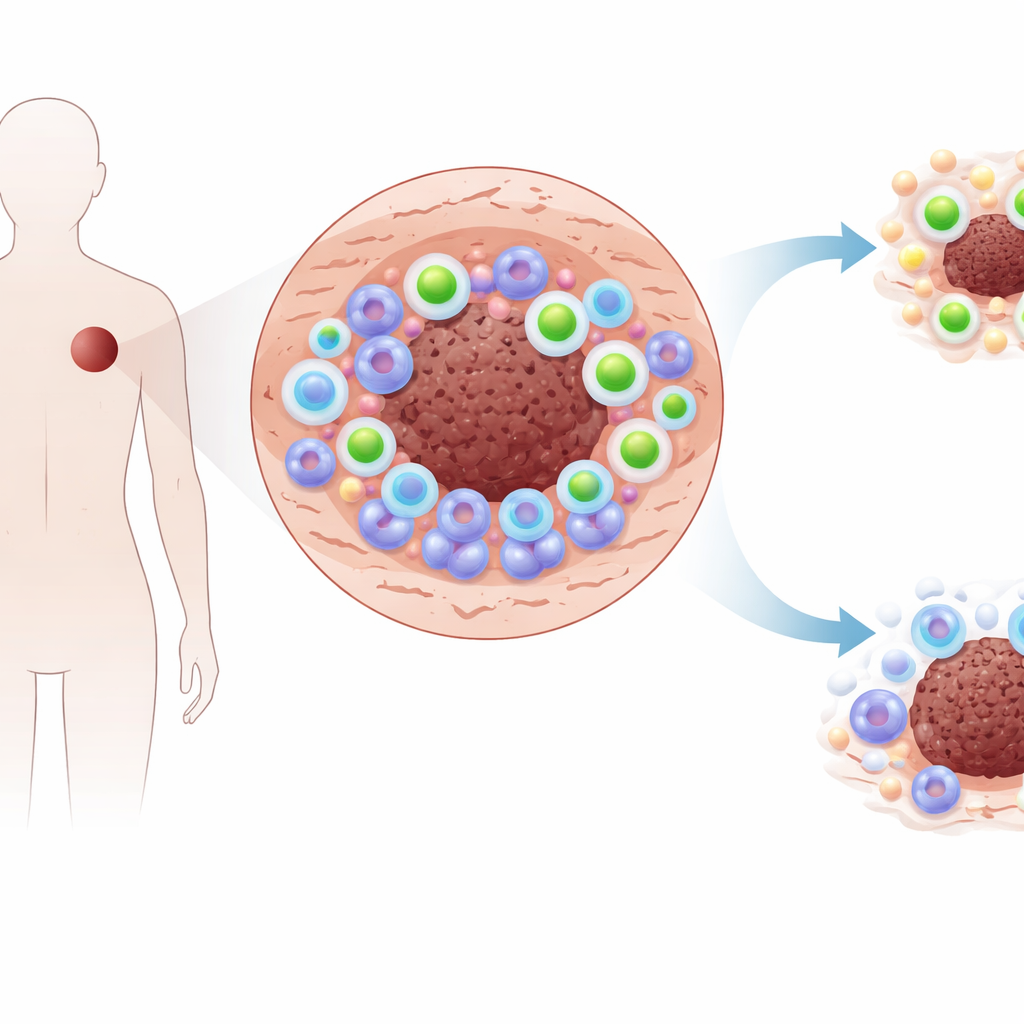
A new clue hiding on immune cells
CD27 sits on the surface of T cells, B cells, and natural killer cells—white blood cells that help the body recognize and destroy cancer. When CD27 is engaged, it boosts the activation and survival of these cells, potentially strengthening the body’s attack on tumors. The researchers wondered: if a melanoma tumor contains many CD27-bearing immune cells, does that mean the patient’s immune system is already primed, and more likely to respond when given immune-boosting drugs such as PD-1 or CTLA-4 inhibitors?
Mining big data to link CD27 to better outcomes
To answer this, the team first turned to large public cancer databases containing gene activity profiles from hundreds of melanoma samples. They compared tumors with high versus low levels of CD27 mRNA, the genetic message that produces CD27 protein. Tumors with high CD27 stood out: they showed strong signals from many other immune-related genes, including several well-known checkpoint molecules targeted by modern drugs. Patients whose tumors had more CD27 tended to live longer overall and went longer without disease worsening, even after accounting for age and cancer stage. These patterns held up across multiple independent datasets, suggesting that CD27 consistently marks a more active, engaged immune response against melanoma.
CD27 and the crowd of immune cells around the tumor
The team then examined the makeup of the tumor microenvironment—the mix of cancer cells and surrounding immune cells. Using computational tools, they estimated how many different immune cell types were present in each tumor sample. High CD27 tumors were packed with diverse immune cells, including killer T cells, helper T cells, B cells, and dendritic cells, all of which are important for recognizing and attacking cancer. Even structures associated with strong immune activity, such as lymphocyte-rich regions around tumors, were more common when CD27 was high. At the same time, some suppressive cell types that can dampen immune responses were also present, pointing to a complex battle between attack and defense inside these tumors.
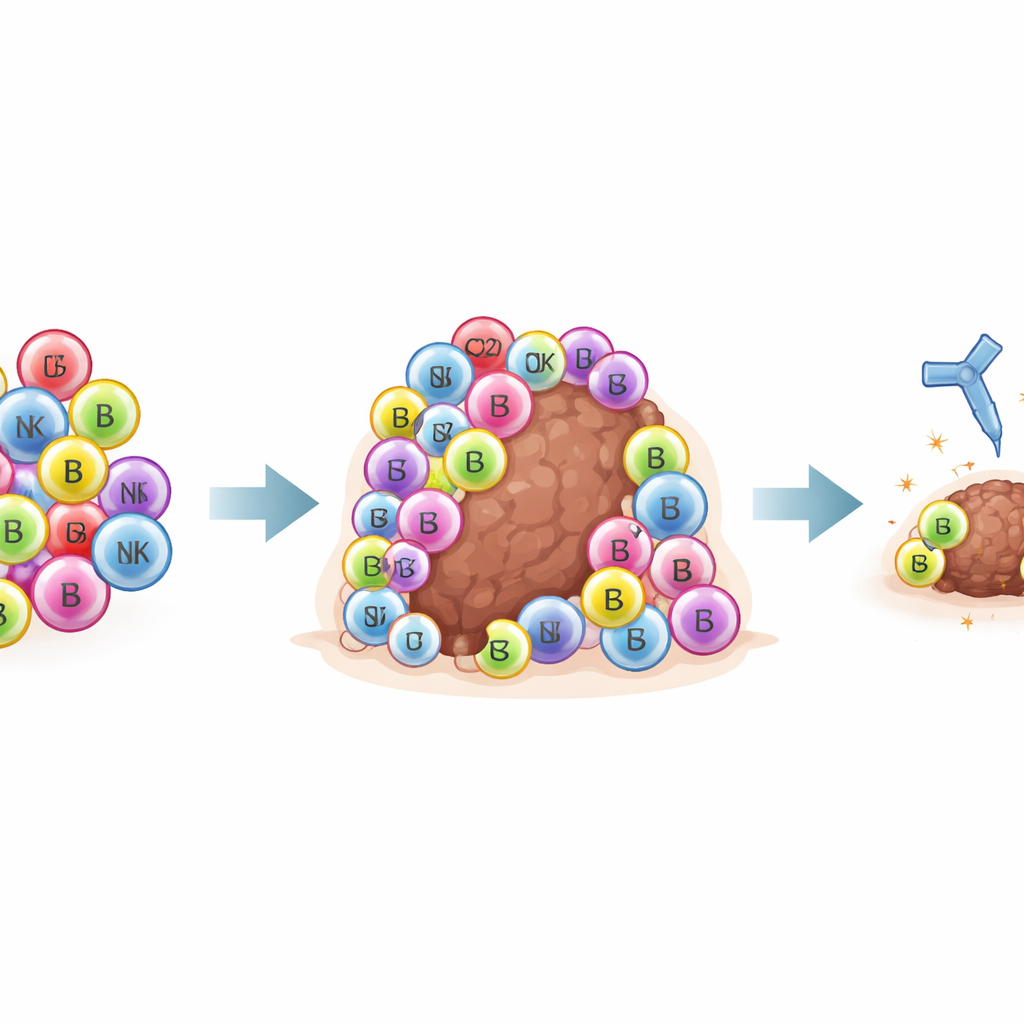
Real-world testing in melanoma patients on immunotherapy
To move beyond database mining, the researchers studied a group of 102 melanoma patients treated with immune checkpoint drugs at a hospital in China. They measured CD27 in two practical ways: by testing for its mRNA using a lab technique called qRT-PCR, and by staining tumor tissue to see the CD27 protein directly under the microscope. In both cases, higher CD27 levels were linked to better responses to treatment and longer periods before the disease progressed. When they compared CD27 with PD-L1—a widely used but imperfect marker—the new marker came out ahead. CD27 was better at correctly identifying patients who responded to treatment and did so with methods that fit naturally into routine pathology workflows.
What this could mean for future melanoma care
Taken together, the findings suggest that CD27 acts as a practical signpost of an immune system already engaged against melanoma and ready to be further unleashed by immunotherapy. Because CD27 can be measured using standard tissue tests, it may be easier to apply in everyday clinics than more complex genetic signatures or sequencing-based measures. If validated in future prospective trials, CD27 testing could help doctors select the patients most likely to benefit from checkpoint inhibitors and guide the design of new drug combinations that directly stimulate CD27 to strengthen anti-tumor immunity.
Citation: Xia, P., Yang, H., Yu, P. et al. CD27 expression is a clinically accessible biomarker for predicting immunotherapy response in melanoma. npj Precis. Onc. 10, 171 (2026). https://doi.org/10.1038/s41698-026-01374-5
Keywords: melanoma, immunotherapy, biomarkers, CD27, tumor microenvironment