Clear Sky Science · en
Integrated multi-omics analysis reveals that MARCKS reprograms the immunosuppressive microenvironment to drive hepatocellular carcinoma progression
Why the Tumor Neighborhood Matters
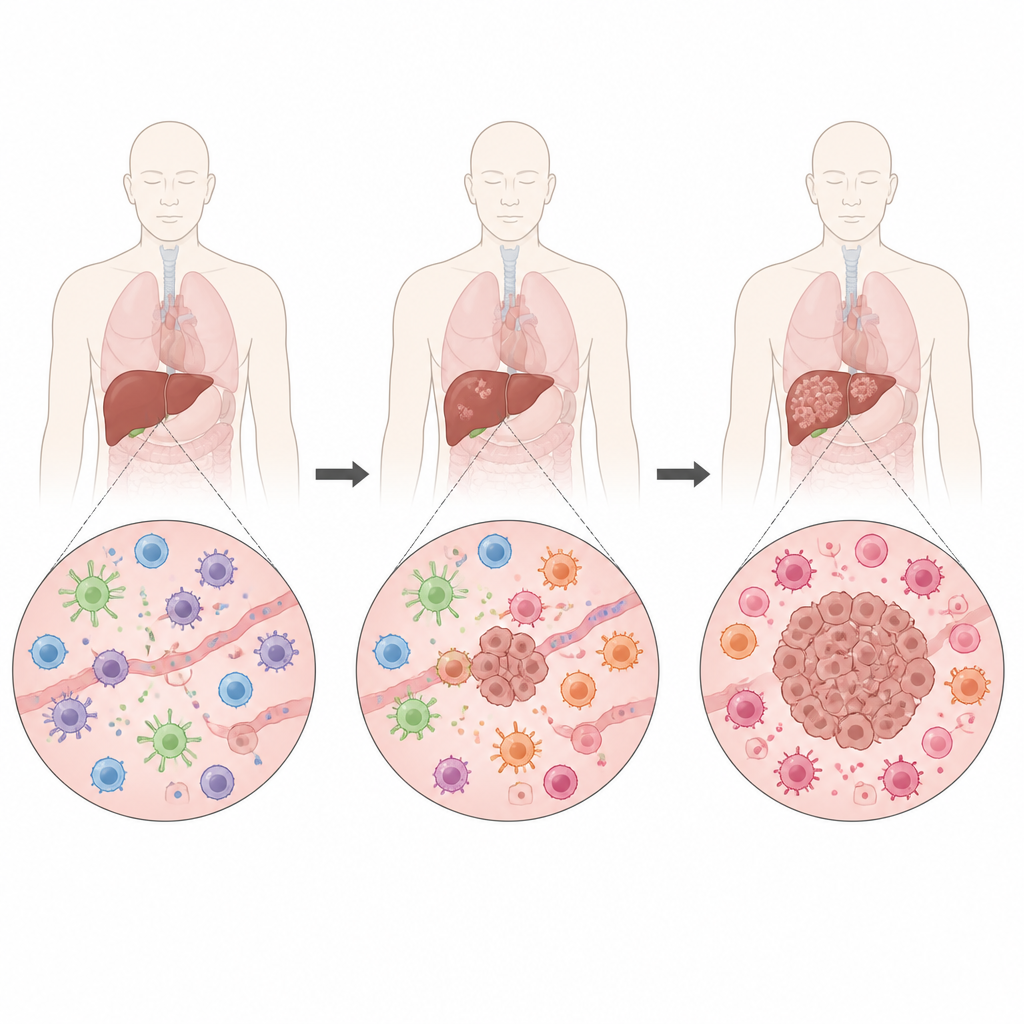
Liver cancer is not just a cluster of runaway cells; it grows within a complex neighborhood of immune and support cells that can either fight the tumor or help it hide. This study looks at a little-known protein called MARCKS and shows how it helps turn the liver’s immune surroundings from a defense zone into a safe haven for cancer. Understanding this switch could point the way toward new treatments and better use of existing immunotherapy drugs.
A Closer Look at Liver Cancer
Hepatocellular carcinoma, the most common type of primary liver cancer, is one of the leading causes of cancer death worldwide. Many patients are diagnosed late, and even with surgery, targeted drugs, and immune checkpoint therapies, results are often disappointing. One key reason is that the tumor’s local environment becomes immunosuppressive: instead of attacking the cancer, many immune cells are reprogrammed to tolerate or even support it. Among these cells, tumor-associated macrophages are especially important. They can exist in a more hostile, tumor-fighting state or in a more tolerant, tumor-helping state. The question the researchers asked was whether the protein MARCKS plays a role in pushing these cells toward the tumor-helping side.
Finding a Trouble-Maker Protein
Using large public cancer datasets, the team showed that MARCKS is more abundant in liver tumors than in normal liver tissue. Patients whose tumors had higher MARCKS levels tended to have more advanced disease and worse survival, even after accounting for other risk factors. This suggests MARCKS is not just a bystander but is tied to more aggressive cancer behavior. Gene expression patterns in MARCKS-high tumors also pointed toward increased stem-like features, inflammation, and markers of immune checkpoints that can blunt the body’s attack on cancer cells.
Immune Cells Turned into Helpers
The researchers then zoomed in at single-cell resolution, using data that profiles thousands of individual cells from liver tumors. They found that MARCKS was especially enriched in myeloid cells, a family that includes macrophages, rather than in the cancer cells themselves or other immune cells. Within these myeloid cells, MARCKS was most strongly linked to a subset of tumor-associated macrophages that show an immunosuppressive, tumor-supporting pattern. These cells expressed gene signatures associated with the so-called M2-like state, which is known for dampening immune responses, encouraging blood vessel growth, and helping tumors spread. Over time, cell trajectory analyses suggested that as myeloid cells develop into these suppressive macrophages, MARCKS levels rise alongside genes that signal immune exhaustion.
How MARCKS Talks to the Immune System
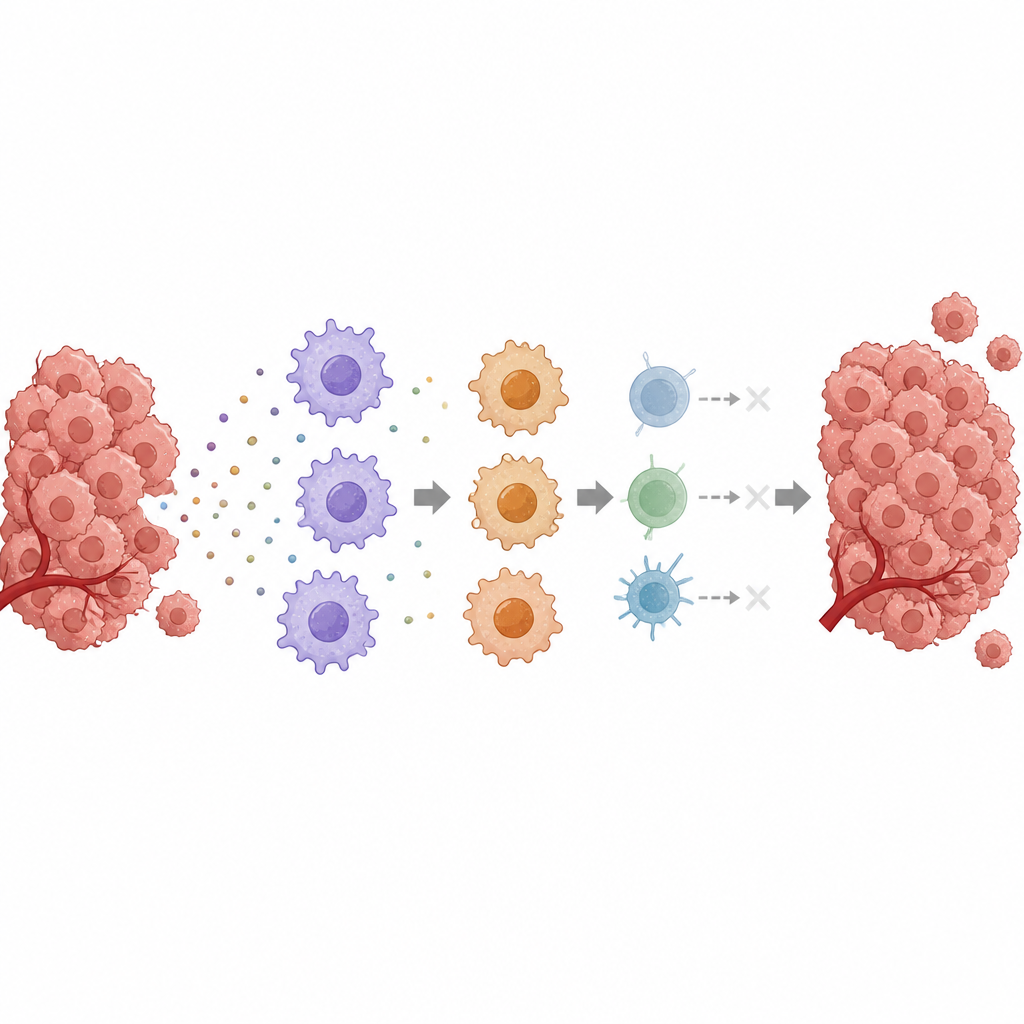
Further analysis revealed that MARCKS-positive myeloid cells are wired into powerful signaling networks, especially involving the JAK/STAT3 pathway, which is known to drive immune suppression and tumor survival. These cells both send and receive a dense web of signals that encourage blood vessel formation, reduce effective immune attack, and strengthen checkpoints that switch off T cells. Spatial mapping of tumor slices showed that MARCKS-rich macrophages cluster in regions packed with other suppressive cell types, such as exhausted T cells and regulatory T cells, forming a coordinated immunosuppressive zone around the tumor.
Testing the Mechanism in the Lab
To move beyond correlations, the team performed cell and animal experiments. Silencing MARCKS in liver cancer cell lines reduced STAT3 activation, slowed their growth, and weakened their ability to migrate and invade. In mice, tumors derived from MARCKS-silenced cells grew more slowly and weighed less. The researchers also used a conditioned medium system, where immune cells were exposed to liquid collected from cancer cells. Medium from MARCKS-knockdown cancer cells was less able to push macrophages into the M2-like, tumor-supporting state and led to reduced STAT3 activation in these macrophages. Together, these results support a model in which MARCKS in tumor cells fuels signals that activate STAT3, reprogram nearby macrophages, and reinforce an immunosuppressive tumor niche.
What This Means for Future Treatment
For non-specialists, the main message is that the protein MARCKS helps liver tumors remodel their local neighborhood so that immune cells stop fighting and start helping the cancer. By boosting a key signaling route centered on STAT3, MARCKS encourages the growth of suppressive macrophages and supports immune escape. This makes MARCKS a potential biomarker for more aggressive, immune-cold liver cancers and a possible target for new therapies. While more work is needed to prove exactly how MARCKS connects to STAT3 in different cell types and to test drugs in immune-competent models, blocking this pathway could someday complement existing immunotherapies and improve outcomes for patients with hepatocellular carcinoma.
Citation: Qin, H., Lu, Q., Hu, B. et al. Integrated multi-omics analysis reveals that MARCKS reprograms the immunosuppressive microenvironment to drive hepatocellular carcinoma progression. npj Precis. Onc. 10, 182 (2026). https://doi.org/10.1038/s41698-026-01372-7
Keywords: liver cancer, tumor microenvironment, macrophages, STAT3 signaling, immunotherapy resistance