Clear Sky Science · en
Genomic landscape and precision therapy in prostate cancer: current status and future directions
Why this research matters
Prostate cancer is one of the most common cancers in men, and it does not behave the same way in every patient. Some tumors grow slowly, while others spread quickly and resist treatment. This article explains how changes in a tumor’s DNA help drive these differences, and how doctors are beginning to use this genetic information to match each man with the treatments most likely to work for him. Understanding this shift toward "precision therapy" shows how cancer care is moving from trial-and-error to a more tailored, personal approach.
Hidden changes inside prostate tumors
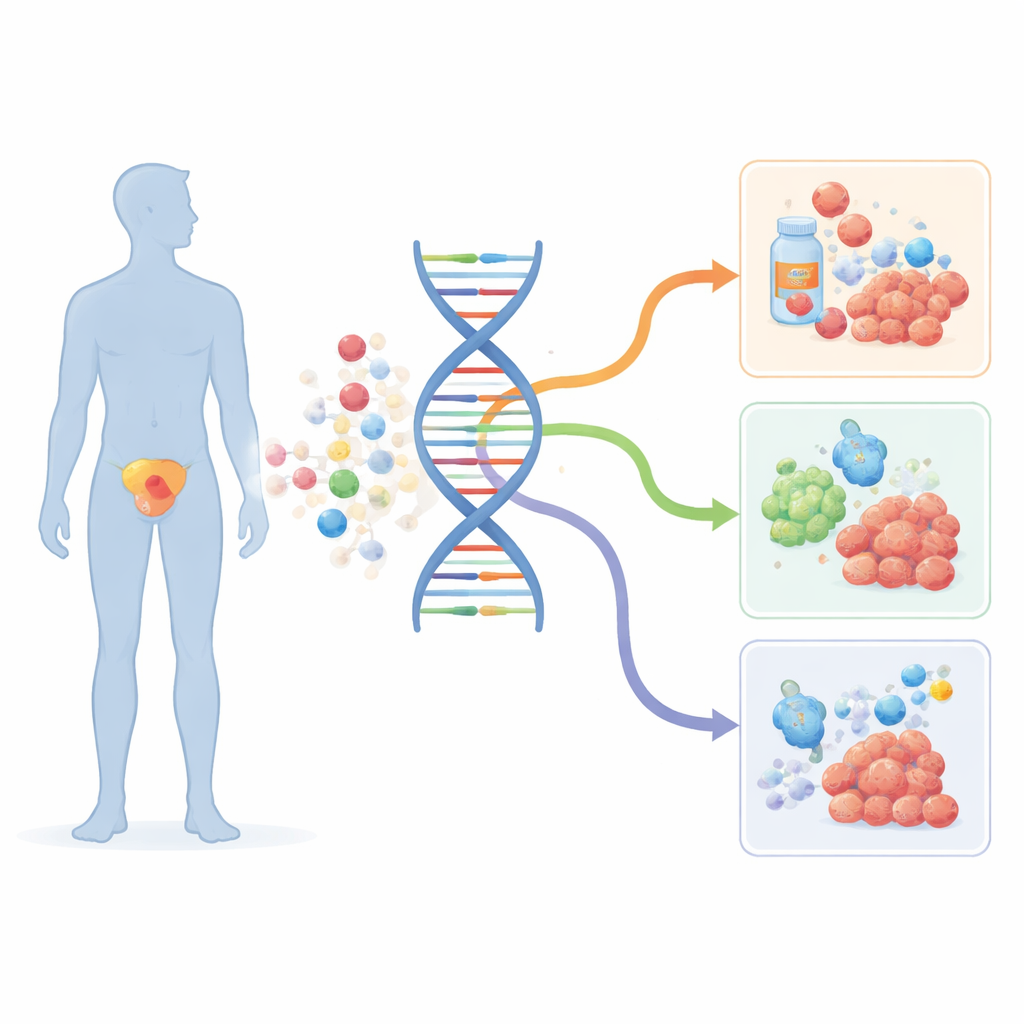
At the heart of this review is the idea that prostate cancer is not a single disease but a collection of many different genetic and epigenetic alterations. As cells progress from early precancerous changes to invasive and then advanced disease, they pick up fusions between genes, point mutations, deletions, amplifications, and chemical changes to DNA and its packaging proteins. These alterations affect important cell systems such as hormone (androgen) signaling, DNA repair, growth pathways, and how tightly or loosely DNA is wrapped. Some common events include gene fusions involving TMPRSS2 and ETS family genes, mutations in tumor suppressors like TP53 and RB1, and loss of the PTEN gene, which normally reins in a powerful growth pathway. Together, these shifts help explain why some cancers become aggressive and stop responding to standard hormone-blocking treatments.
When cancer cells change their identity
One striking pattern the article describes is "lineage plasticity"—the ability of prostate cancer cells to change their character to survive treatment. Under sustained pressure from hormone-blocking therapies, some tumors lose their dependence on the androgen receptor and take on features more like nerve cells, a state called neuroendocrine differentiation. This shift is driven by the loss of key guards such as RB1 and TP53 and the rise of specific transcription factors and epigenetic regulators like EZH2 and MYCN. These remodeled tumors no longer respond to standard hormone-directed drugs and are often more aggressive, underscoring the need for new strategies that target the factors maintaining this altered state.
Inherited risk and the tumor’s immune surroundings
The review also highlights how inherited mutations can raise a man’s lifetime risk of prostate cancer and shape how his tumor behaves. Changes passed down in genes involved in DNA repair—such as BRCA1, BRCA2, HOXB13, ATM, and CHEK2—can increase both the chance of developing prostate cancer and the odds that it will be more severe. Because these genes control how cells fix DNA damage, their loss can make tumors more sensitive to drugs that further disrupt repair. At the same time, both inherited and acquired alterations influence how the immune system sees the tumor. For example, loss of PTEN and amplification of the growth driver MYC can create an environment that keeps killer T cells out and supports suppressive immune cells, making the cancer less responsive to immune-based therapies. Rare tumors with high mutation loads or mismatch repair defects, however, can be especially vulnerable to immune checkpoint inhibitors.
New ways to match patients with treatments
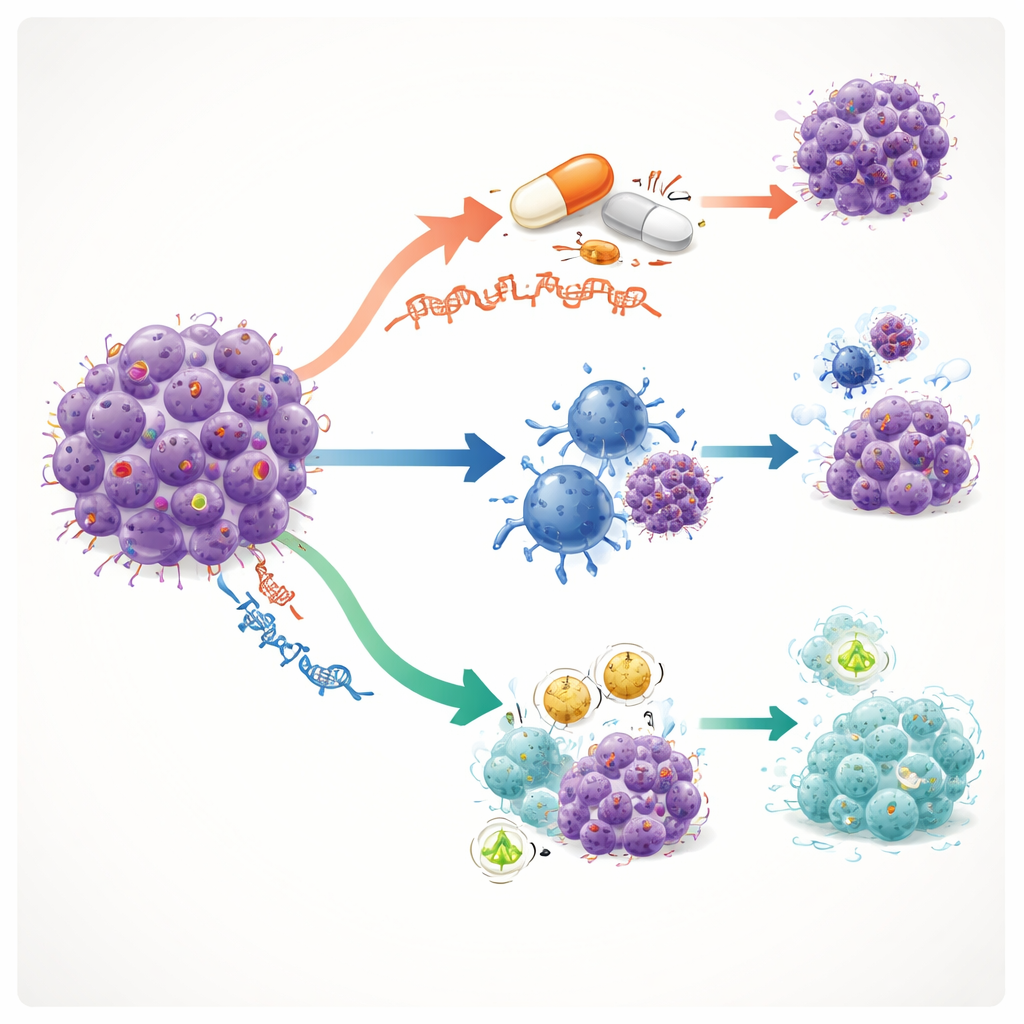
Armed with this genetic information, doctors are beginning to move beyond a one-size-fits-all approach. The article reviews how specific drug classes are being tied to particular molecular features. PARP inhibitors, for instance, are now used in men whose tumors carry defects in DNA repair genes like BRCA1 or BRCA2, sometimes in combination with hormone-blocking pills. Drugs that shut down the PI3K/AKT pathway may benefit men whose cancers have lost PTEN. Immune checkpoint drugs such as pembrolizumab are reserved for the small fraction of patients whose tumors show high microsatellite instability or related repair problems. Other precision approaches include radioligand therapies that home radioactive particles to PSMA on tumor cells, antibody–drug conjugates that deliver chemotherapy directly to cancer cells, and emerging cell-based therapies like CAR T cells and bispecific antibodies for selected subtypes, including difficult-to-treat neuroendocrine disease.
Looking ahead to more personalized care
The authors emphasize that, despite rapid progress, many genetic changes in prostate cancer still cannot be targeted, and the tumor’s diversity—both within a single patient and across patients—remains a major challenge. They point to promising tools such as liquid biopsies, advanced imaging like PSMA PET, organoid models grown from patient tumors, and artificial intelligence to help track tumor evolution and guide choices over time. In simple terms, the conclusion is that reading and interpreting the DNA and molecular signals of each man’s cancer is steadily turning prostate cancer care into a more precise, tailored field. Continued research is expected to expand the number of patients who can benefit from therapies chosen specifically for the unique genetic fingerprint of their disease.
Citation: Ligon, J.A., Anand, S., Singh, S. et al. Genomic landscape and precision therapy in prostate cancer: current status and future directions. npj Precis. Onc. 10, 172 (2026). https://doi.org/10.1038/s41698-026-01368-3
Keywords: prostate cancer, precision oncology, genomic profiling, targeted therapy, immunotherapy