Clear Sky Science · en
Sea surface height variability shapes Siberian Arctic Ocean circulation and Pacific Water inflow
Why the Arctic's Hidden Currents Matter
The Siberian edge of the Arctic Ocean is one of the main gateways through which heat and freshwater enter the polar seas, yet the invisible flow of water there is surprisingly poorly understood. This study shows how tiny changes in sea level – just a few centimeters – shape powerful coastal currents, connect Siberian rivers to the wider Arctic, and even help control how much water enters the Arctic from the Pacific Ocean. For anyone concerned about future sea ice, weather, and ecosystems, these subtle shifts in sea surface height turn out to be key pieces of the climate puzzle.
Shallow Seas, Big Climate Connections
Along the Siberian coast lies a broad, shallow shelf where river water, melting sea ice, and inflows from the Pacific and Atlantic all converge. The authors focus on two main currents here: the Eastern Siberian Shelf Current, which flows along the outer edge of the shelf, and a narrower Siberian Coastal Current hugging the coastline. These flows redistribute freshwater and heat, helping set how stratified the upper Arctic Ocean is – in other words, how strongly a light, fresh surface layer sits atop heavier, saltier water. That layering controls how easily deeper heat can reach the surface and sea ice, so even modest shifts in these currents can ripple through the entire Arctic system. 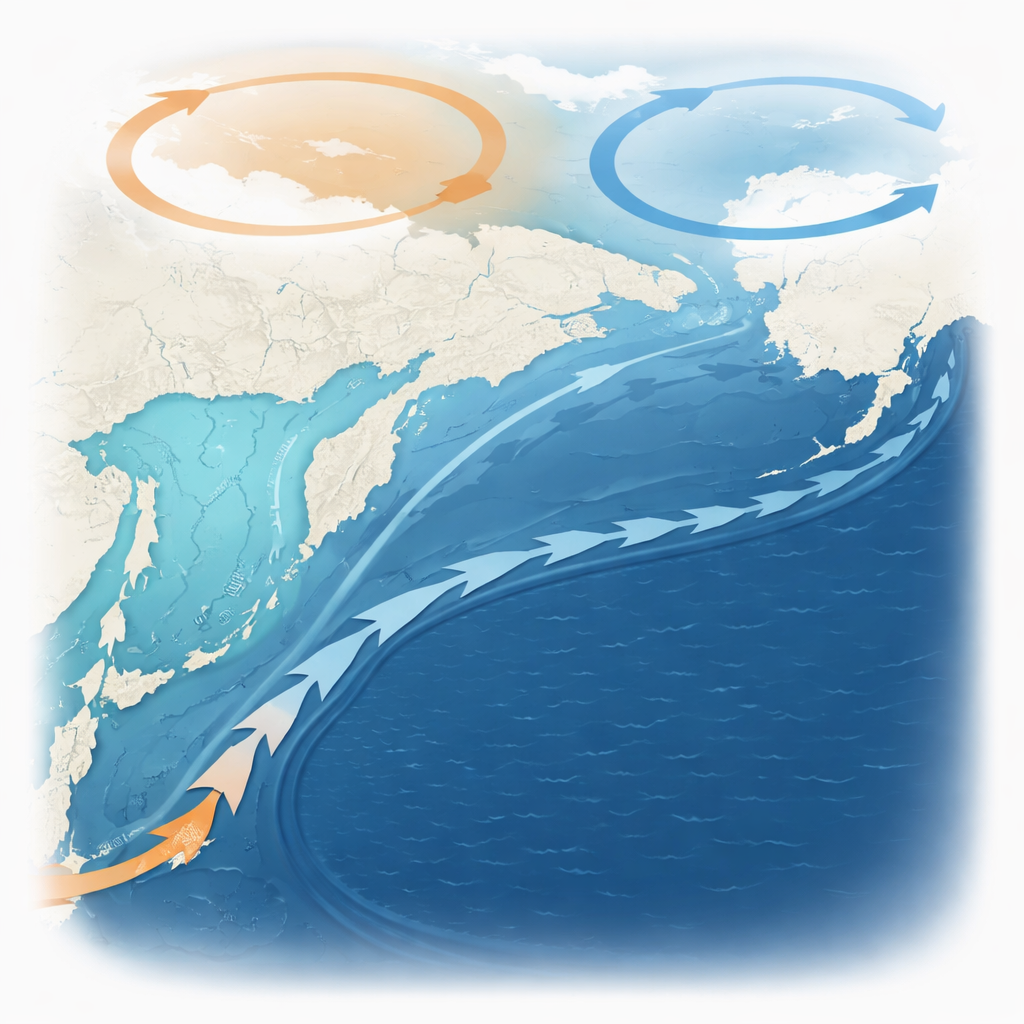
Seasonal See-Saw in Freshness and Height
Using satellite measurements of sea surface height, ocean reanalysis products, and moored instruments, the team applied a statistical method that can track repeating yearly patterns while still capturing longer-term swings. They found that, on seasonal time scales, the Eastern Siberian Shelf Current is governed mainly by changes in salinity. In spring and summer, Siberian rivers discharge most of their freshwater, and melting ice adds more. This fresher water is lighter, causing the sea surface along the coast to swell slightly higher than offshore. The resulting slope in sea level supports a strong eastward flow along the shelf. As autumn and winter arrive, the surface becomes saltier again, the slope flattens or reverses, and the current weakens or even turns westward. Calculations show that this salinity-driven effect overwhelms the direct push of the wind for most of the year.
A Narrow Jet Steered by Buoyancy and Wind
The study also highlights the Siberian Coastal Current, a ribbon-like flow only about 50–60 kilometers wide pressed right against the shoreline. This jet is powered primarily by buoyancy differences between fresh coastal water and saltier offshore water. However, in early summer, strong northeasterly winds can temporarily flip the usual pattern: despite freshening near the coast, wind-driven set-up can reverse the local sea level slope, causing a short-lived westward current that runs counter to the typical direction. By autumn, winds weaken, the freshwater layer intensifies the coastal sea level bulge, and the current reverts to a persistent eastward flow that continues through winter. This seasonal dance shows how wind can modulate, but not replace, the organizing role of buoyancy.
Deep Basin Currents and Changing Atmospheric Regimes
Beyond the shallow shelf, the authors identify a second, slower mode of variability tied to the Siberian Slope Current, a major boundary flow encircling the deep Arctic basin. On time scales of two to three years, sea level tends to dip in the central Arctic while rising along the continental margins, strengthening a cyclonic (counterclockwise) circulation. Earlier in the satellite record, this pattern was closely linked to the Arctic Oscillation, a well-known mode of atmospheric pressure variability. In recent decades, however, the connection has shifted toward a different pressure pattern called the Arctic Dipole, which sets up a stronger pressure contrast between the Atlantic and Pacific sides of the Arctic. This transition suggests that the atmosphere’s “steering wheel” for Arctic currents has changed, with implications for where warm Atlantic waters enter and how they move beneath the ice.
Sea Level Gradients as Gatekeepers
A central result of the paper is that these sea surface height patterns help control the flow of water through the three main gateways between the Arctic and lower-latitude oceans: the Bering Strait, the Barents Sea Opening, and Fram Strait. When sea level is especially high along the East Siberian shelf, the gradient that normally draws Pacific water north through the Bering Strait weakens, reducing inflow there but enhancing Atlantic inflow through the Barents Sea. Another mode of sea level variability is tied to changes in the strength of Atlantic water entering through Fram Strait. By analyzing pressure patterns over Siberia and Alaska, the authors uncover a recurring dipole in sea-level pressure that straddles the Bering Strait. This large-scale wind pattern strengthens or weakens the sea level tilt across the strait and can explain nearly half of the year-to-year changes in the measured Pacific inflow. 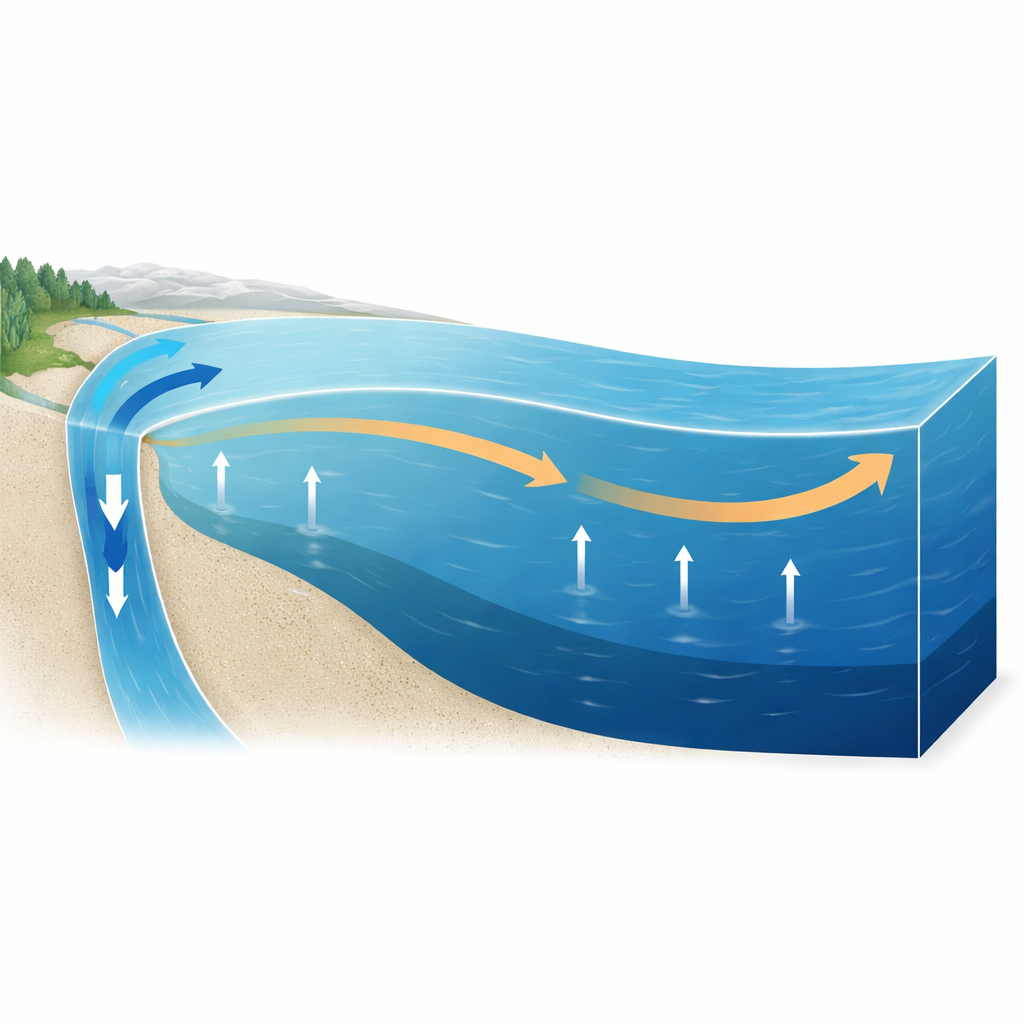
What This Means for the Future Arctic
Overall, the study shows that small, regionally organized variations in sea surface height act as a kind of summary index of many forces at once: river runoff, sea ice melt, winds, and slowly shifting atmospheric pressure regimes. In the Siberian Arctic, these combined influences shape coastal and slope currents and regulate how much Pacific and Atlantic water enters the polar ocean. For non-specialists, the key message is that watching the Arctic’s sea surface height – through satellites and models – offers a powerful way to monitor how the ocean’s circulation is evolving in a warming world, and how that evolution may feed back on sea ice, weather, and ecosystems in the decades ahead.
Citation: Park, T., Cho, KH., Lee, E. et al. Sea surface height variability shapes Siberian Arctic Ocean circulation and Pacific Water inflow. npj Clim Atmos Sci (2026). https://doi.org/10.1038/s41612-026-01393-w
Keywords: Arctic Ocean circulation, Siberian shelf currents, sea surface height, Bering Strait inflow, climate variability