Clear Sky Science · en
Quantifying Arctic-boreal methane emissions using atmospheric observations and a global inverse model
Why Northern Methane Matters
Methane is a powerful greenhouse gas, and the frozen lands ringing the Arctic hold vast stores of carbon that could be released as the planet warms. Scientists worry that thawing soils and expanding wetlands might turn this region into a major new source of methane, speeding up climate change. This study asks a simple but crucial question: how much methane is actually coming out of the Arctic–boreal zone today, is it changing over time, and what controls those changes?
Taking a New Look from the Air
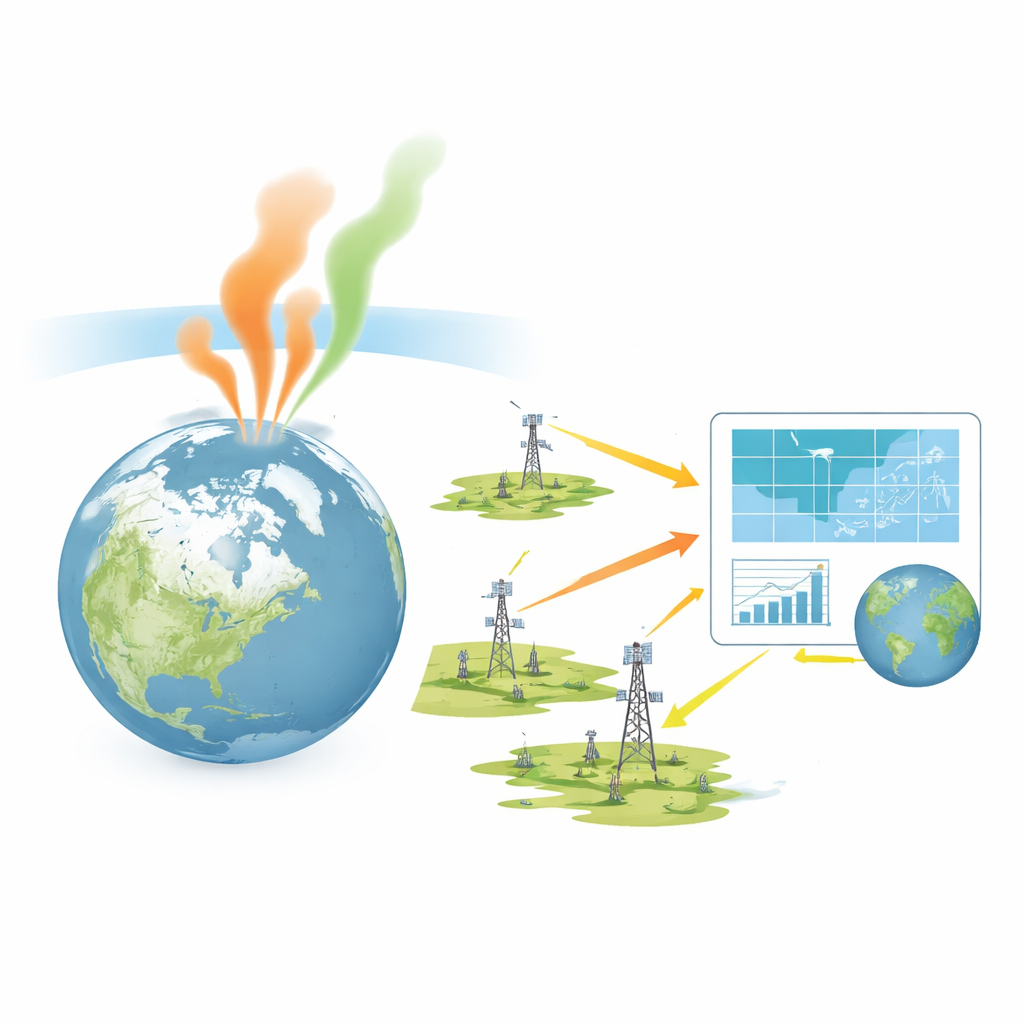
Instead of measuring methane only at the ground, the researchers used air measurements collected from a network of 154 monitoring stations worldwide, including 33 scattered across the Arctic and northern forests. These stations continuously sample the air and track how methane concentrations rise and fall. The team fed these observations into a global computer system that can work backwards: given the way air flows and mixes around the planet, what pattern of emissions at the surface best explains the methane measured at each tower? By combining the observations with prior estimates from land and emission models, they cut the average uncertainty in regional methane emissions in the Arctic–boreal zone by about two thirds.
How Much Methane the North Emits
The analysis shows that, from 2010 to 2021, the Arctic–boreal region emitted roughly 45 teragrams of methane per year—about 7 percent of global emissions. This is higher than earlier “bottom-up” estimates based purely on land models and inventories, which tended to underestimate emissions, especially in Russia. Almost half of this methane comes from wetlands, with additional contributions from human activities such as fossil fuel extraction and agriculture, other natural sources like lakes and termites, fires, and a small amount from nearby ocean areas. Western Russia stands out as the largest hotspot, emitting two to six times more methane than other subregions such as Alaska or northern Canada, thanks to its extensive wetlands and dense oil and gas activity.
Seasonal Ups and Downs
Across the high northern latitudes, methane emissions follow a clear yearly rhythm. They are lowest in the dark, frozen winter and climb sharply as snow melts and soils warm, peaking in July and August when wetlands are warm, waterlogged, and biologically active. In summer, wetlands account for about 70 percent of total methane release. Human sources dominate only in a few places, particularly in the European part of the study area. Adding the atmospheric data mainly changed the size of the seasonal peaks, not their timing, indicating that models roughly capture the seasonal pattern but have been missing the true magnitude in important regions.
Trends and Climate Connections
Over the twelve-year window, total Arctic–boreal methane emissions do not show a strong, statistically secure overall upward trend, but some notable patterns emerge. Certain years, especially 2016, 2019, and 2020, stand out with emissions several percent above average, largely because of wetter or warmer conditions in wetland-rich regions and, in 2019, strong fire activity in eastern Russia. When the team looked specifically at wetlands, they found that warmer years are generally linked to higher methane release, particularly in late summer. A closer focus on Western Siberia—a huge lowland carpeted with bogs—revealed a clearer local increase in wetland emissions over time and a surprisingly strong role for winter snow: deeper snow appears to lead to wetter soils after melt and, in turn, higher methane output during the following warm season.
Why Snow and Wetness Matter
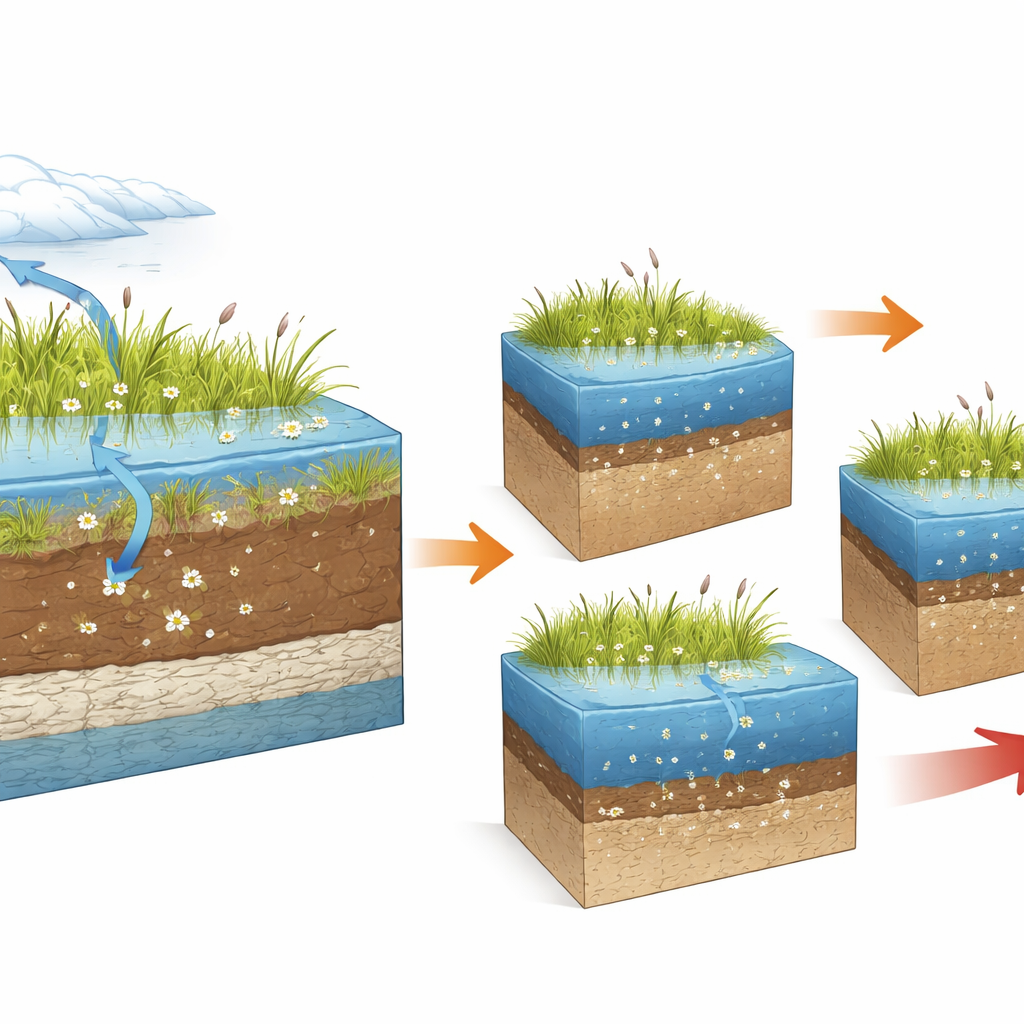
The Western Siberian Lowlands case study illustrates how subtle shifts in climate can amplify methane release. Thick winter snow can insulate the ground, helping soils stay less deeply frozen, and then melt gradually to keep wetlands saturated for longer. In these flat landscapes with poor drainage, that extra moisture supports conditions that favor methane-producing microbes. Statistical tests showed that a combination of snow depth, growing-season warmth, and rainfall explains most of the year-to-year swings in methane from these wetlands, whereas earlier land models missed much of this sensitivity.
What This Means for the Future
For a layperson, the main takeaway is that the Arctic–boreal lands are already a substantial and highly responsive source of methane, but they have not yet “run away” into a dramatic, rapid increase. Wetlands, especially in western Russia, play a central role, and their emissions grow in warmer, wetter years. Because the region is warming faster than the global average and snow and rainfall patterns are changing, the study suggests that methane output from northern wetlands is likely to rise in coming decades. At the same time, the work shows that using dense atmospheric monitoring networks together with global models can greatly sharpen our picture of where methane is coming from and why—critical knowledge for anticipating future climate feedbacks and for designing strategies to limit them.
Citation: Basso, L.S., Rödenbeck, C., Brovkin, V. et al. Quantifying Arctic-boreal methane emissions using atmospheric observations and a global inverse model. npj Clim Atmos Sci 9, 80 (2026). https://doi.org/10.1038/s41612-026-01348-1
Keywords: Arctic methane, permafrost, wetlands, climate feedback, Western Siberia