Clear Sky Science · en
Chemical and mechanical extraction for egyptian safflower bio-oil with a performance and economic analysis for renewable fuel applications
Turning a hardy flower into cleaner fuel
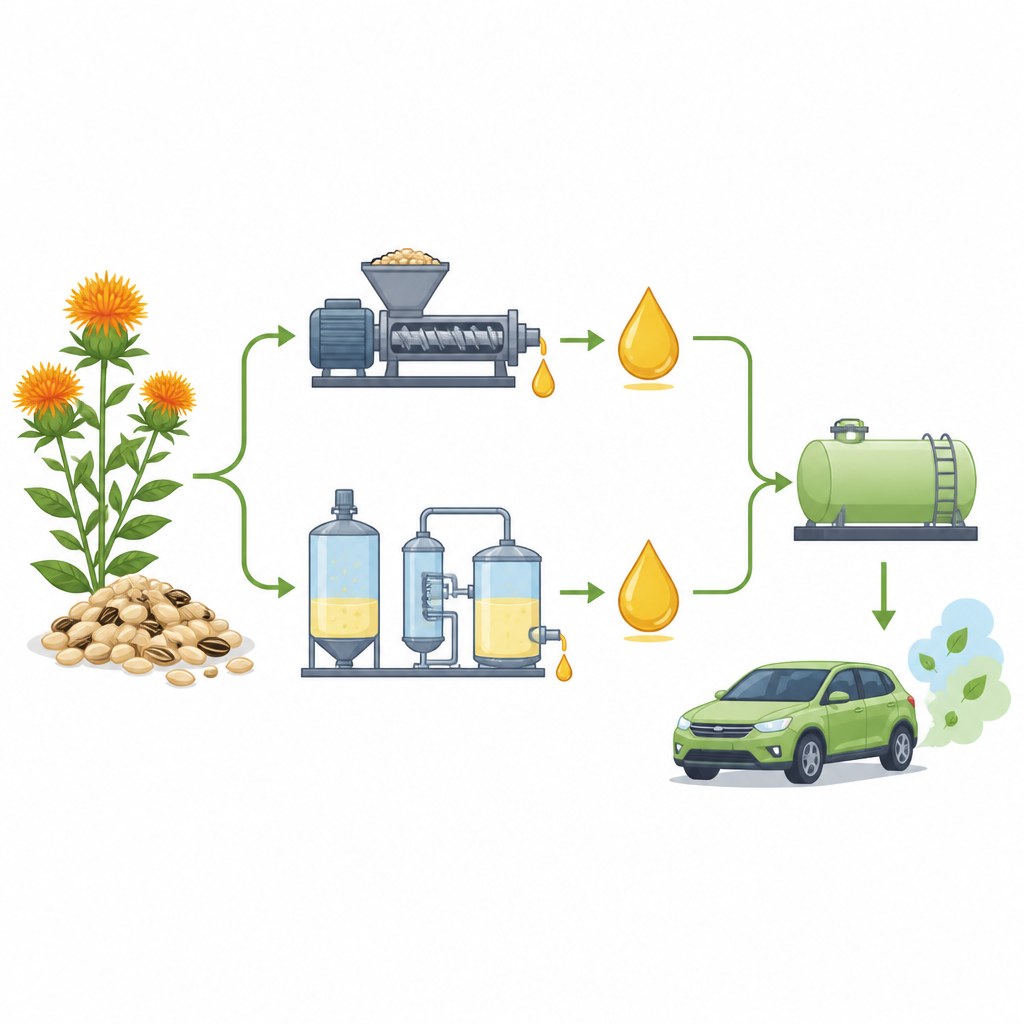
As the world looks for ways to cut planet-warming emissions without competing with food crops, hardy plants that grow in poor soils are gaining attention. This study explores how to best squeeze useful oil from Egyptian safflower seeds, a tough, drought-tolerant plant, and compares several techniques to see which can supply oil for biodiesel in an energy-saving, low-cost, and safer way.
Why safflower matters for future energy
Safflower is not a common food staple, but its seeds are rich in oil and the plant can thrive in hot, dry, and salty soils where many crops fail. That makes it an attractive option for producing fuel without putting extra pressure on farmland used for food. The seeds contain a mix of fatty substances similar to those in cooking oils, which can be turned into biodiesel, a cleaner-burning fuel than regular diesel. Because safflower is non-edible and resilient, it fits well into the search for renewable fuels that reduce greenhouse gas emissions and avoid direct competition with people’s plates.
Different ways to get oil out of seeds
The researchers compared two broad families of extraction methods. Chemical methods rely on soaking finely ground seeds in liquid solvents, such as hexane or ethanol, and then heating the mixture so the oil dissolves into the liquid and can be separated. Traditional laboratory setups like Soxhlet extractors can pull out a high share of the oil, but they use large amounts of solvent, require hours of heating, and demand significant energy and equipment costs. A simpler chemical approach, maceration, where seeds sit in solvent at room temperature for days, uses less energy but produces lower oil yields and still depends on large solvent volumes that must be recovered and handled safely.
Pressing the seeds instead of dissolving them
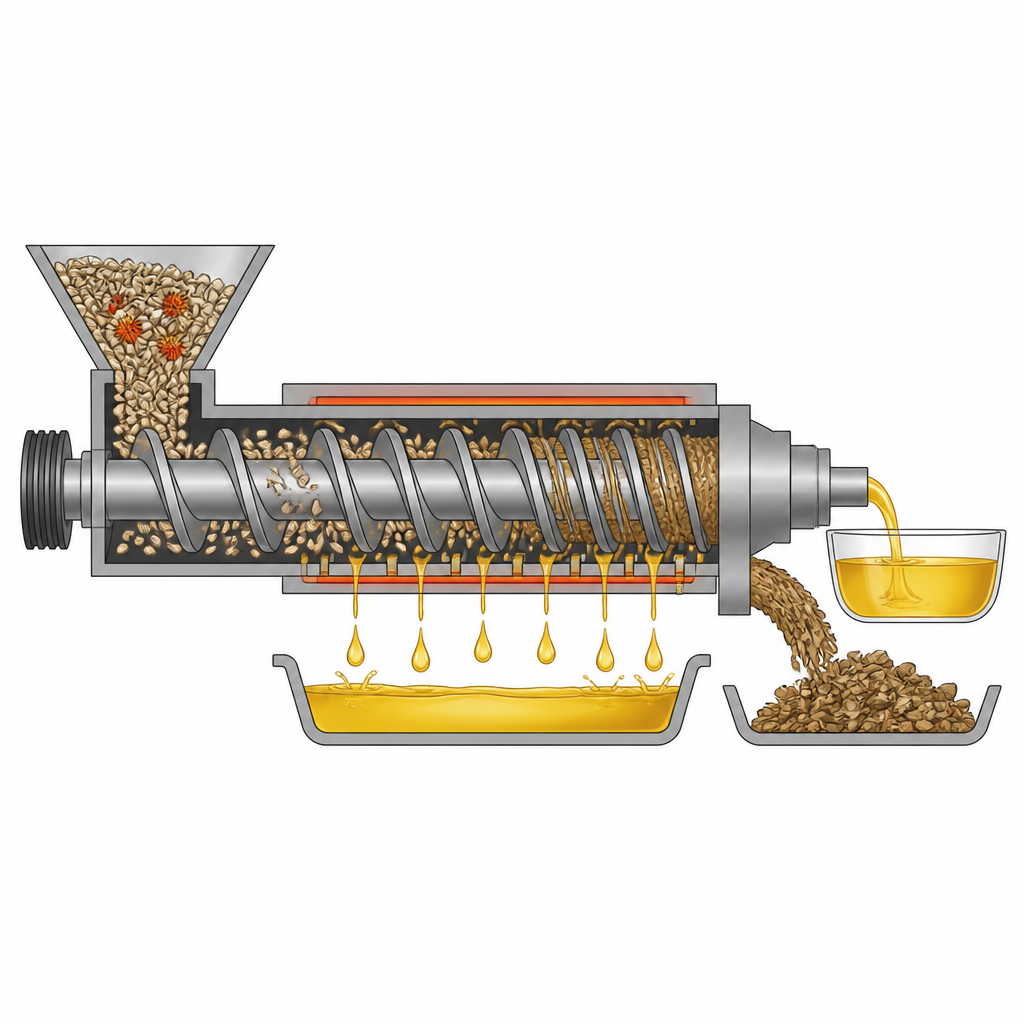
Mechanical methods skip most of the chemicals and instead rely on force. In a hydraulic press, a piston slowly squeezes a packed cylinder of seeds, pushing some oil out but leaving a noticeable amount behind when the pressure is released. In a screw press, a rotating metal screw moves seeds through a heated barrel, crushing and compacting them so oil is forced out through small openings while the dry seed cake exits at the end. Using a statistical design approach, the team systematically varied screw speed and temperature and measured oil yield, processing time, and energy use. They found that running the press hot and fast, around 172.5 °C and 1400 revolutions per minute, gave a yield near 19 percent in under half a minute, with low energy consumption.
Balancing yield, cost, and energy use
Chemical extraction with hexane delivered the highest oil yield, up to about one third of the seed mass, but it also had the highest cost per kilogram of oil once the price of solvent, energy for heating, and labor were included. Ethanol worked, but was even more expensive per unit of oil despite being a more familiar and less toxic solvent. By contrast, the screw press did not need any solvent and used only a few watt-hours of electricity per run. Even with a somewhat lower maximum yield than the best chemical method, its very short processing time and lack of solvent purchases led to the lowest production cost per kilogram of oil among the tested options. The pressed oil also showed a favorable mix of fatty components and physical properties suitable for conversion to biodiesel.
What the findings mean for cleaner fuels
For readers interested in how science can reshape our energy system, the main message is that a relatively simple machine can turn a tough, non-food crop into a useful fuel ingredient in a way that is both economical and kinder to the environment. While solvent-based methods can squeeze out a bit more oil, the screw press offers a practical path that trades a small loss in yield for big gains in safety, cost, and energy savings. The authors argue that this makes mechanical pressing of safflower a strong candidate for future biodiesel production, especially in regions with limited resources, while noting that further work is needed to test more seed batches and fully characterize the final fuel.
Citation: Kamel, M.A., Zahran, M.K., El-Sherbiny, S. et al. Chemical and mechanical extraction for egyptian safflower bio-oil with a performance and economic analysis for renewable fuel applications. Sci Rep 16, 16292 (2026). https://doi.org/10.1038/s41598-026-54252-2
Keywords: safflower oil, biodiesel, screw press, oil extraction, renewable energy