Clear Sky Science · en
Phytochemical signatures and multifunctional bioactivities of two Ocimum basilicum varieties (Obb vs. Obg): antimicrobial, antioxidant, and anticancer potential
Why kitchen herbs can matter for health
Sweet basil is a favorite ingredient in pesto and salads, but the same plant family also hides a trove of natural chemicals that may help fight germs, mop up harmful molecules in our bodies, and influence cancer cells in the lab. This study asks a simple but important question for cooks and scientists alike: do different kinds of basil carry different health‑related powers, and if so, how?
Two kinds of basil under the microscope
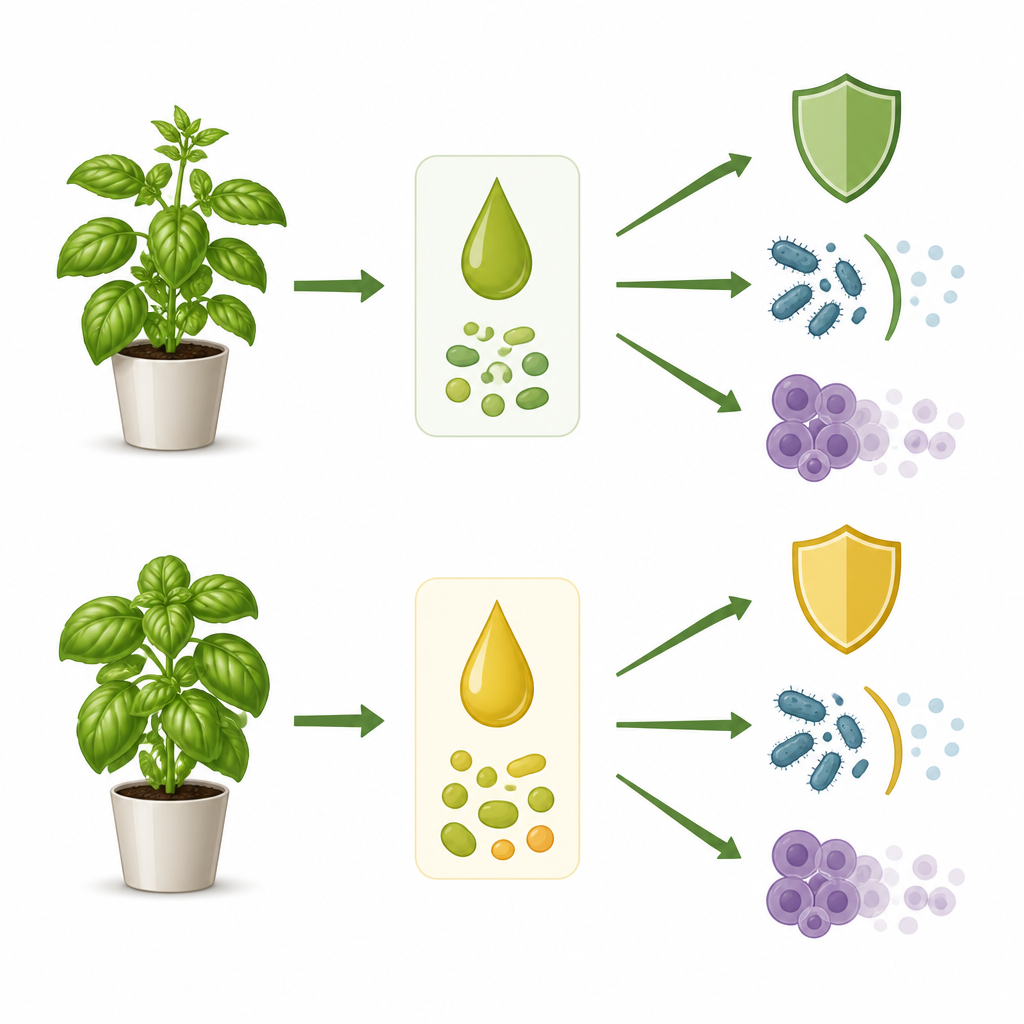
The researchers focused on two closely related types of sweet basil grown from seeds: a common variety called basilicum (Obb) and the well known Genovese variety (Obg), popular in Italian cooking. They dried and ground the seeds, then pulled out their chemical ingredients using methanol, a standard laboratory solvent. With these extracts in hand, they set out to map what was inside and to test how each extract behaved against bacteria, unstable "free radical" molecules, and human cancer cells grown in dishes.
What is inside the basil extracts
To reveal the chemical makeup, the team used gas chromatography coupled to mass spectrometry, a technique that separates complex mixtures and identifies individual compounds. Both basil types contained fatty acids, alcohols, and aldehydes, but in clearly different amounts. The Genovese extract held a higher total level of several bioactive components, including important unsaturated fatty acids and certain aldehydes, while the basilicum extract was richer in a long chain alcohol. These differences suggest that even small genetic changes between plant varieties can shift the balance of molecules that may drive their biological effects.
Fighting germs and harmful molecules
The next step was to see how the extracts handled three troublesome bacteria that commonly cause hospital infections: Escherichia coli, Klebsiella pneumoniae, and Pseudomonas aeruginosa. Using standard plate tests, both basil types slowed bacterial growth in a clear dose‑dependent way, carving out wider "kill zones" as the concentration increased. At the highest level tested, the Genovese extract usually produced slightly larger clear zones than the basilicum extract and, in some cases, matched or even exceeded low doses of common antibiotics. The scientists also ran three different antioxidant tests, all of which measure how well a substance can neutralize damaging free radicals or reduce oxidized metals. In every assay, the Genovese extract showed stronger antioxidant capacity than the basilicum extract, though neither matched pure vitamin C.
How basil extracts interact with cancer cells
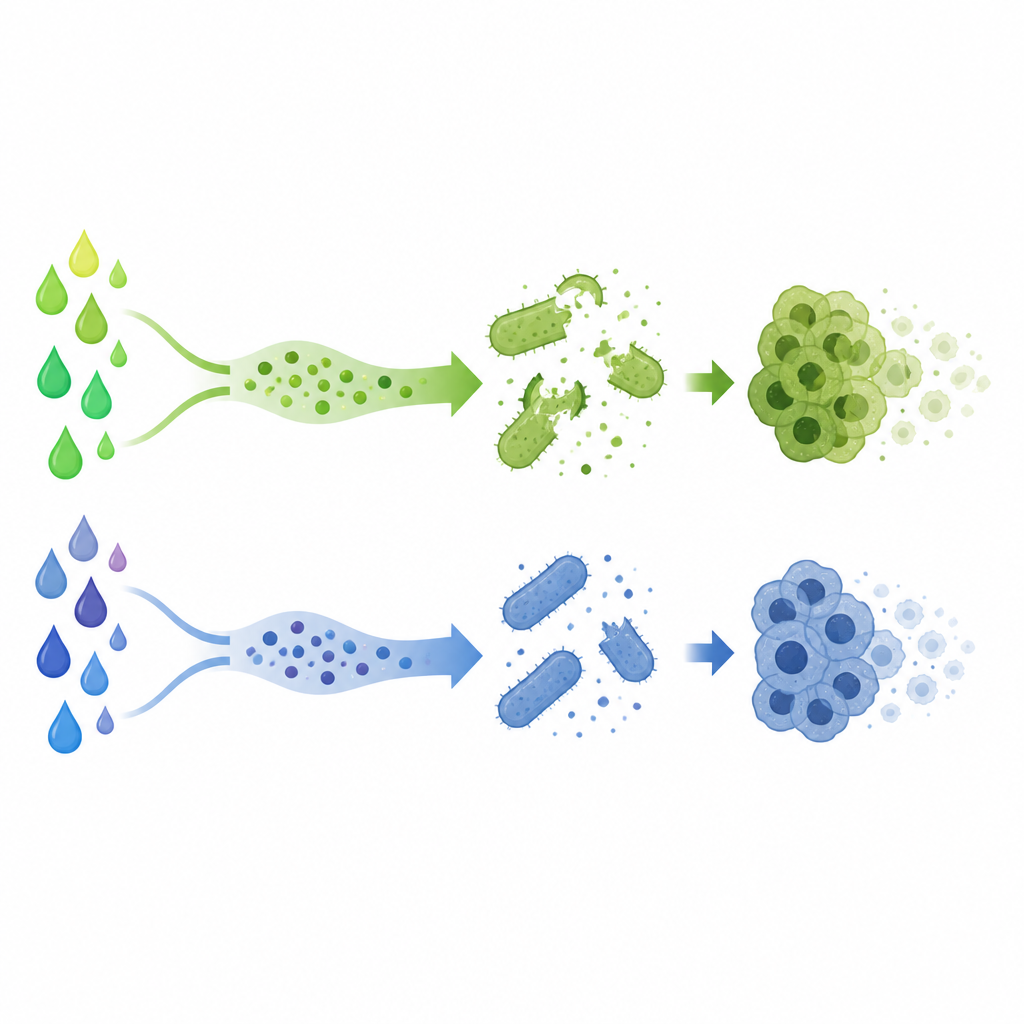
To explore potential anticancer effects, the team exposed A431 human epidermoid carcinoma cells to rising doses of each basil extract and used a color‑based MTT test to track surviving cells. Both extracts had little impact at low doses but sharply reduced cell survival once concentrations rose above about 125 micrograms per milliliter, nearly wiping out the cancer cells at the top dose. When the researchers calculated the dose that cut cell viability in half, the basilicum extract came out slightly more potent than the Genovese extract, hinting that the two varieties may differ not just in overall strength but also in the mix of compounds that affect cancer cells.
What this means for everyday basil
Taken together, the findings suggest that Genovese basil may be a particularly good source of natural ingredients that act as antioxidants and help curb the growth of certain bacteria in the lab, while the standard basilicum type may have a small edge in harming a line of skin cancer cells. For now, these results apply only to controlled laboratory conditions, not to eating basil or using it as medicine. Still, the work highlights how choosing the right plant variety can change the balance of helpful chemicals and points toward future animal and human studies that could clarify whether specific types of basil might someday support new antimicrobial, antioxidant, or anticancer products.
Citation: Sultan, A.B., Haidar, K., Sayedahmed, M.M. et al. Phytochemical signatures and multifunctional bioactivities of two Ocimum basilicum varieties (Obb vs. Obg): antimicrobial, antioxidant, and anticancer potential. Sci Rep 16, 16129 (2026). https://doi.org/10.1038/s41598-026-53499-z
Keywords: sweet basil, Genovese basil, antioxidant activity, antimicrobial activity, anticancer potential