Clear Sky Science · en
Exploring the interplay between systemic immune–inflammatory response, nutritional patterns, and metabolic health in MAFLD
Why this matters for everyday health
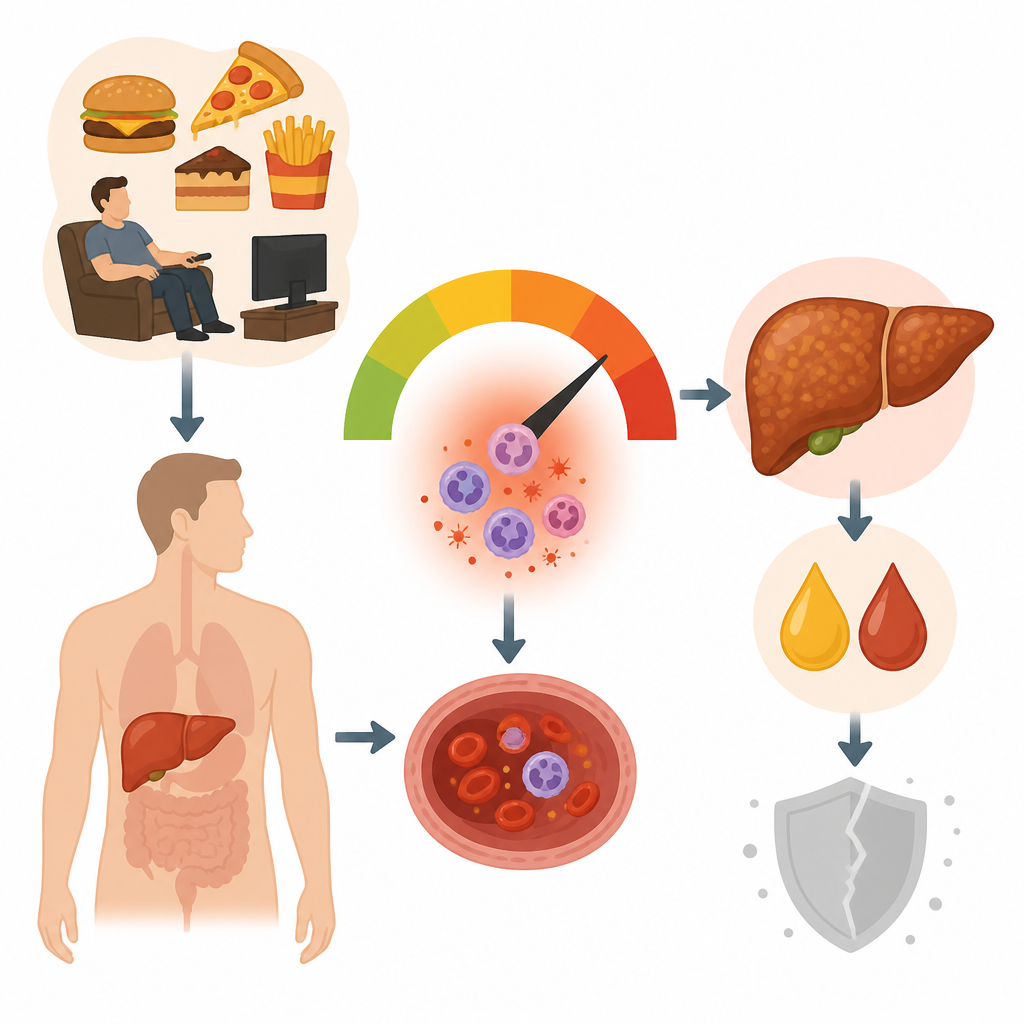
Many people have extra fat in the liver without knowing it, a condition now called metabolic dysfunction associated fatty liver disease. It is closely tied to weight, blood sugar, and heart health. This study looks at how quiet, long lasting inflammation in the blood, everyday eating habits, and liver fat all relate to each other. Understanding this three way link may help turn simple blood tests and diet choices into tools to protect both liver and heart.
A closer look at fatty liver and the immune system
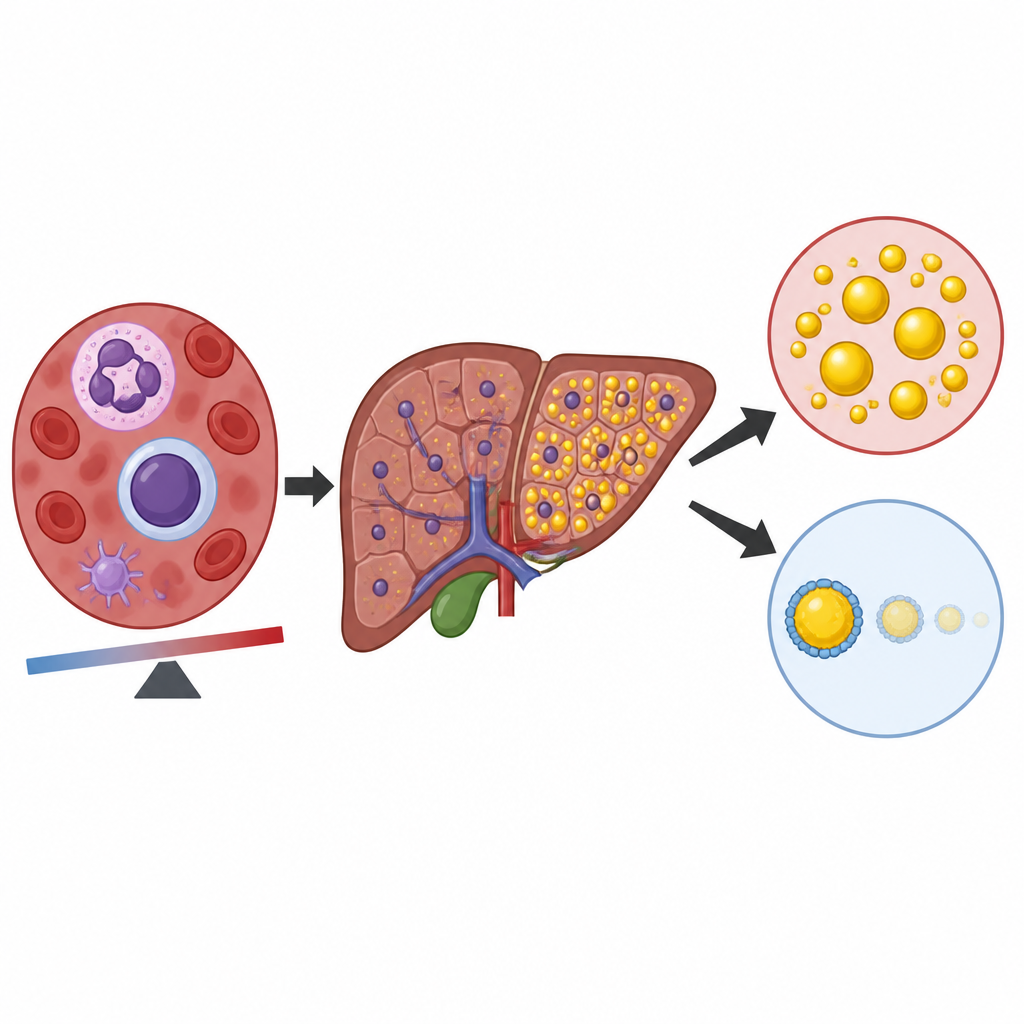
Fatty liver in this context develops not from heavy drinking but from modern lifestyles filled with excess calories, inactivity, and metabolic strain. The liver becomes loaded with fat while the body lives in a state of low grade inflammation. Immune cells that usually defend against infections instead release signals that disturb how the body handles fats and sugars. The researchers focused on a measure called the systemic immune inflammation index, which combines three routine blood counts into a single picture of inflammatory balance.
How the study was carried out
The team studied 254 adults aged 18 to 50 who all had fatty liver confirmed by ultrasound and metabolic risk factors such as obesity or type 2 diabetes. None drank alcohol, had viral hepatitis, or other serious inflammatory diseases, so the focus stayed on metabolic liver disease. Participants were grouped into three levels of the inflammation index. The researchers measured body size, blood fats, liver enzymes, and blood sugar. They also used a detailed food questionnaire to score how closely each person followed a Mediterranean style diet, using an index that captures intake of olive oil, fish, meat, cereals, and fruits and vegetables.
What the blood tests revealed
People with the highest inflammation index did not differ much in age, weight, physical activity, or stage of liver fat compared with those in the lowest group. Yet their blood fat patterns were clearly less healthy. The high inflammation group had markedly higher triglycerides and lower HDL cholesterol, the so called good cholesterol, even after adjusting for many other factors. Their white blood cell profile showed more neutrophils, fewer lymphocytes, and slightly more platelets, all of which fit a pattern of ongoing immune activation. Other measures such as total cholesterol, LDL cholesterol, liver enzymes, and fasting blood sugar did not change much across inflammation levels.
Diet quality and inflammation
Overall scores for the Mediterranean diet did not differ strongly between the groups, suggesting many participants had similar broad eating patterns. However, a closer look at the components told a more detailed story. Those with higher inflammation scores tended to have poorer scores for fruits and vegetables, meaning they ate smaller amounts of these foods. Fruits and vegetables are rich in fiber, vitamins, and plant compounds that can calm inflammation and support vessel and liver health. The study also found that better Mediterranean diet scores were linked to higher HDL cholesterol and healthier lymphocyte counts, hinting that diet quality still matters even when weight and activity are similar.
What this means going forward
The findings suggest that in people with metabolic fatty liver, a higher immune inflammation index goes hand in hand with more harmful blood fat patterns and lower fruit and vegetable intake. While the study cannot prove cause and effect, it raises the possibility that quiet inflammation and shortfalls in plant rich foods may work together to weaken liver and heart health. Because the inflammation index uses simple blood counts, it might one day help doctors spot patients whose fatty liver carries added risk and who could benefit most from tailored lifestyle changes focusing on improving diet quality.
Citation: Abdelgawwad El-Sehrawy, A.A.M., Kandil, I., ELmazny, G.M. et al. Exploring the interplay between systemic immune–inflammatory response, nutritional patterns, and metabolic health in MAFLD. Sci Rep 16, 16022 (2026). https://doi.org/10.1038/s41598-026-53487-3
Keywords: fatty liver, systemic inflammation, Mediterranean diet, triglycerides, HDL cholesterol