Clear Sky Science · en
Melatonin–selenium nanoformulation: a promising therapeutic strategy against Ehrlich ascites carcinoma
Why sleep and trace minerals matter for cancer research
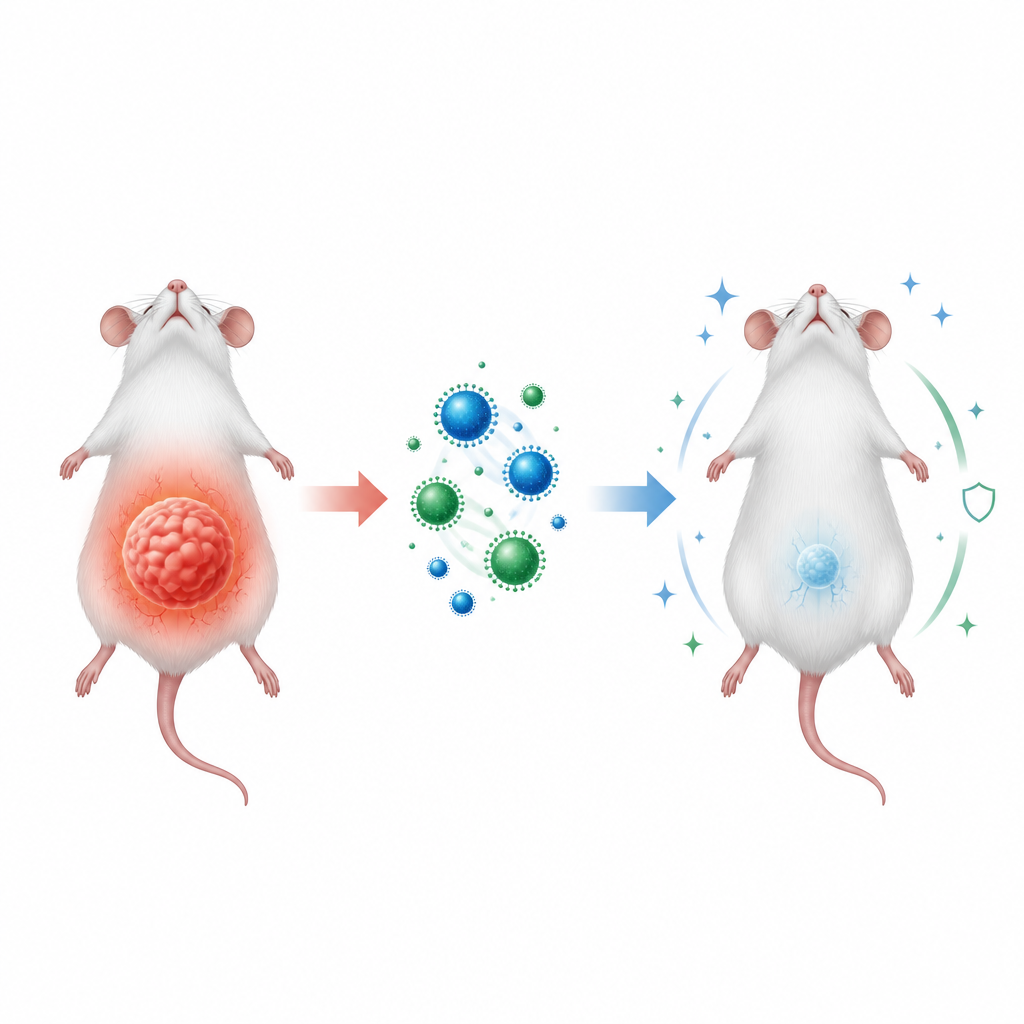
Most people know melatonin as the “sleep hormone” and selenium as a nutrient found in foods like nuts and fish. This study brings these familiar substances together in a tiny engineered form to explore whether they can work as a smart, safer treatment against a fast-growing mouse tumor called Ehrlich ascites carcinoma. By packing melatonin and selenium into nanoparticles, the researchers tested whether this duo could better slow cancer growth, calm harmful inflammation, and protect healthy tissues than either ingredient alone.
Tiny carriers with a big job
The team first created and examined very small particles made from selenium alone and from selenium plus melatonin. These nanoparticles are hundreds of times smaller than the width of a human hair, allowing them to move easily through the body. Using electron microscopes, they confirmed that the particles were mostly round and stable in liquid, which is important so they do not clump or fall apart before reaching their targets. When melatonin was added, the particles grew a bit larger but became even more stable, suggesting a robust carrier that could deliver both components together.
Testing the treatment in tumor-bearing mice
The scientists then used female mice implanted in the abdomen with Ehrlich ascites carcinoma cells, a standard model for studying aggressive tumors. Mice were divided into groups that received plain selenium, melatonin, selenium nanoparticles, or the combined melatonin-selenium nanoparticles. Some mice were treated only after tumors formed, while others were given the compounds before tumor cells were introduced, mimicking a preventive approach. The researchers tracked tumor fluid volume, tumor cell survival, blood health, and signs of stress and inflammation inside the animals.
How the combo fights stress and inflammation
Cancer growth in the untreated mice was linked to severe oxidative stress, where unstable molecules damage cells, and to high levels of the inflammatory signal IL-6. The melatonin-selenium nanoparticles strongly boosted natural antioxidant defenses in the liver and tumor fluid, raising key enzymes that neutralize harmful molecules while lowering markers of damage such as lipid breakdown products and nitric oxide. At the same time, IL-6 levels dropped more sharply with the combined nanoparticles than with melatonin, selenium salt, or selenium nanoparticles alone, pointing to a stronger calming effect on tumor-driven inflammation.
Shutting down tumor growth from the inside
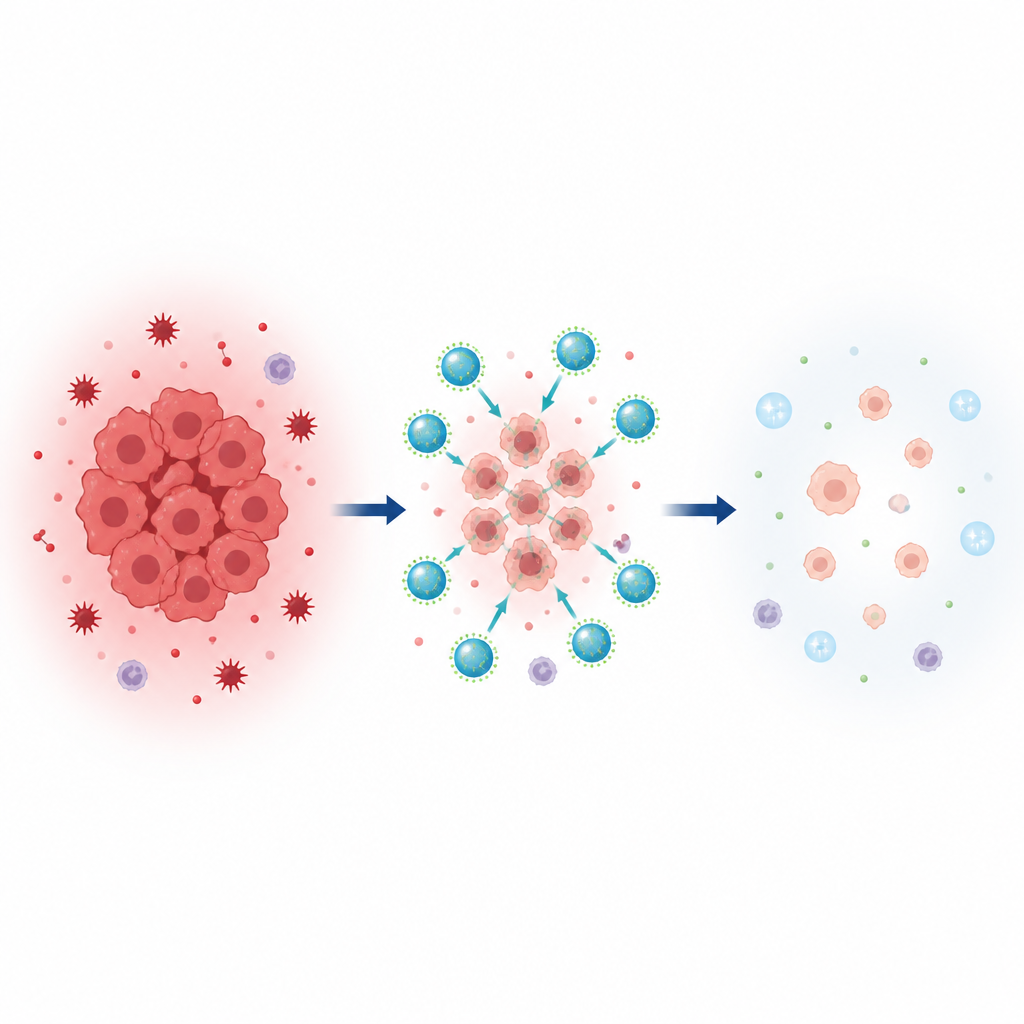
Beyond shrinking tumor volume, the combined nanoparticles changed how tumor cells behaved. They pushed many cells into a resting phase of the cell cycle and greatly reduced the fraction of cells actively copying their DNA, a hallmark of rapid growth. A protein marker of cell division, Ki-67, fell to its lowest levels in the group pretreated with the melatonin-selenium particles. At the same time, the treatment switched on programmed cell death, as shown by high levels of the enzyme caspase-3 and widespread cell damage in tumor tissue sections. Mice that received the nanoparticle mix, especially as a pre-treatment, had fewer viable tumor cells and more areas of necrosis and apoptosis than any other group.
Protecting blood and kidneys while attacking cancer
An important concern with cancer drugs is how much they harm healthy tissues. In this study, tumor-bearing mice that received no treatment developed severe changes in their blood counts and serious kidney damage. Melatonin, selenium, and selenium nanoparticles each helped somewhat, but the melatonin-selenium nanoparticles gave the best overall recovery of red blood cells, platelets, and immune balance. Kidney examinations showed that the pretreated nanoparticle group had the least structural damage, suggesting that this approach can curb the tumor while also shielding vital organs.
What this could mean for future cancer care
In simple terms, combining melatonin and selenium inside a single nanoparticle worked better against this mouse tumor than using either component alone. These tiny carriers reduced tumor size, helped the body clean up cancer cells, eased inflammation, and limited harm to blood and kidney tissues. While this work is still at the animal stage and focused on a specific tumor model, it supports the idea that carefully designed nutrient-based nanoparticles could become part of multi-targeted strategies to treat cancer more effectively and more gently.
Citation: Morad, H.M., Abdel-Aziz, A.F. & Madkour, M.M. Melatonin–selenium nanoformulation: a promising therapeutic strategy against Ehrlich ascites carcinoma. Sci Rep 16, 16264 (2026). https://doi.org/10.1038/s41598-026-53359-w
Keywords: melatonin, selenium nanoparticles, cancer therapy, oxidative stress, Ehrlich ascites carcinoma