Clear Sky Science · en
Eco-friendly second-derivative synchronous fluorescence method for the determination of empagliflozin and sitagliptin in tablets and plasma samples
Why this matters for people with diabetes
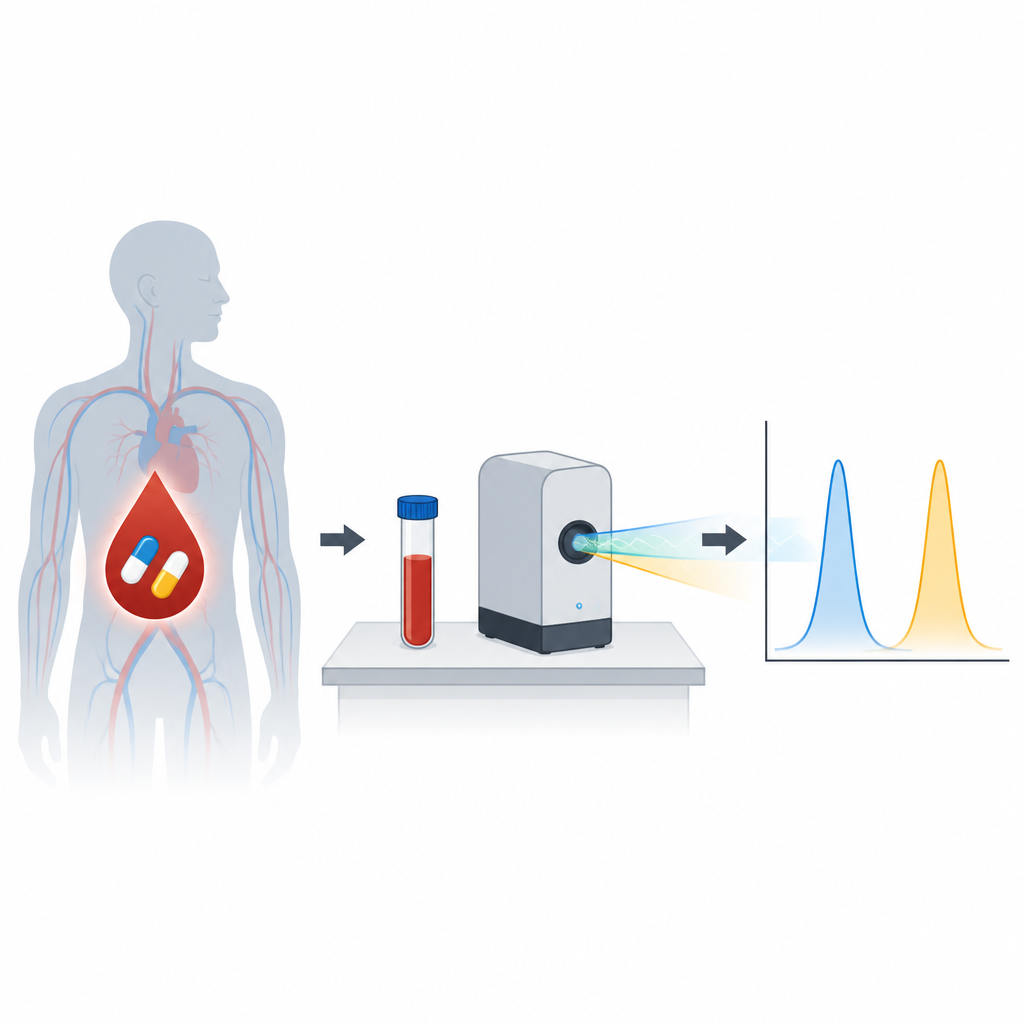
Many people with type 2 diabetes take a pair of modern medicines together to help control blood sugar more safely. Doctors and pharmacists need reliable ways to check that these drugs are present in the right amounts in tablets and in the bloodstream. This study introduces a laboratory test that can measure both medicines at once using very small samples while keeping energy use, waste, and harmful chemicals to a minimum.
Two partner drugs that work as a team
The work focuses on empagliflozin and sitagliptin, two drugs that are often prescribed together. Empagliflozin helps the kidneys release extra sugar into the urine, while sitagliptin helps the pancreas release more insulin and reduce sugar release from the liver. Because they act in different ways, using them together can improve blood sugar control with a low risk of dangerous drops in glucose. To support safe treatment, laboratories must be able to measure both drugs accurately in tablets and in blood samples.
The challenge of seeing two drugs at once
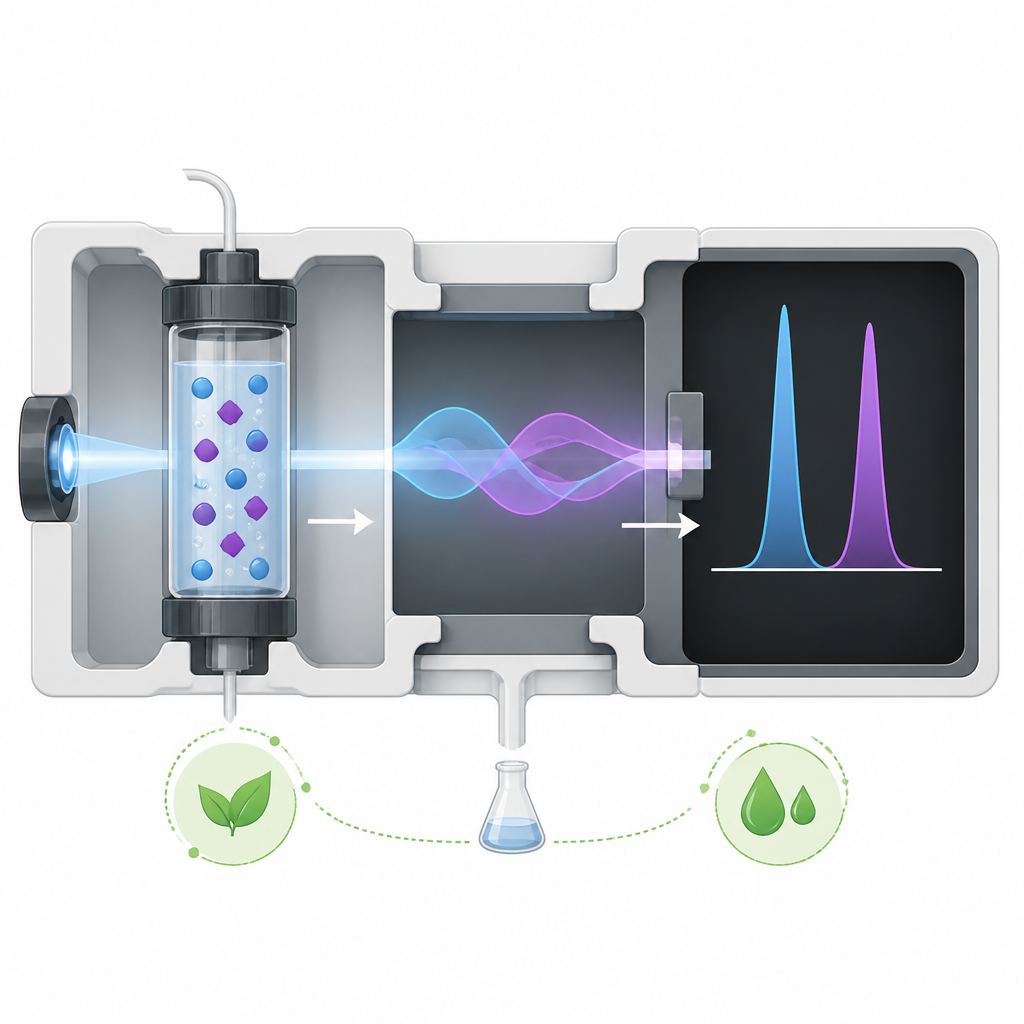
Both medicines naturally glow faintly when they are exposed to certain colors of light, a property called fluorescence. In principle, this glow can be used to measure how much drug is present. In practice, their light patterns overlap so strongly that ordinary fluorescence methods cannot easily tell them apart when they are mixed. Existing high performance techniques, such as advanced liquid chromatography, can separate and measure them, but these approaches are slower, more expensive, and use larger volumes of organic solvents that create chemical waste.
A sharper, cleaner way to read their glow
The researchers solved this problem by combining two refinements of fluorescence measurement. First, they used a “synchronous” scan, changing the light that excites and the light they measure in a coordinated way. Second, they converted the result to a second derivative signal, which mathematically sharpens the peaks and reduces overlap. By tuning key conditions such as the gap between the scanned colors, the acidity of the solution, and the choice of solvent, they found settings where empagliflozin and sitagliptin produced distinct peaks at different light colors without getting in each other’s way.
Proving accuracy in tablets and blood
Once the test conditions were set, the team carefully checked how well the method worked. They showed that the signal increased in a straight line with drug concentration over the ranges expected in real samples, and that the smallest amounts they could reliably detect were well below typical levels found in patients. The method gave nearly exact recoveries when analyzing lab-made mixtures, crushed commercial tablets, and human plasma samples that had been spiked with known amounts of the drugs. Small changes in settings such as solution acidity or scanning gap did not disturb the results, confirming that the procedure is stable and suitable for routine quality control.
Checking the environmental footprint
Beyond performance, the authors systematically examined how gentle the method is on the environment. They applied several established “green chemistry” scoring systems that look at solvent use, hazard, energy demand, and practical convenience. Across these tools, the new test scored higher than typical chromatographic methods and a previously reported ultraviolet method. It uses modest amounts of methanol, avoids complex extraction steps, runs quickly, and needs only standard laboratory equipment, which together reduce chemical waste, carbon emissions, and operating burden.
What this means for everyday care
In simple terms, the study presents a fast and sensitive way to check two common diabetes drugs in both pills and blood using a comparatively eco friendly laboratory setup. By sharpening how their faint glows are read, the method can separate and measure each drug without extra separation steps, while keeping costs and waste low. This kind of approach can help manufacturers and clinical labs monitor treatments more efficiently and with less environmental impact, supporting both patient safety and greener pharmaceutical testing.
Citation: Mohamad, A.A.A., Almrasy, A.A., Abdelazim, A.H. et al. Eco-friendly second-derivative synchronous fluorescence method for the determination of empagliflozin and sitagliptin in tablets and plasma samples. Sci Rep 16, 15708 (2026). https://doi.org/10.1038/s41598-026-53178-z
Keywords: empagliflozin, sitagliptin, fluorescence analysis, green analytical chemistry, diabetes drugs