Clear Sky Science · en
3D‑printed training model for periodontal splinting: a randomized preclinical study
Practice Teeth Before Treating People
Dental students need a safe way to learn how to steady loose teeth before they ever touch a real patient. This study describes a low cost 3D printed tooth model that lets students practice a common stabilizing technique again and again, while teachers can measure how closely the students match an ideal tooth position.
Why Loose Teeth Need Support
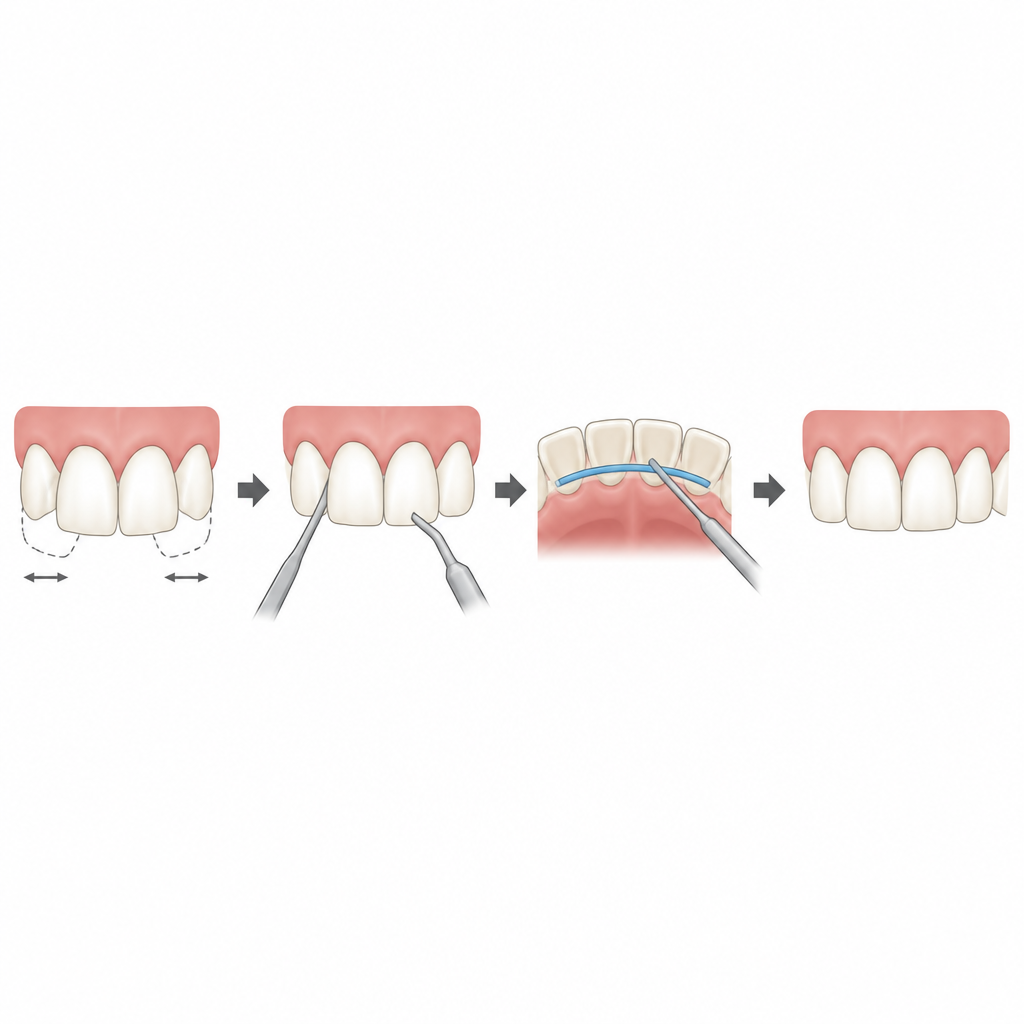
In real life, teeth can become wobbly after gum disease or injury. One common solution is to join several front teeth together on the inside with a thin fiber strip covered by plastic, forming a kind of hidden support bar. Done well, this spreads out biting forces and makes teeth feel firmer. But the method is delicate, and beginners must learn to nudge each loose tooth into a natural line before locking it into place.
A New Type of Practice Model
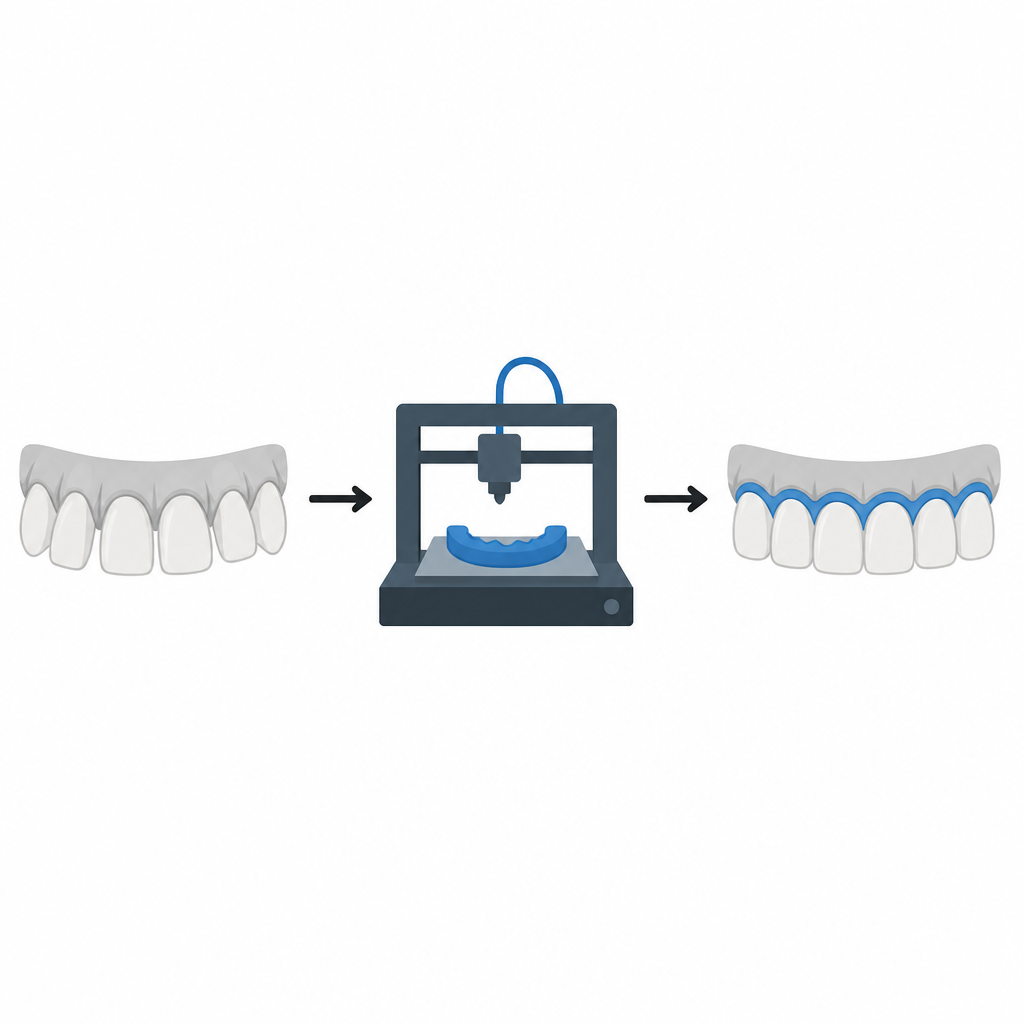
The researchers designed upper front teeth that deliberately move inside a standard plastic jaw used in teaching labs. These 3D printed teeth can be pushed out of line and then guided back into an ideal arch, mimicking what dentists do with real loose teeth. Because the teeth drop into a widely used commercial jaw frame and are printed in batches with simple white resin, the parts are inexpensive and easy for schools to reproduce at scale.
How Students Used the Model
Forty three dental students, all early in their clinical training, took part in a two session course. In each session, they first repositioned the loose front teeth into a smooth curve, then prepared a shallow groove behind the teeth and placed one of two common fiber materials into it before covering everything with plastic. The order of materials was shuffled so that some students used one fiber type first and others started with the second. Afterward, the models were scanned in 3D so that the final tooth positions could be compared with an instructor made ideal version.
What Students Thought and How They Performed
Students rated the course and the model positively. They felt the looseness and repositioning of the teeth were realistic and judged the overall exercise as good and highly relevant to real practice. Before training, most felt poorly prepared to stabilize loose teeth on patients; after the two sessions they felt well prepared. When their finished models were analyzed, the distances between each student’s tooth positions and the instructor’s ideal positions were small, and there were no clear differences between the two fiber products or between the first and second attempts in this pilot group.
What This Means for Dental Training
For a layperson, the main message is that a simple 3D printed set of wobbly teeth can give students a realistic way to learn how to line up and support loose front teeth without risking harm to patients. The model is cheap to make, fits into equipment many schools already own, and allows objective checking of how well students align teeth. While larger studies are needed to see how much this improves skill over time or how different materials compare, this approach offers a practical step toward better hands on preparation in dental education.
Citation: Hoehne, C., Rehling, S., Schrenker, J. et al. 3D‑printed training model for periodontal splinting: a randomized preclinical study. Sci Rep 16, 15996 (2026). https://doi.org/10.1038/s41598-026-52988-5
Keywords: 3D printed dental model, periodontal splinting, dental education, simulation training, fibre reinforced composite