Clear Sky Science · en
Design, synthesis, and multitarget evaluation of thiosemicarbazone–sulfonamide hybrids as potent cholinesterase and MAO-A inhibitors with neuroblastoma-associated cytotoxicity
Why this research matters
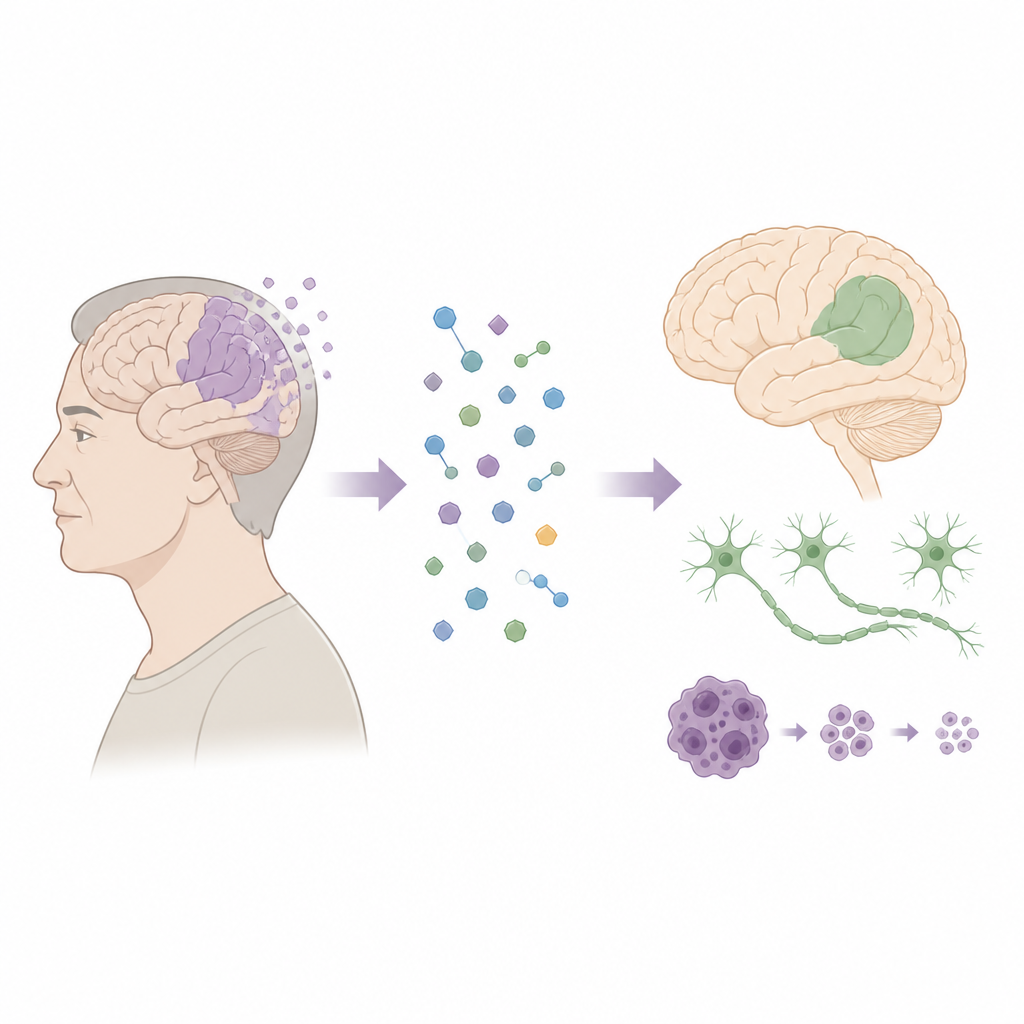
Alzheimer’s disease robs people of memory and independence, and current medicines mostly ease symptoms without slowing the underlying damage. At the same time, a childhood cancer called neuroblastoma arises from nerve-like cells that share some of the same chemical pathways as brain cells. This study explores new small molecules designed to hit several biological targets at once, with the hope of better treating brain decline while also curbing cancer-like cell growth.
Looking for many levers instead of one
Alzheimer’s involves a tangle of problems rather than a single faulty switch. Two key brain chemicals, acetylcholine and certain monoamines, help support memory, mood, and attention. Enzymes in the brain break these messengers down. In Alzheimer’s, the balance shifts: enzymes that clear acetylcholine become overactive, and another enzyme tied to oxidative stress becomes more active as well. The researchers set out to design compounds that could gently block three of these enzymes at the same time, aiming to preserve brain signals and reduce stress on vulnerable nerve cells.
Designing a new family of small molecules
The team built a series of twenty related compounds that combine three chemical building blocks in one scaffold. One part, known as an indole, is common in many brain-active drugs and can help molecules cross into the brain. A second part, a sulfonamide group, can tune fat solubility and strengthen contact with enzyme pockets. The third, called a thiosemicarbazone, is flexible and able to form multiple contacts inside enzyme sites. By varying one side chain of this scaffold, the scientists could probe how small structural tweaks change biological effects, a classic structure–activity approach.
Blocking brain enzymes and testing cancer-like cells
In test-tube experiments, all twenty compounds strongly blocked the two enzymes that break down acetylcholine, often outperforming the approved drug galantamine. Many also blocked the monoamine enzyme more effectively than the drug clorgyline. One compound, labeled 5n, stood out for its balanced strength across all three targets at very low concentrations. The researchers then exposed human neuroblastoma cells, a widely used nerve-like cancer model, to the compounds. Several members of the series slowed the growth of these cells while being substantially less harmful to normal blood vessel cells grown in parallel, suggesting a degree of selectivity.
Peering into how the molecules fit their targets
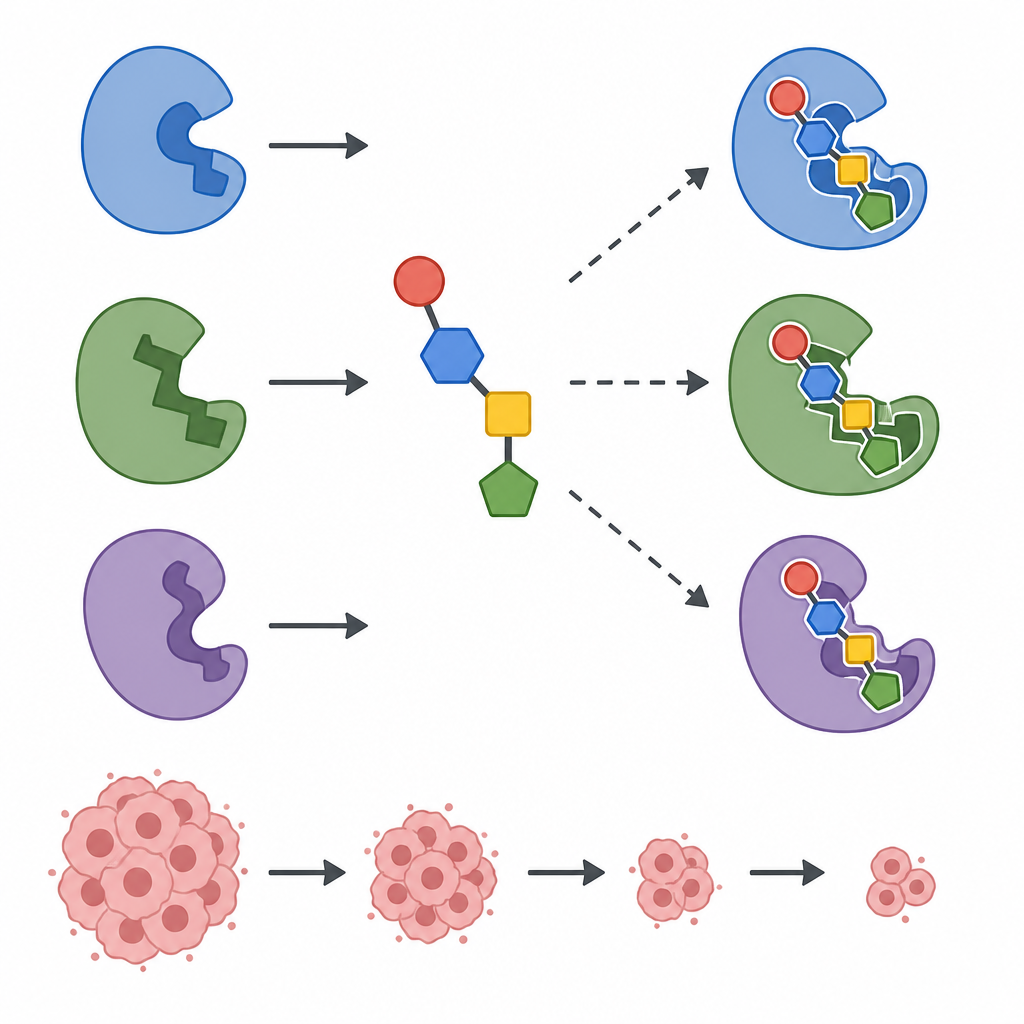
To understand why certain versions worked best, the team used computer simulations that visualize how each compound nestles into the three-dimensional grooves of its target enzymes. For the top candidates, these models showed snug fits held in place by hydrogen bonds, stacking interactions between flat ring systems, and contacts with chlorine and bromine atoms. One lead compound, 5n, formed especially stable complexes in long-running molecular dynamics simulations, which mimic the constantly moving environment inside cells. Additional calculations of electronic structure and predicted drug-like behavior suggested that these molecules have suitable stability, brain penetration, and oral absorption for further development.
What the findings mean going forward
Put together, the results highlight compound 5n as a promising starting point for drugs that tackle Alzheimer’s from several angles at once while also showing activity against neuroblastoma cells in the lab. The work does not yet offer a treatment for patients, and the molecules still need to be tested in animals, checked against additional brain enzymes, and refined for safety. Nonetheless, the study shows that carefully designed hybrid molecules can engage multiple disease-related pathways at the same time, pointing toward future medicines that better protect nerve cells from both degeneration and uncontrolled growth.
Citation: Abbas, K., Elamin, M.R., Şenol, H. et al. Design, synthesis, and multitarget evaluation of thiosemicarbazone–sulfonamide hybrids as potent cholinesterase and MAO-A inhibitors with neuroblastoma-associated cytotoxicity. Sci Rep 16, 15736 (2026). https://doi.org/10.1038/s41598-026-52909-6
Keywords: Alzheimer’s disease, cholinesterase inhibitors, monoamine oxidase A, multitarget drug design, neuroblastoma