Clear Sky Science · en
Impact of treated wastewater on the mechanical properties and durability of concrete
Why reused water in concrete matters
As cities grow and climate pressures mount, clean water is becoming harder to secure. At the same time, the concrete industry uses enormous volumes of freshwater for mixing and curing. This study asks a practical question with big consequences: can safely treated wastewater stand in for drinking water when we make concrete, without sacrificing strength or long life? The answer could help relieve pressure on freshwater supplies while keeping buildings and infrastructure safe.
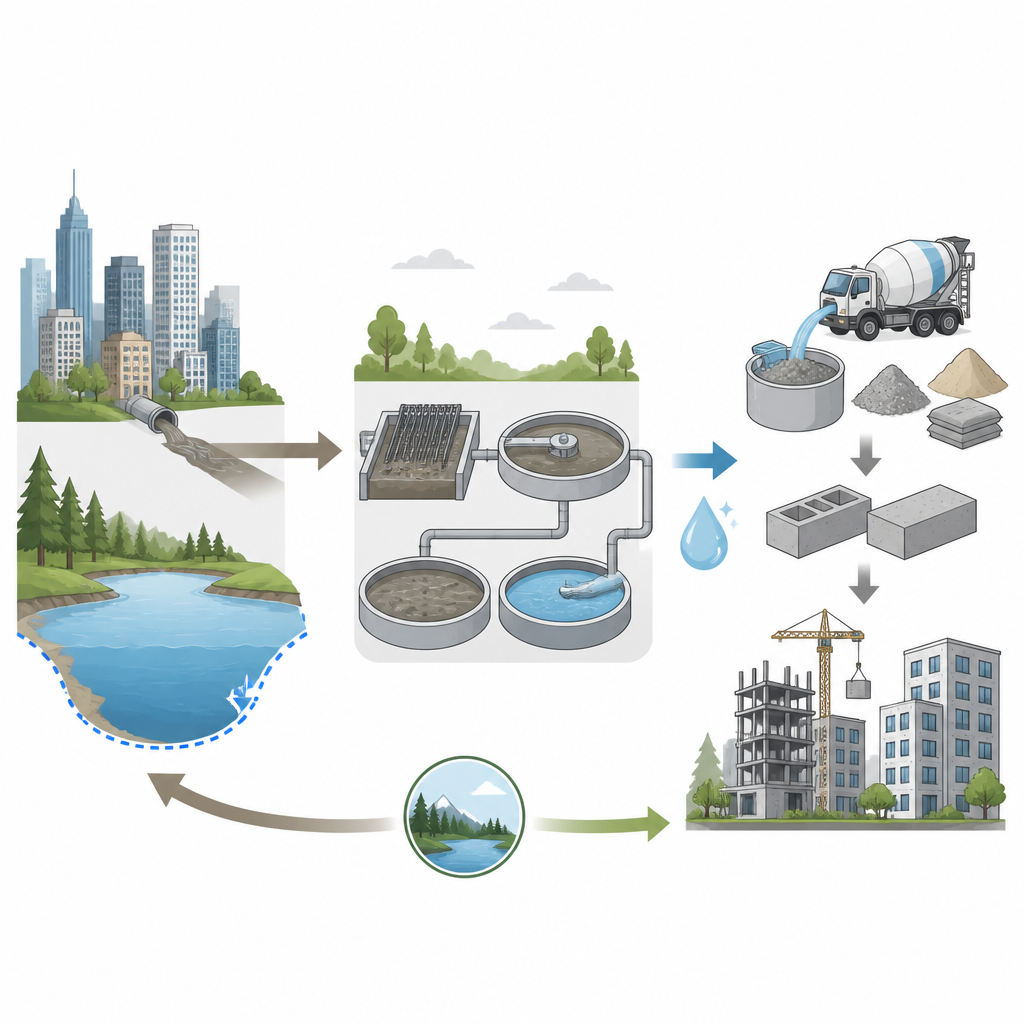
Turning used water into a construction resource
The researchers looked at concrete made with three kinds of water: ordinary tap water and two samples of treated wastewater taken from different treatment plants in Egypt. All three waters met common quality limits, but they differed in how much dissolved salts, fine particles and other ingredients they carried. The team mixed concrete using each water type, then cured the finished pieces either in tap water or in treated wastewater to simulate real-world building practices in regions facing water stress.
How the concrete held up in strength tests
The team tested how easy the fresh concrete was to work with, and how strong it became over time in compression, tension and stiffness. Using treated wastewater made the fresh mix less workable, mainly because extra fine particles in the water effectively reduced the free water available for flow. At early ages, concrete mixed or cured with treated wastewater showed lower compressive strength than concrete made with tap water. However, as the concrete aged, these differences shrank and became small by 60 to 90 days. One treated water, which contained more dissolved solids, even approached the strength of the control mix, likely because those fine solids helped fill tiny gaps inside the hardened concrete.
What the study found about long term durability
Beyond basic strength, the researchers checked how easily water and chloride ions could move into the concrete, since that movement helps control cracking and damage over the long term. They measured water absorption, how deeply pressurized water penetrated, the flow of chloride ions through the concrete, and how quickly water was drawn in through tiny capillaries. For most of these tests, the effects of treated wastewater were modest, and one of the treated water mixes performed almost as well as the tap water concrete. Microscopic imaging supported these results, revealing that the control concrete had the densest internal structure, while the better performing treated water mix showed a more organized crystal network than the poorer one.
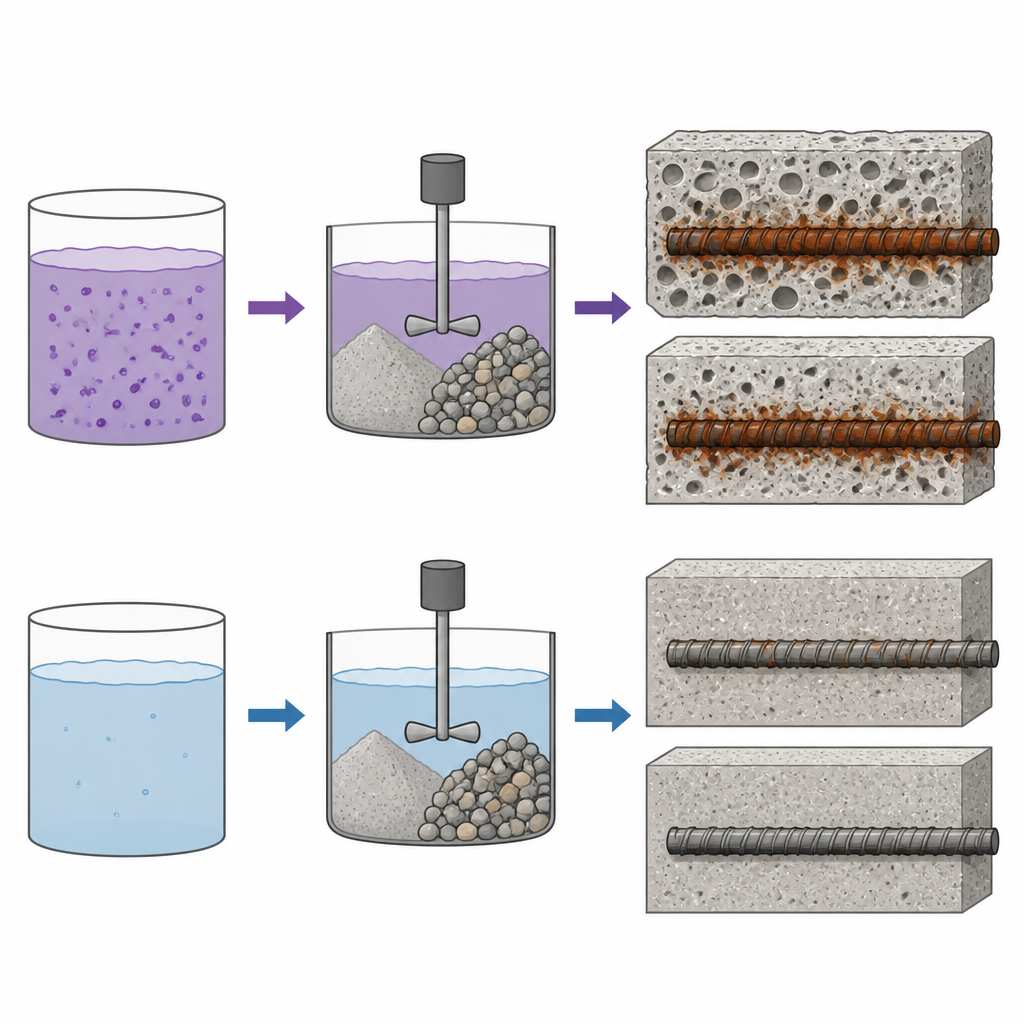
The hidden risk to steel inside concrete
Where treated wastewater did raise concern was in protecting the steel bars that reinforce most structural concrete. In accelerated corrosion tests, steel embedded in concrete made with treated wastewater lost noticeably more mass than steel in the control mix. This was true even though the chloride levels in the wastewater were within accepted limits. The researchers point to total dissolved solids and the resulting higher electrical conductivity as possible culprits, which may make it easier for corrosion to start and spread, even when other durability measures look acceptable.
What this means for future building practice
For a general reader, the take home message is that safely treated wastewater can produce concrete with nearly the same strength and basic durability as concrete made with drinking water, especially at later ages. However, it also tends to increase the risk of rusting in steel reinforcement. The study suggests that treated wastewater is a promising option for concrete that does not contain steel, such as some blocks, pavements and non structural elements. With careful control of water quality and further research on how its ingredients affect corrosion, treated wastewater could become an important tool for saving precious freshwater in construction.
Citation: Abdelazim, O., Abdel-Latif, I., Ismail, S. et al. Impact of treated wastewater on the mechanical properties and durability of concrete. Sci Rep 16, 15497 (2026). https://doi.org/10.1038/s41598-026-52561-0
Keywords: treated wastewater, concrete durability, recycled water, steel corrosion, sustainable construction