Clear Sky Science · en
Hypnotic safety suggestions reduce cortisol awakening response and morning heart rate in daily life
Why a Calmer Morning Matters
Many people wake up already feeling tense about the day ahead. That hidden “gear-up” of the body shows up in hormones and heart rate and is closely tied to long-term health. This study tested a simple hypnosis-based technique, the Jena Safety Anchor, to see whether a single, brief session could help people’s bodies start the day in a calmer state—without weeks of training or lifestyle overhauls.
A Simple Tool to Feel Safer
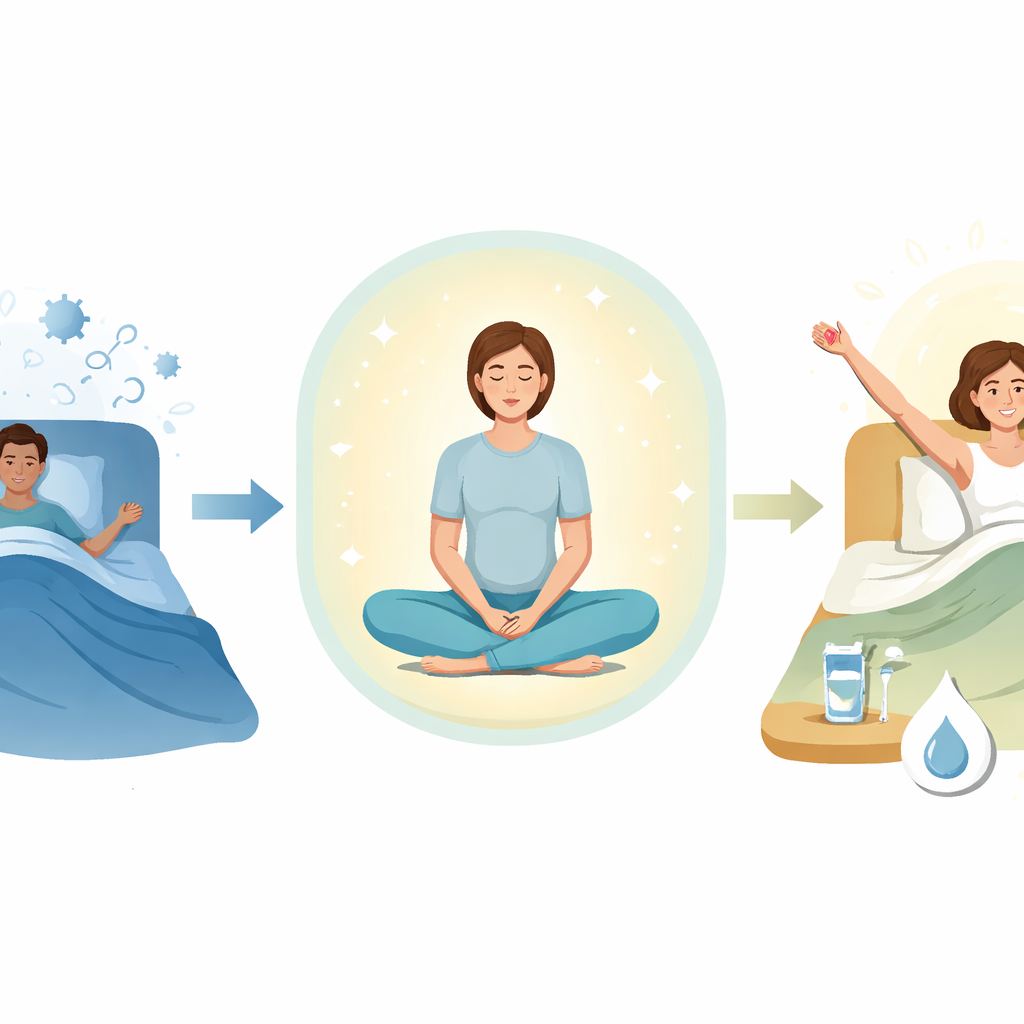
The Jena Safety Anchor builds on a basic idea: when we vividly imagine a safe, comfortable place, our bodies respond as if we truly are safer. In a guided hypnosis session, participants were helped to picture such a personal “safe place,” engaging sights, sounds, and sensations. While still in this focused, relaxed state, they wrote the letter S on a piece of paper and were told that seeing or touching this paper later would bring back the same feeling of safety. Earlier work showed this technique could cut self-reported stress in half during a staged public-speaking test in the lab. The new question was whether it could also ease the body’s automatic stress signals in everyday life, especially right after waking.
Testing Calmness at Home
Eighty adults were randomly assigned to one of two groups. Both groups wore smartwatches for two weeks and collected saliva samples at home on selected mornings. During the first week, everyone simply followed their usual routines while sampling their saliva shortly after waking and again later, and while their watches tracked heart rate between 6 and 9 a.m. At the end of that week, only the hypnosis group received a single, roughly 30-minute Jena Safety Anchor session, led by trained medical students. The control group visited the lab but did not receive any hypnosis or special stress-management exercise. In the second week, all participants again collected saliva and heart rate data at home under the same conditions.
What Changed in Hormones and Heartbeat
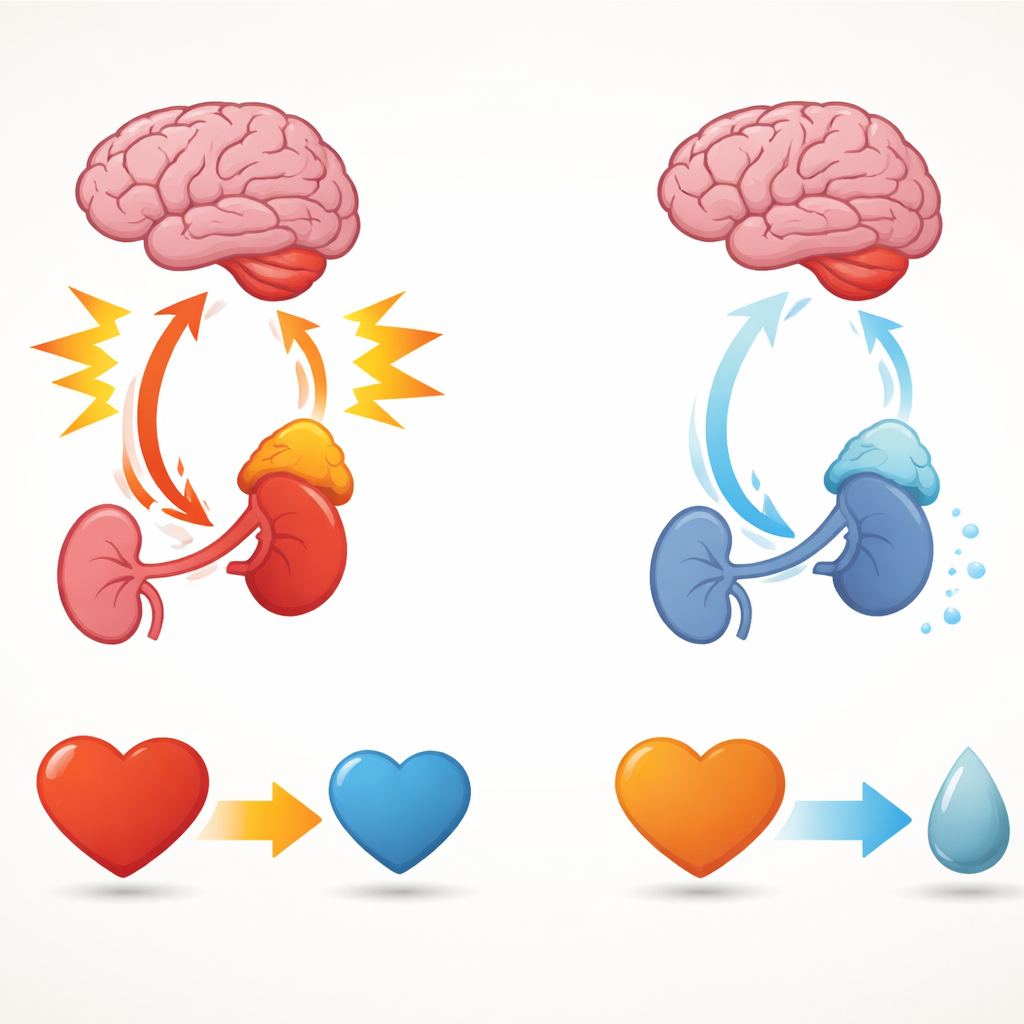
The researchers focused on two markers of how the body prepares for the day. The first was the cortisol awakening response—the natural rise in the stress hormone cortisol in the first 30 to 45 minutes after waking. A steeper rise is often linked to higher ongoing stress or strain, while a more moderate response can reflect better regulation. The second marker was morning heart rate, which tends to be higher when the body’s “fight-or-flight” system is more active. After the hypnosis session, people in the hypnosis group showed a clear drop in their cortisol awakening response compared with their own first week, and the difference between them and the control group largely disappeared. Their morning heart rate also fell more from week one to week two than in the control group, suggesting a shift toward a calmer, more settled physiology.
Everyday Calm Without Ongoing Practice
Interestingly, whether participants said they had actively used their Safety Anchor paper in daily life did not strongly predict how much their cortisol response changed. This hints that the guided hypnosis session itself, and the deep sense of safety it created, may have had lingering effects on the body’s stress systems, beyond any conscious use of the anchor later. Participants also reported feeling strongly safe right after hypnosis, and those who experienced a deeper trance tended to feel safer, suggesting that the quality of the session mattered. The study was not perfect—participants knew which group they were in, and saliva collection timing at home could not be controlled as strictly as in a lab—but the results still point to a robust shift in biological stress markers.
What This Means for Everyday Well-Being
Together, lower morning cortisol increases and reduced heart rate point to a body that is less braced for threat and better able to ease into the day. For people living with constant pressure, that shift might, over time, translate into better mood, more energy, and lower risk for stress-related illness. This work suggests that a single, well-designed hypnosis session that installs a strong feeling of safety can be a time-efficient, easy-to-integrate tool to support resilience—helping people start the morning from a place of calm rather than alarm.
Citation: Schmidt, B., Riede, M., Walter, M. et al. Hypnotic safety suggestions reduce cortisol awakening response and morning heart rate in daily life. Sci Rep 16, 14675 (2026). https://doi.org/10.1038/s41598-026-52081-x
Keywords: hypnosis, stress, cortisol, heart rate, resilience