Clear Sky Science · en
Moderate pre-stroke physical activity has a protective effect on symptoms of depression in the post-acute phase after stroke
Why moving before illness can matter later
Stroke can turn life upside down in a single day, not only by weakening the body but also by clouding mood and motivation. Many survivors struggle with depression and anxiety in the months that follow, which can slow their recovery and diminish quality of life. This study asks a simple but important question: does the way people move in their everyday lives before a stroke make any difference to how they feel emotionally afterward? The answer, it turns out, is yes, but with a twist: moderate activity seems to help most. 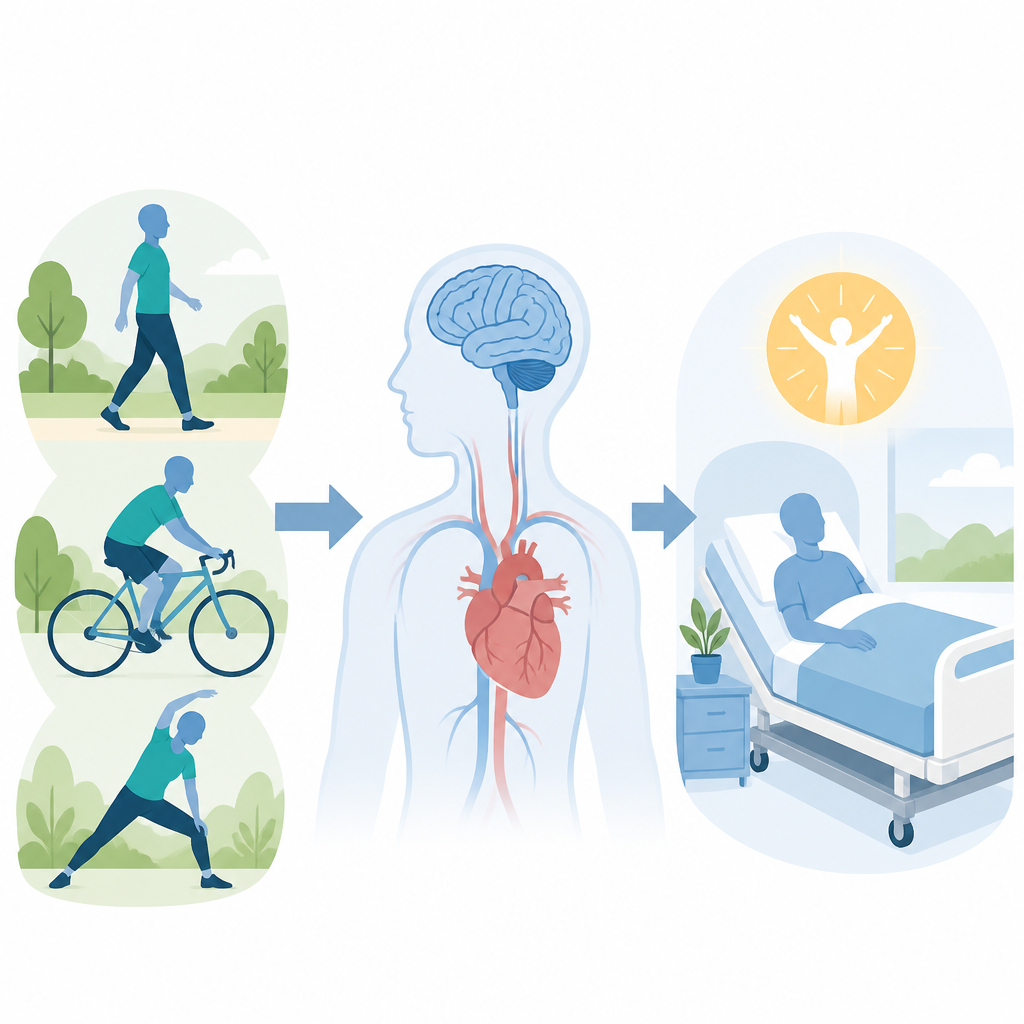
Everyday activity before a sudden event
The researchers followed 1,790 adults treated for stroke at a large hospital in Augsburg, Germany, between 2018 and 2022. While patients were still in the hospital, trained staff interviewed them or close relatives about their usual physical activity in the week before the stroke. The questions covered simple things like walking, moderate exercise such as brisk walking or easy cycling, and more vigorous workouts. Using a standard scoring method, the team sorted people into three groups: low, moderate, and high activity. A typical person in the moderate group might take a brisk walk five times per week, while the high group did several hours of stronger exercise. This information was then linked with how patients felt months later.
Checking mood months after stroke
To track mental health, the team mailed questionnaires to survivors three and twelve months after they left the hospital. Two widely used tools captured symptoms of depression and anxiety. The depression scale rated how often people experienced problems such as low mood, loss of interest, poor sleep, or low energy, while the anxiety scale asked about worry, restlessness, and tension. Higher scores meant more severe symptoms. The responses were combined with medical records on stroke severity, disability, other illnesses, body weight, smoking, earlier mental health problems, and social factors such as living alone or with others. This allowed the researchers to adjust for many differences between people when comparing activity groups. 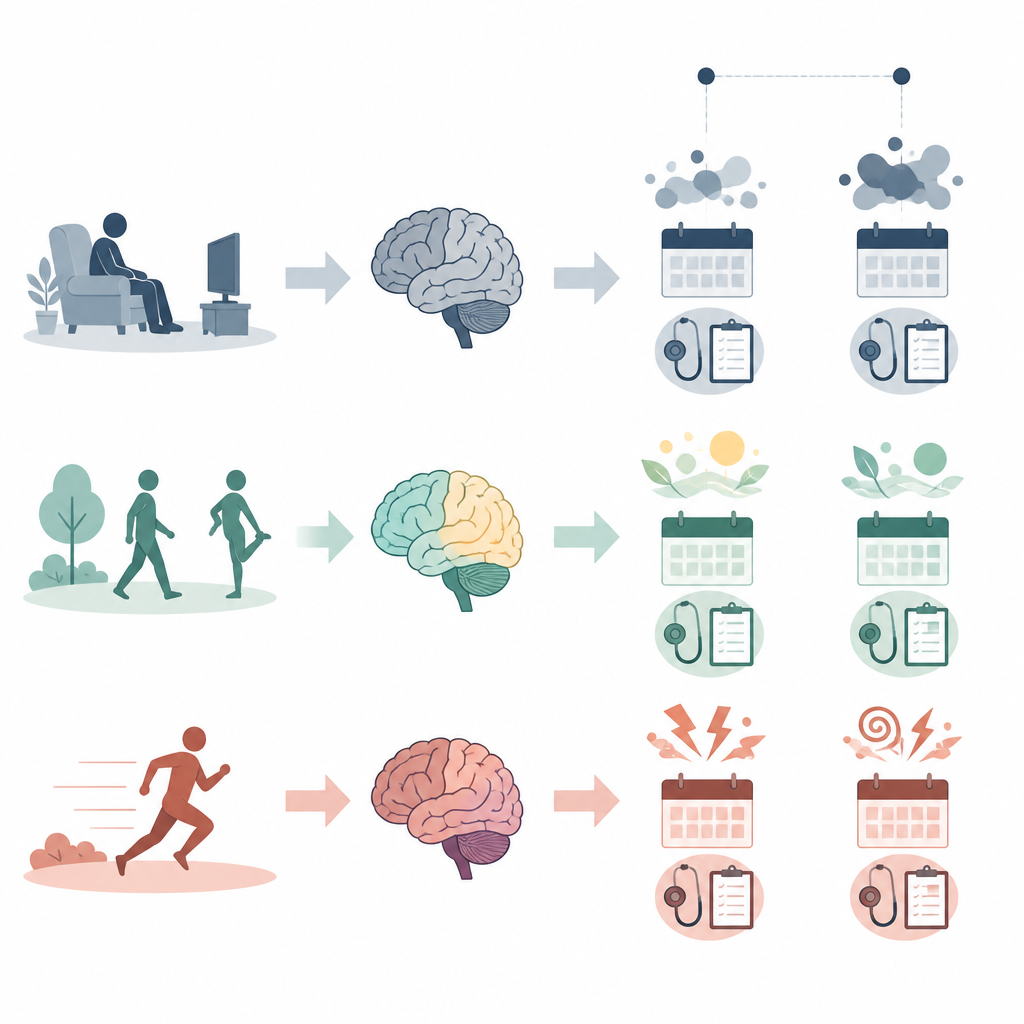
Moderate movement stands out
When they looked at the three-month mark, people who had been moderately active before their stroke reported fewer depressive symptoms than those who had been mostly inactive, even after accounting for age, sex, other diseases, prior mental health diagnoses, and overall health. In contrast, those in the high activity group did not show a clear advantage once these factors were taken into account. At twelve months, the link between pre-stroke activity and depression largely faded, suggesting that early benefits may weaken over time as other influences, such as life adjustments and activity after stroke, become more important. Across all groups, depression and anxiety scores were strongly tied together: most people with high anxiety also had high depression scores, underlining how closely these two conditions travel together after stroke.
What the findings might mean inside the body
Why would regular but not extreme activity before a stroke be linked to fewer depressive symptoms shortly afterward? Earlier work suggests that steady movement can support brain health in several ways. It may boost growth-supporting molecules, help new blood vessels form in the brain, calm inflammation, and improve blood pressure and metabolism. These changes can lessen stroke severity and help the brain adapt. However, the study authors point out that more exercise is not always better. People who were highly active may find the sudden loss of independence especially hard to accept, which could offset some of the biological benefits. At the same time, people with very low activity often carry more chronic illnesses and poorer overall health, which can increase their risk of depression once a major event like stroke occurs.
What this means for patients and care teams
For a layperson, the core message is that how much you move before a stroke may shape how you feel in the early months afterward, but the sweet spot seems to be moderate rather than extreme effort. The study does not prove that exercise alone prevents depression or anxiety, and it cannot replace medical or psychological care. Still, it suggests that an active lifestyle before stroke is one piece of the puzzle for better emotional recovery, especially in the first three months. The authors urge doctors to pay close attention not just to people who were inactive but also to those who were very active before their stroke, since both groups may be at higher risk for emotional difficulties. In the longer term, regular monitoring and tailored support for mood problems remain essential for helping stroke survivors regain as much quality of life as possible.
Citation: Hahner, M., Meisinger, C., Kirchberger, I. et al. Moderate pre-stroke physical activity has a protective effect on symptoms of depression in the post-acute phase after stroke. Sci Rep 16, 16290 (2026). https://doi.org/10.1038/s41598-026-51679-5
Keywords: stroke recovery, physical activity, post-stroke depression, mental health, moderate exercise