Clear Sky Science · en
Evaluation of serum progranulin as a biomarker for early detection of neonatal sepsis in a microbiological context
Why tiny infections matter
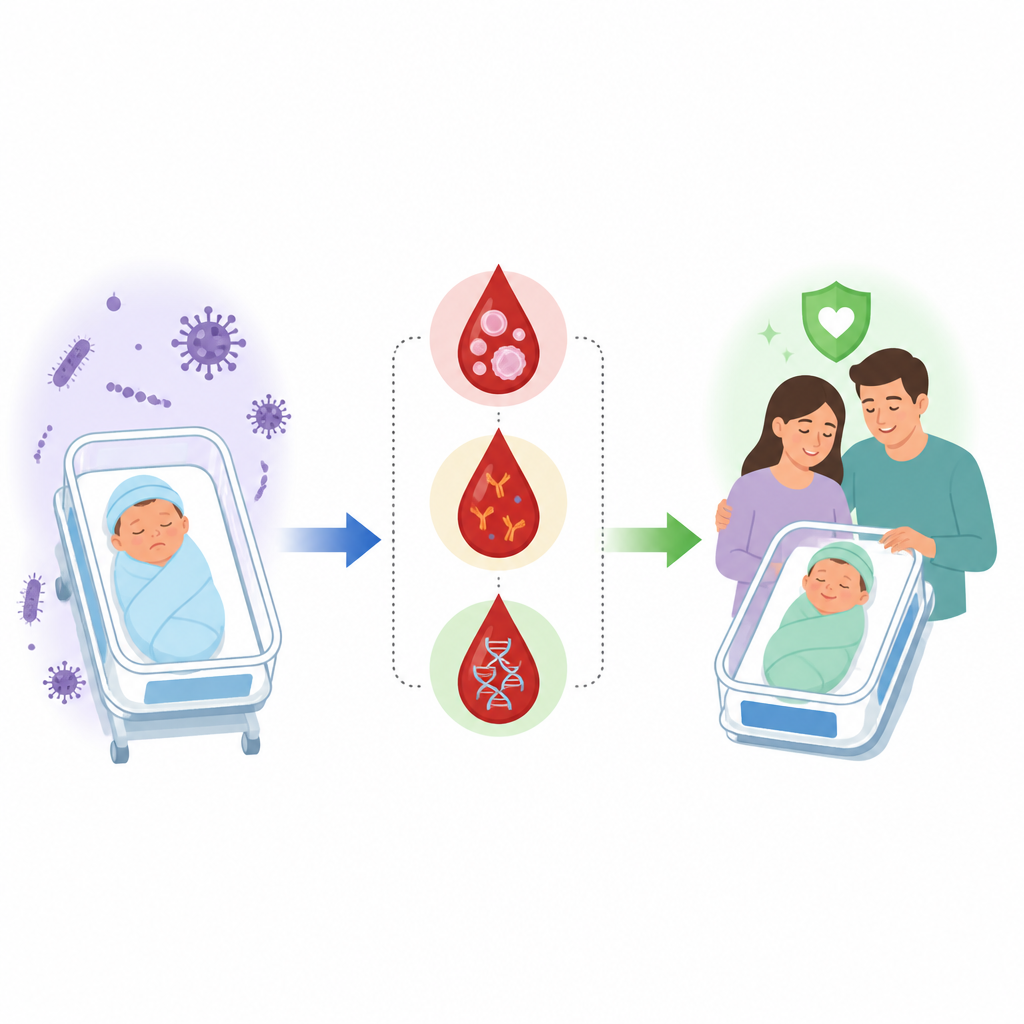
For newborn babies, even a small infection can quickly become life threatening. Doctors often have only subtle clues to tell whether a sleepy or fussy baby is dangerously ill or simply adjusting to life outside the womb. This study looks at a blood substance called progranulin and asks whether it can help doctors spot serious infections in newborns earlier and more reliably than today’s standard blood tests.
The hidden threat in the first days of life
Neonatal sepsis is a severe whole-body infection that strikes within the first month after birth. Its early signs—poor feeding, breathing trouble, or temperature changes—are easy to confuse with more harmless newborn problems. The current gold standard test is a blood culture, in which a small sample of blood is watched for germ growth over several days. This method can miss infections and often takes too long to guide urgent treatment. As a result, many babies receive antibiotics “just in case,” which can disrupt healthy bacteria and fuel antibiotic resistance.
Searching the blood for clearer signals
Doctors already use two blood markers, C-reactive protein and procalcitonin, to help judge whether a newborn has a serious infection. Both rise during inflammation, but they are not always specific for infection and may increase for other reasons. Progranulin is a small protein made by many cells in the body that helps control inflammation and supports tissue repair. Previous work in animals and adults suggested that progranulin rises sharply during sepsis and might be tightly linked to how the body responds to invading germs. This study tested whether measuring progranulin in newborn blood could improve early diagnosis of sepsis compared with the older markers.
How the study was carried out
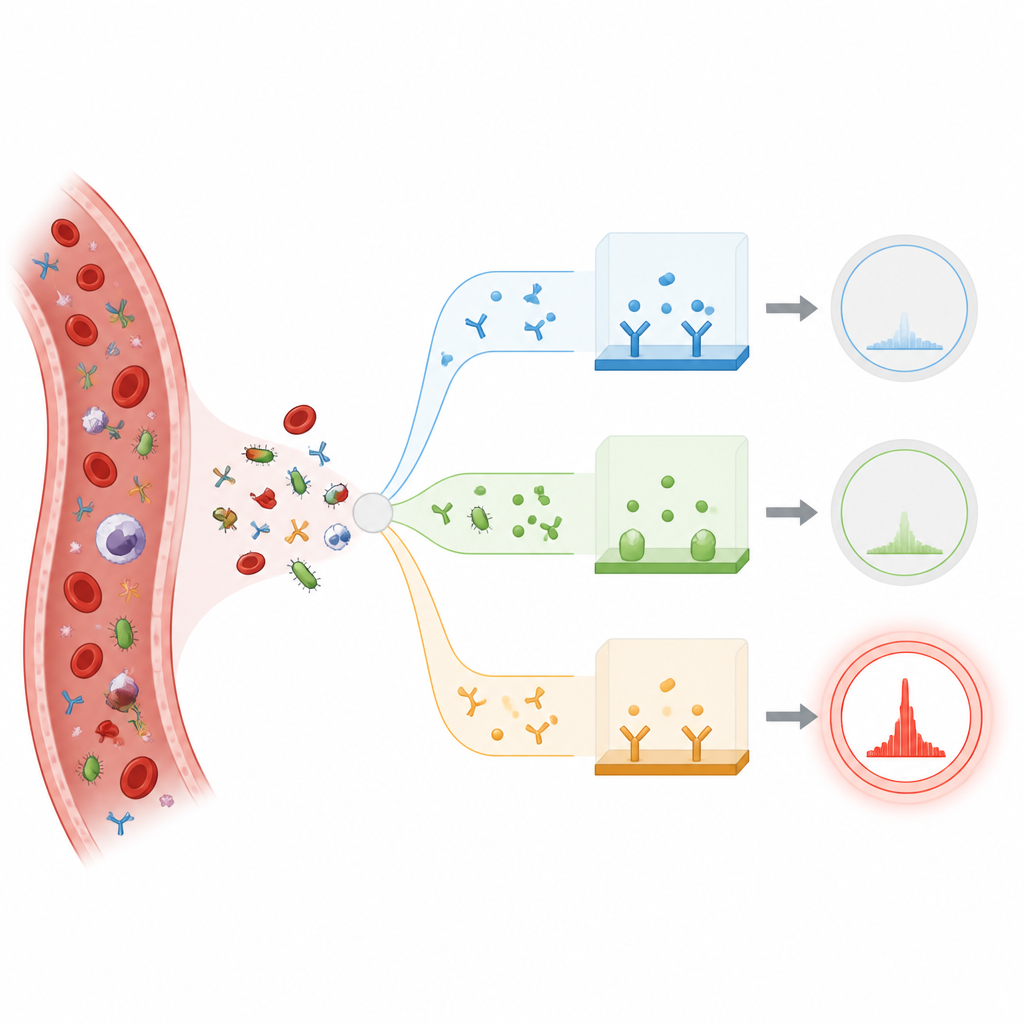
The researchers studied 60 newborns with signs suggesting sepsis and compared them with 30 healthy newborns. All of the babies with suspected sepsis were carefully examined and had blood drawn before starting antibiotics. One portion of each sample was sent for culture to look for germs. The rest was used to measure the levels of progranulin, procalcitonin, and C-reactive protein. Based on the culture results, the sick babies were sorted into a “confirmed sepsis” group, where germs were grown from the blood, and a “probable sepsis” group, where symptoms strongly pointed to infection but cultures stayed negative. This design allowed the team to see how well each marker worked both when cultures were positive and when they were not.
What the blood markers revealed
All three markers were higher in sick babies than in healthy controls, but progranulin showed the clearest separation. Newborns with sepsis had progranulin levels almost three times those of healthy babies, and this pattern held across both culture-positive and culture-negative cases. When the team tested how accurately each marker could distinguish sepsis from health, progranulin came out on top by a wide margin. Using a locally defined cut-off value, progranulin correctly flagged almost all infected babies and rarely misclassified healthy ones. Procalcitonin and C-reactive protein were still useful, but they were less sensitive and, in the case of C-reactive protein, less helpful in predicting sepsis on their own.
Putting the pieces together
Beyond the performance of single markers, the study also examined how combinations behaved. Pairing progranulin with procalcitonin further improved the balance between correctly identifying sick babies and avoiding false alarms. Statistical analysis showed that progranulin remained the strongest independent predictor of sepsis even after accounting for the other tests. The researchers also explored how marker levels related to the timing of infection and the type of bacteria involved. While some differences appeared, especially for C-reactive protein, progranulin stayed high across different scenarios, suggesting it reflects a general sepsis response rather than a narrow subset of cases.
What this means for newborn care
The study concludes that measuring progranulin in newborn blood could become a powerful addition to current tools for spotting sepsis early. For parents and clinicians, this could mean faster, more confident decisions about which babies truly need aggressive treatment and which might be spared unnecessary antibiotics. Progranulin is not a replacement for blood cultures or careful clinical judgment, but it may offer a sharper early signal that a newborn’s body is fighting a serious infection. Larger, multi-center studies will be needed before this test can move into routine practice, but the findings suggest a promising step toward safer, more precise care for the most vulnerable patients.
Citation: Belasy, S.F., Abdo, A.M., Abdel-Halim, S.A. et al. Evaluation of serum progranulin as a biomarker for early detection of neonatal sepsis in a microbiological context. Sci Rep 16, 15332 (2026). https://doi.org/10.1038/s41598-026-51484-0
Keywords: neonatal sepsis, progranulin, biomarkers, early diagnosis, procalcitonin