Clear Sky Science · en
Levofloxacin versus moxifloxacin in nitazoxanide-based quadruple therapy as a first-line treatment for Helicobacter pylori infection: NILE, a randomized, comparative, multicenter study
Why this stomach bug matters
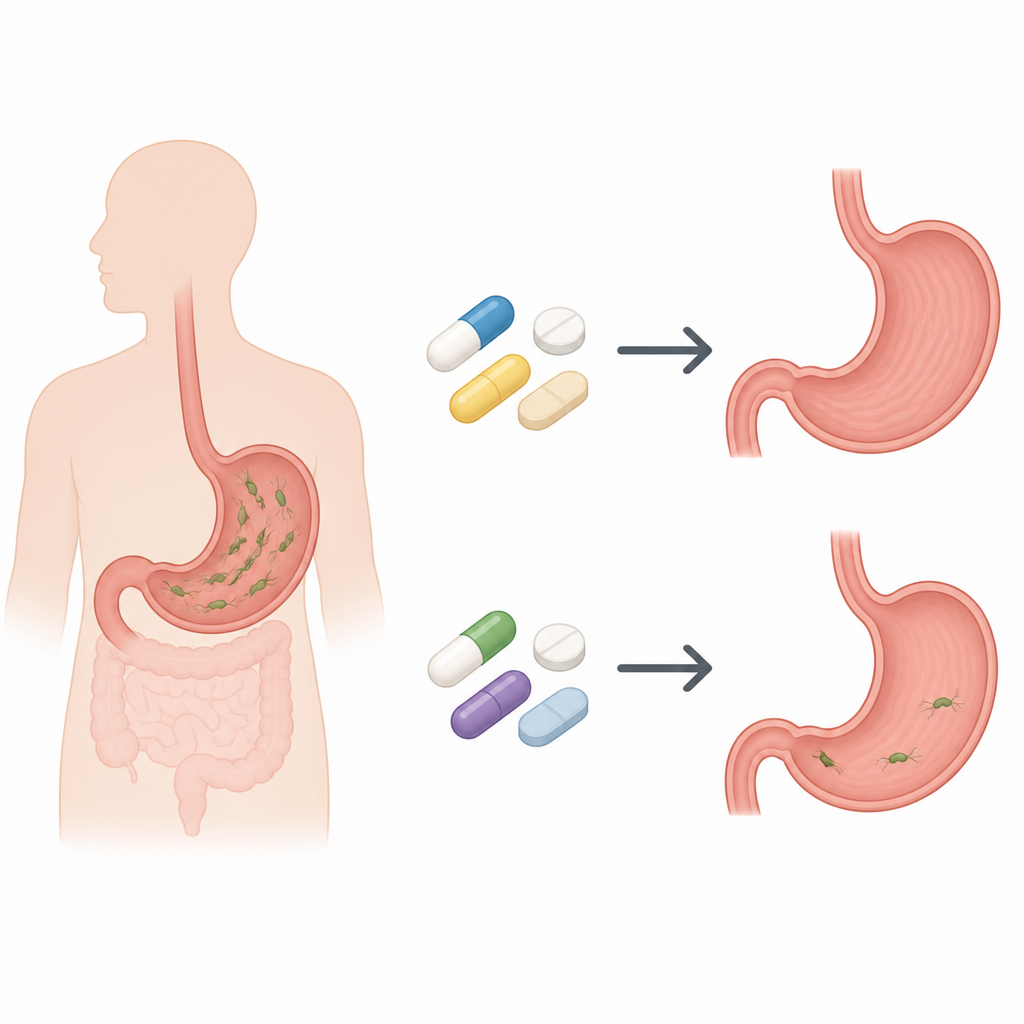
Many people around the world carry a stomach germ called Helicobacter pylori without knowing it. This tiny bacterium can cause long lasting indigestion, ulcers and, over many years, even stomach cancer. Doctors usually treat it with combinations of antibiotics and acid blocking pills, but rising drug resistance is making those treatments less reliable. This study from several hospitals in Egypt tested two newer four drug options built around a medicine called nitazoxanide and compared them with a widely used older three drug cocktail.
The challenge of a stubborn infection
H. pylori is common in many countries and can quietly inflame the lining of the stomach and upper intestine. Clearing the germ lowers the chances of ulcers coming back and helps reduce the risk of stomach cancer. For years, a standard mix of two antibiotics plus an acid blocker worked well. Over time, however, the bacterium has learned to resist some of these drugs, especially clarithromycin and metronidazole, and cure rates have slipped below the level experts consider acceptable. In Egypt, resistance to several common antibiotics is high, and some recommended drugs such as bismuth and tetracycline are hard to obtain, forcing doctors to look for practical alternatives.
New four drug mixes on trial
The NILE trial enrolled 354 adults with indigestion and confirmed H. pylori infection who had not been treated for it before. They were randomly assigned to one of three 14 day treatments. One group received a four drug mix that combined levofloxacin, nitazoxanide, doxycycline and the acid blocker lansoprazole. A second group received a very similar mix in which moxifloxacin replaced levofloxacin. The third group received the older standard three drug therapy made up of amoxicillin, clarithromycin and lansoprazole. About a month after finishing pills, patients provided stool samples to check whether the germ had disappeared.
How well did the treatments work
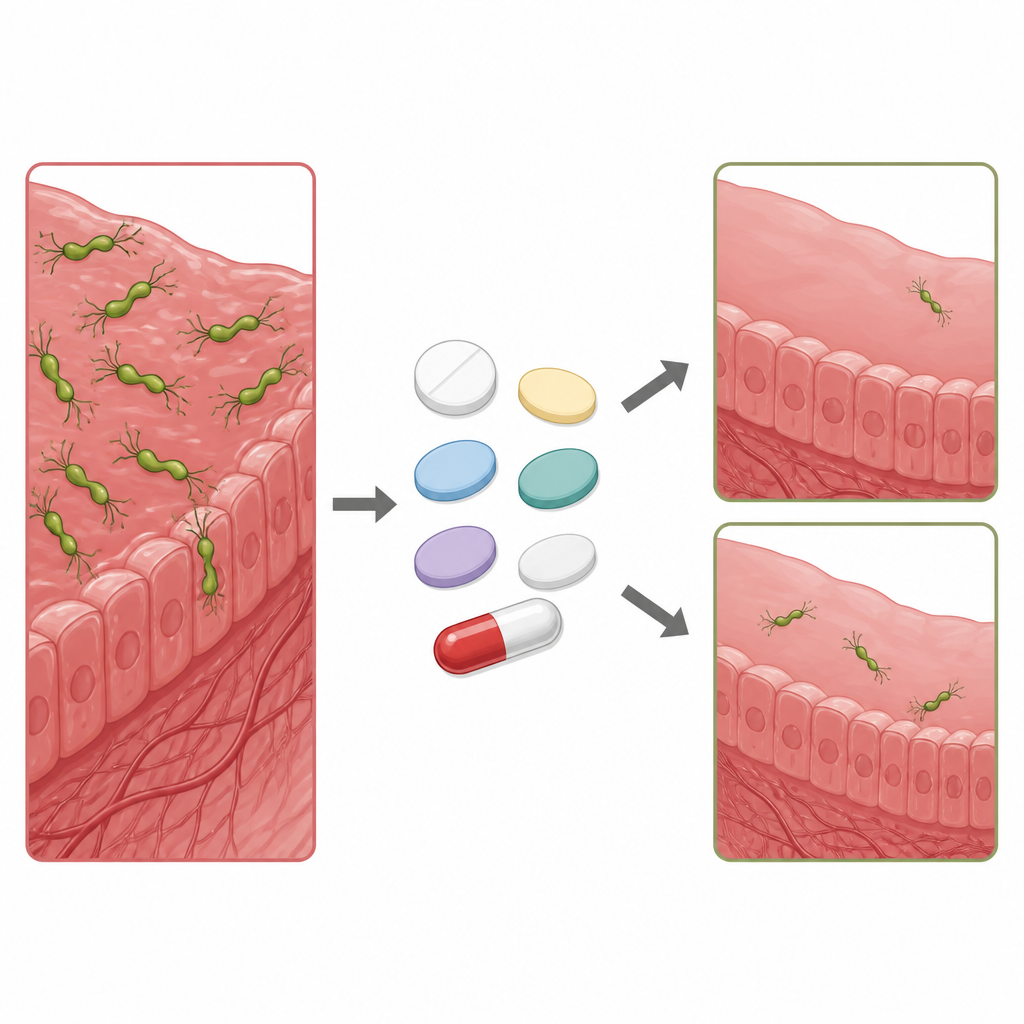
When the researchers counted every person who started treatment, even those who missed the final test, the levofloxacin based four drug mix cleared the infection in about eight out of ten patients. The moxifloxacin version cured roughly seven out of ten, while the older three drug cocktail succeeded in only about six out of ten. When the analysis was limited to patients who took at least 80 percent of their pills and returned for testing, success rates rose somewhat: close to nine out of ten for the levofloxacin mix, a bit more than eight out of ten for the moxifloxacin mix and about six out of ten for the older regimen. These results suggest that both four drug options outperformed the standard approach in this Egyptian setting, with levofloxacin showing a slight edge when all patients were considered.
Side effects and comfort during treatment
All three regimens caused side effects in some patients, but most problems were mild and manageable. Common complaints included abdominal pain, nausea, headache and changes in bowel habits. Diarrhea occurred more often with the older clarithromycin based therapy, while temporary darkening of the urine was seen mainly in the nitazoxanide groups. A small number of people in each group stopped treatment because of discomfort, yet no serious drug related complications were reported. Overall, the new four drug mixes were about as tolerable as the standard regimen.
What this means for patients and doctors
For people living in regions where key antibiotics no longer work well and recommended drugs are scarce, the findings offer an important option. The nitazoxanide based four drug combinations, especially the one built around levofloxacin, cleared H. pylori more often than the older three drug therapy and did so with a similar safety profile. However, cure rates still fell short of the ideal goal of at least nine out of ten patients. The authors therefore view these regimens as useful alternatives when preferred treatments are not available, not as perfect solutions. They also stress the need to use antibiotics wisely and to design future studies that include better acid suppression and careful tracking of local resistance patterns, so that more people can safely and reliably rid themselves of this persistent stomach germ.
Citation: El-Azab, G., Salam, S.A., Moustafa, E. et al. Levofloxacin versus moxifloxacin in nitazoxanide-based quadruple therapy as a first-line treatment for Helicobacter pylori infection: NILE, a randomized, comparative, multicenter study. Sci Rep 16, 15337 (2026). https://doi.org/10.1038/s41598-026-51062-4
Keywords: Helicobacter pylori, stomach infection, antibiotic resistance, quadruple therapy, nitazoxanide