Clear Sky Science · en
Fecal HBA mRNA as an alternative to FIT for colorectal cancer screening: a computational and clinical validation study
Why this stool test research matters
Colorectal cancer is one of the leading causes of cancer death, yet it is often curable when found early. Many people avoid screening because they fear colonoscopy or find current tests inconvenient. This study explores a new kind of stool test that could make screening simpler and cheaper while keeping accuracy high, potentially helping more people get tested in time.
From protein tests to genetic signals
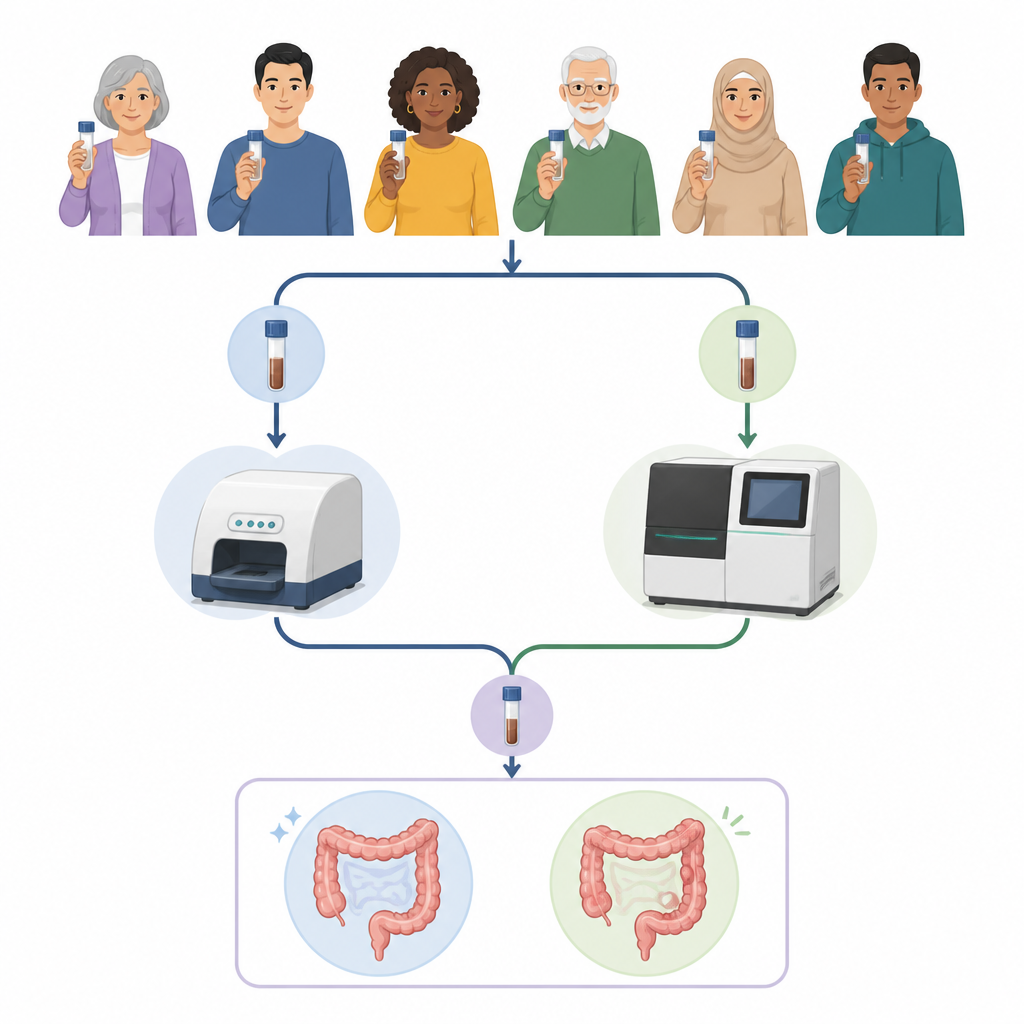
The most widely used stool test for hidden blood today is called FIT. It looks for a blood protein in stool and is often combined with other DNA or RNA markers to check for warning signs of cancer. The problem is that this combination needs two separate lab workflows, one for the protein test and one for the genetic markers. This double setup adds cost, more tubes, and more chances for error. The researchers asked whether the blood detection part could also be done with a genetic signal, so that everything runs in one smooth process.
Finding the right blood marker
To answer this, the team first turned to a large public database of gene activity across many human tissues. They searched for genes that are very active in blood but quiet almost everywhere else. Hemoglobin genes, which code for the oxygen-carrying part of red blood cells, stood out by a wide margin. In particular, two related genes called HBA1 and HBA2 were both highly specific to blood and very abundant, making their RNA copies attractive candidates for spotting tiny amounts of blood in stool.
Building a human-only stool test
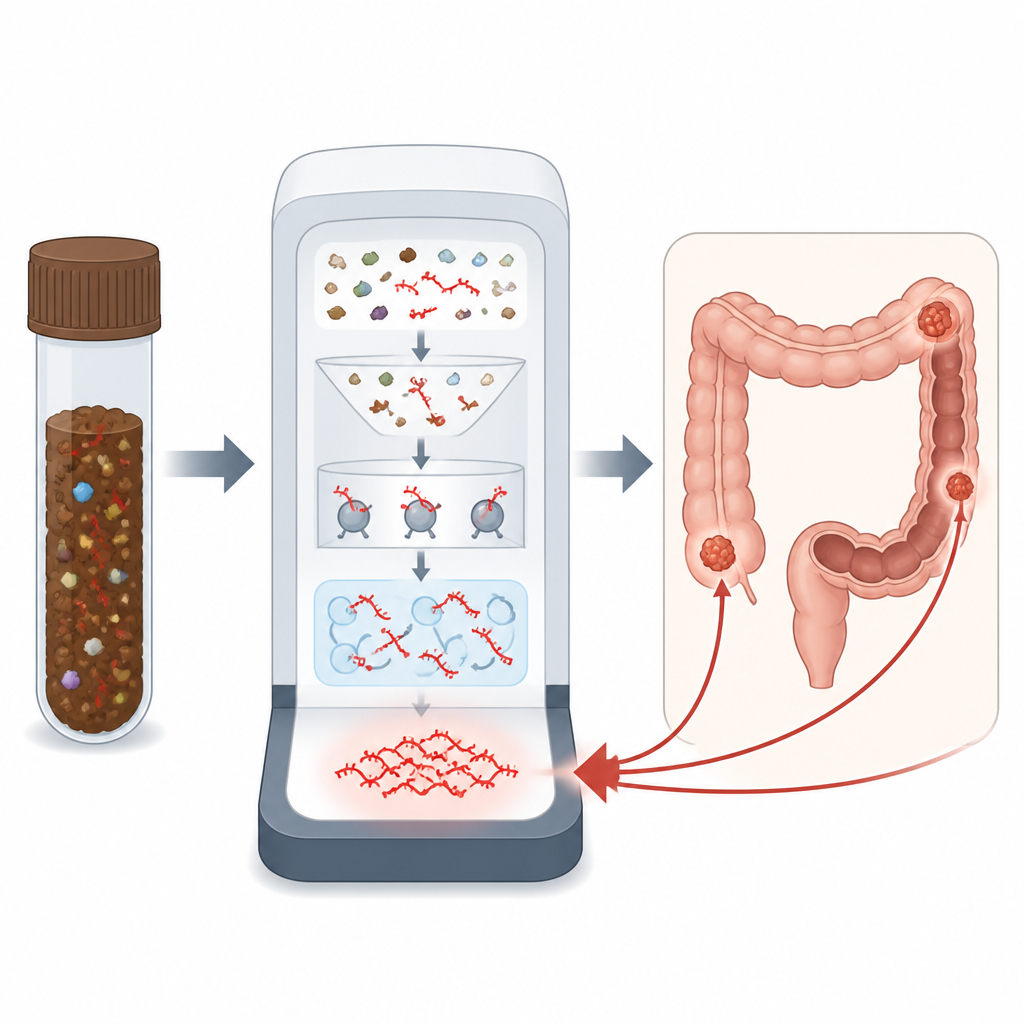
Next, the scientists designed a lab assay to detect the combined HBA1 and HBA2 RNA signal, which they call HBA mRNA. They carefully checked that the test only reacts to human sequences and not to similar genes from common food animals such as cows, pigs, or chickens, which might still be present in stool. Computer checks and experiments with synthetic DNA confirmed that only the human version produced a signal. They also showed that the assay works over a wide range of blood RNA levels and does not mistakenly react to human DNA, which helps keep results specific and reliable in messy real-world samples.
Putting the new test to the test
The core of the study was a clinical trial of 364 adults who provided stool samples and had colonoscopies. Participants were grouped into colorectal cancer, advanced precancerous lesions (large or high-risk polyps), small low-risk polyps, or people with no concerning findings. Each stool sample was tested in two ways: the traditional FIT protein test and the new HBA mRNA assay. HBA mRNA levels were clearly higher in cancer and advanced precancer cases than in the other groups, mirroring the pattern seen with FIT. When used alone, the HBA mRNA test matched or slightly exceeded FIT in detecting cancers, showed better detection of advanced precancerous lesions, and kept similar rates of correctly identifying people without disease.
Combining blood signals with tumor signals
The team then combined HBA mRNA with an existing panel of stool RNA markers that come from tumors or nearby tissue. They compared this to the same panel paired with FIT. In both setups, the combined tests detected a high fraction of cancers and a meaningful portion of advanced precancerous lesions while maintaining high accuracy for ruling out disease. Importantly, using HBA mRNA instead of FIT gives nearly the same diagnostic performance but lets all measurements be made in a single nucleic acid workflow, without a separate protein test. This single-modality design can reduce hands-on work, lower costs per sample, and make large-scale screening programs easier to run.
What this means for future screening
For patients, the main message is that a simple stool sample may one day support a streamlined molecular test that checks both for hidden blood and for cancer-related RNA changes at the same time. In this study, the HBA mRNA signal closely tracked the current standard protein test while fitting neatly into an all-in-one genetic testing pipeline. Larger and more diverse trials are still needed, but the results suggest that measuring blood-related RNA in stool could help deliver more accessible, efficient colorectal cancer screening without sacrificing accuracy.
Citation: Pan, W., Hansen, L., Lin, H. et al. Fecal HBA mRNA as an alternative to FIT for colorectal cancer screening: a computational and clinical validation study. Sci Rep 16, 14720 (2026). https://doi.org/10.1038/s41598-026-50512-3
Keywords: colorectal cancer screening, stool RNA test, fecal occult blood, mRNA biomarkers, FIT alternative