Clear Sky Science · en
Defatted biomass of the green microalga Chlorella sp. as a sustainable biostimulant to enhance barley growth under saline conditions
Turning Waste into Help for Hungry Fields
Rising soil salinity is quietly shrinking harvests worldwide, especially in arid regions where irrigation leaves salt behind. At the same time, the booming microalgae industry throws away tons of leftover material after extracting oils for biofuels. This study asks a simple but powerful question: can that "waste" from green algae be turned into a gentle plant tonic that helps barley keep growing in salty water?
Why Salty Soils Threaten a Key Food Crop
Barley is one of the world’s top cereal crops and underpins food, feed, and brewing industries. Yet it dislikes salt. When salts build up in irrigation water and soils, barley plants struggle to take up water and nutrients, their leaves lose efficiency at turning sunlight into energy, and grain yield can drop by half or more. With nearly half of irrigated farmland affected by salinity to some degree, farmers and scientists are searching for tools that can help crops cope without relying solely on costly breeding or heavy fertilizer use.
A New Life for Leftover Green Algae
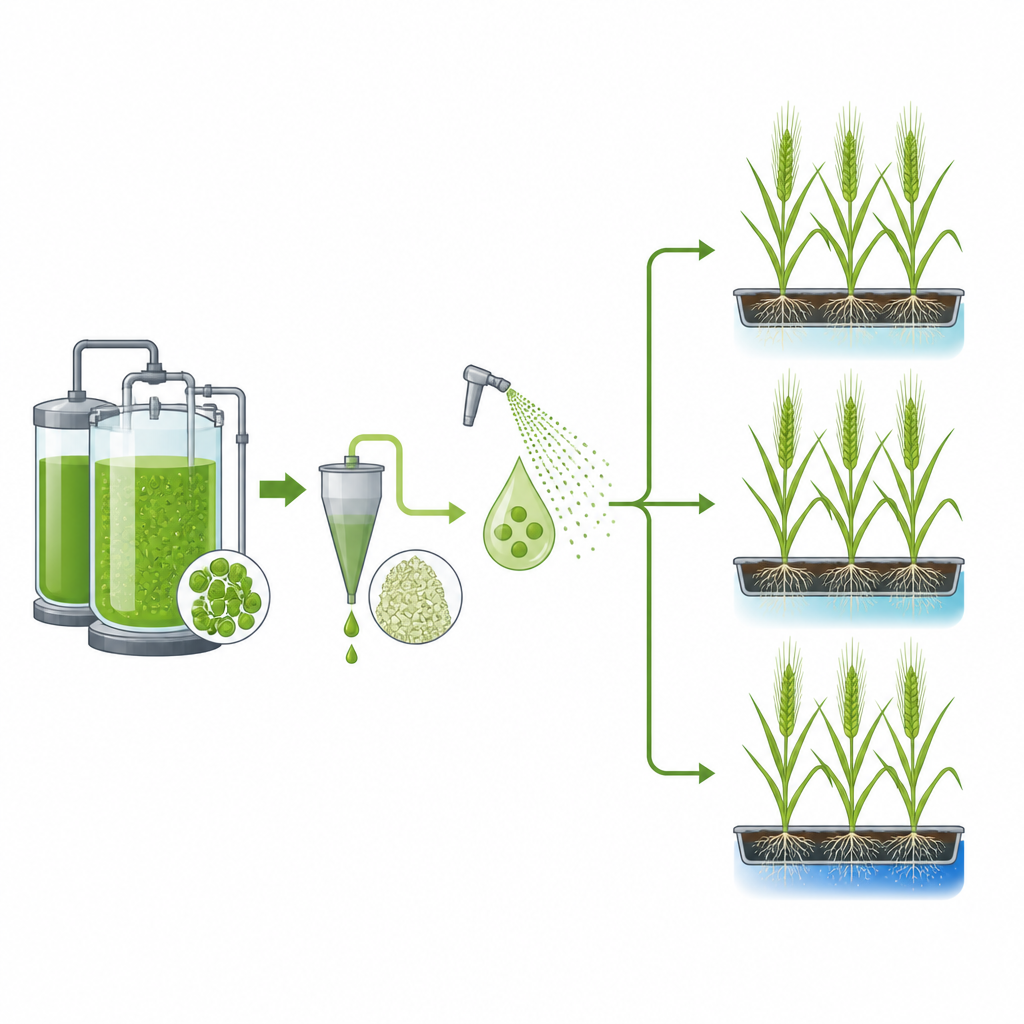
Microalgae such as Chlorella are already grown at large scale for food supplements and for extracting oils that can be turned into biodiesel. After the oils are removed, a defatted, protein-rich biomass remains. In this study, researchers prepared an alcohol-based extract from this leftover Chlorella material and examined its chemical makeup. They identified 28 biologically active compounds, mainly fatty acids and related molecules known to influence plant growth, protect cell membranes, and help plants tolerate stress. Because the biomass is a byproduct, using it as a crop booster fits neatly with circular economy ideas: turning one industry’s residue into another’s resource.
Testing Algal Help on Barley in Salty Water
The team grew three barley types in a floating hydroponic system that allowed precise control of salt levels in the nutrient solution. Plants were exposed to low, moderate, and high salinity, similar to what farmers might encounter in irrigated fields. Some seeds were soaked in the algae extract before planting, some plants were sprayed with it as they grew, some received both treatments, and others served as untreated controls. Over 60 days the scientists measured grain weight, leaf light-use efficiency, gas exchange, mineral nutrients in shoots and grains, and the content of pigments like chlorophyll that help capture sunlight.
How the Algal Tonic Changed Plant Performance
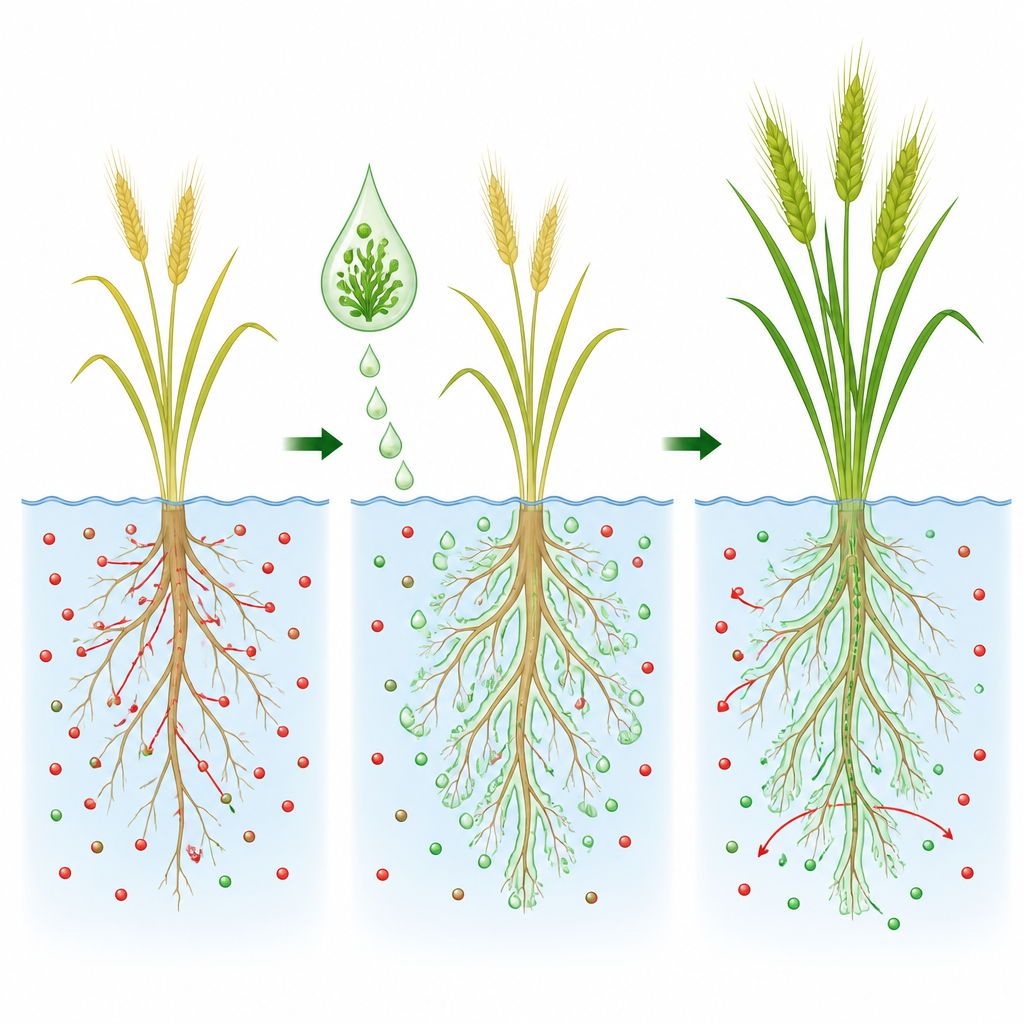
As expected, more salt meant less yield: grain weight and a key measure of photosynthetic activity fell sharply at higher salinity, and the balance of nutrients in the plants shifted toward harmful sodium at the expense of potassium and phosphorus. Yet the algae extract softened these blows. The combination of seed soaking and leaf spraying gave the best results, raising grain dry weight by about a third compared to untreated plants under the same conditions and boosting the flow of electrons in the photosynthetic machinery. Barley treated with the extract stored more nitrogen, phosphorus, and potassium in both shoots and grains, while taking up relatively less sodium. Protein content and green pigments were also higher, indicating healthier metabolism and improved nutritional quality of the harvested grain.
Different Barley Types, Different Gains
The three barley genotypes did not respond in identical ways. One type, known as Giza 123, kept the heaviest grains and the most robust photosynthetic activity under salt stress, especially when combined with the algal treatments. Another, Giza 132, excelled at protein buildup and nitrogen uptake. These differences show that the algae-based tonic interacts with the plant’s genetics and suggest that choosing the right barley varieties can further amplify the benefits of such biostimulants in salty environments.
What This Means for Salty Farmland
To a non-specialist, the takeaway is straightforward: leftover material from oil-rich green algae can be repurposed as a gentle aid that helps barley plants stay greener, capture light more efficiently, and fill grains better even when the water is salty. The work points to a practical way to recycle an industrial byproduct while improving crop performance on stressed land. Although these results come from controlled water-based systems rather than real fields, they suggest that algae-based treatments could become part of sustainable strategies to maintain yields and grain quality where soil salinity is on the rise.
Citation: El-Akhdar, I., Elsakhawy, T. & Elakhdar, A. Defatted biomass of the green microalga Chlorella sp. as a sustainable biostimulant to enhance barley growth under saline conditions. Sci Rep 16, 15064 (2026). https://doi.org/10.1038/s41598-026-49609-6
Keywords: salinity stress, barley, microalgae biostimulant, Chlorella extract, sustainable agriculture